The US stock market is in a state of "extreme weakness" as the earnings season begins
 Core Viewpoint

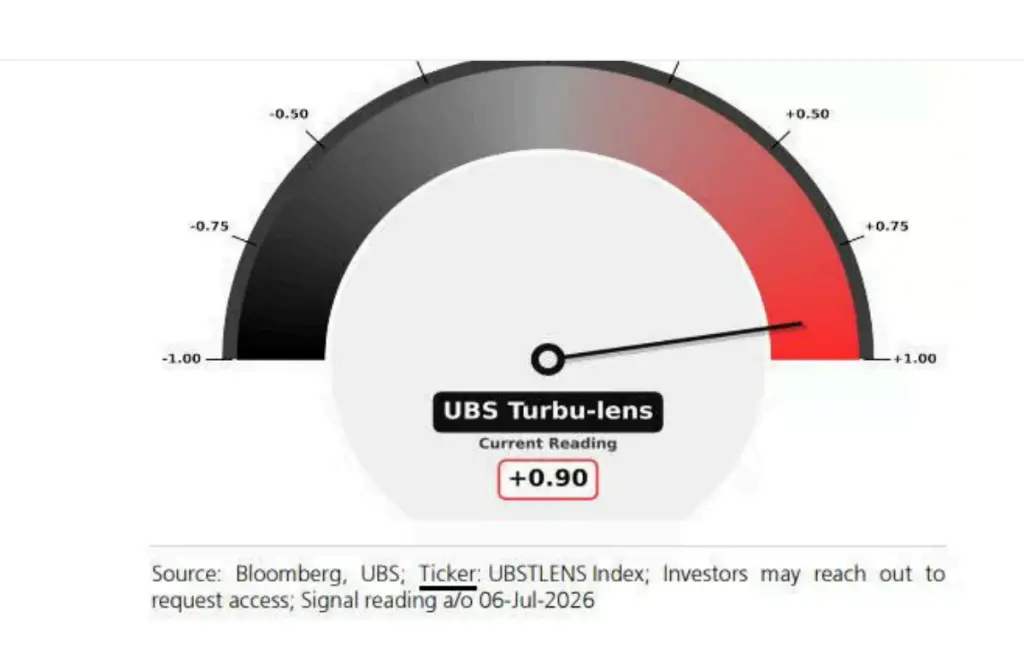
 The US stock indices appear calm (VIX is low), but UBS's market vulnerability indicator has soared to a historical high of 0.9. As the "high expectations" earnings season kicks off with a 24% surge in second-quarter profit forecasts, internal market pressures are accelerating: individual stock volatility has exceeded three times that of the indices, bond market yields are approaching 4.6%, and rising oil prices (Brent crude nearing $80) threaten inflation and European stock markets.
Author: Zhang Yaqi, Wallstreet News
The volatility at the index level of the U.S. stock market appears calm on the surface, but internal pressures are building up. Under the triple constraints of geopolitical situations, monetary policy expectations, and signals from the credit market, market vulnerability has risen to near historical highs—just as a season of high expectations and high-risk earnings reports is about to begin.
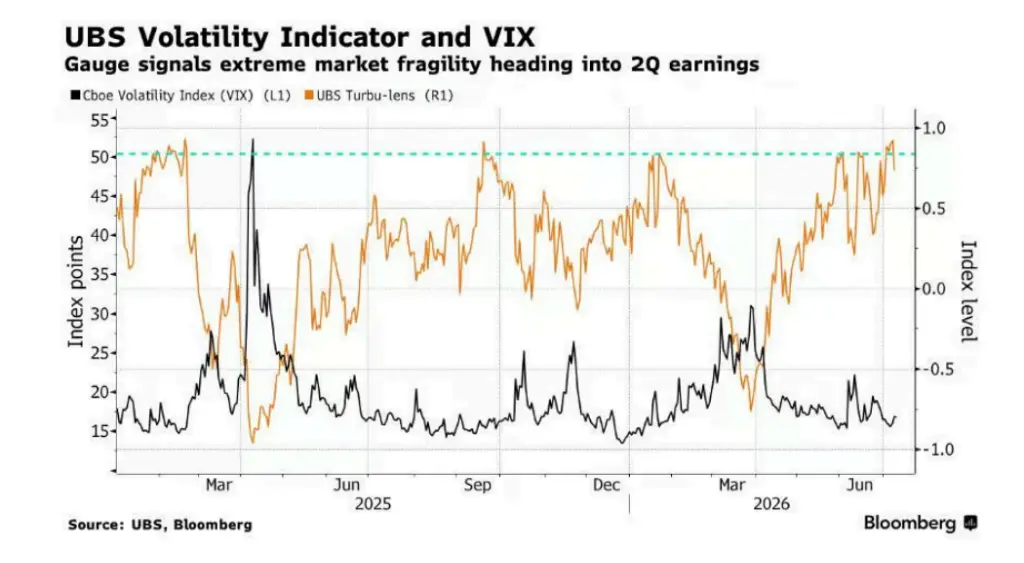
The "Turbu-lens" market vulnerability indicator from UBS's derivatives strategy team currently reads 0.9 (range from -1 to 1), the highest level since mid-September 2025. Historically, such readings often indicate a phase of sharp increases in VIX. UBS derivatives strategist Maxwell Grinacoff's team warns that this indicator points to "extreme market vulnerability," coinciding with the start of the earnings season. Meanwhile, the team also noted that if systemic strategies fully leverage, this indicator could "really touch +1."
The current high expectations in the market further amplify the risks. Analysts expect a 24% growth in earnings for S&P 500 constituents in the second quarter, and a 12% expectation for the European Stoxx 600 index. Unlike previous earnings seasons, analysts have continuously raised their forecasts on the eve of the reporting period, and such strong confidence means that if the results disappoint the market, there will be greater room for adjustment.
Under VIX's Calm, Individual Stock Volatility is Three Times Higher
Currently, VIX is at a low level, but this calm is misleading. Barclays strategist Anshul Gupta's team points out that the recent decline in VIX coincides with a seasonal calendar window where price volatility typically narrows, representing a "temporary sweet spot" with limited sustainability, and the start of the earnings season may push VIX back up.
More concerning is that the low volatility of the index masks extreme internal market divergence—individual stock volatility has exceeded index volatility by more than three times. Grinacoff states that this gap is likely to narrow in the summer, when either a repricing of monetary policy or geopolitical disturbances could trigger a sharp increase in index-level volatility.
In terms of hedging strategies, due to the potential for diversified trading and sector rotation to continue during the earnings period over the next few weeks, the hedging effect at the index level may be limited. Grinacoff suggests that "single stock options may offer better tactical opportunities."
Oil Prices and Bond Markets Issue Dual Warnings
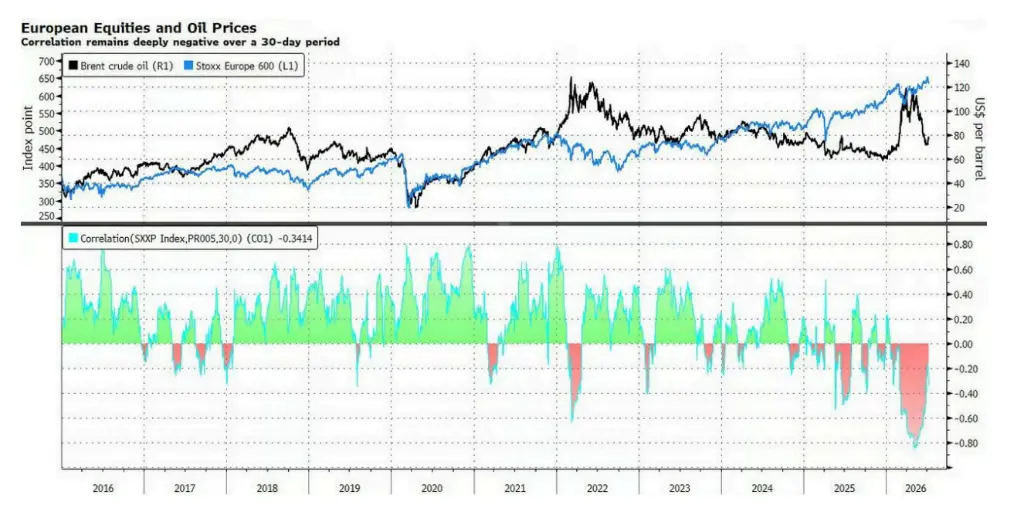
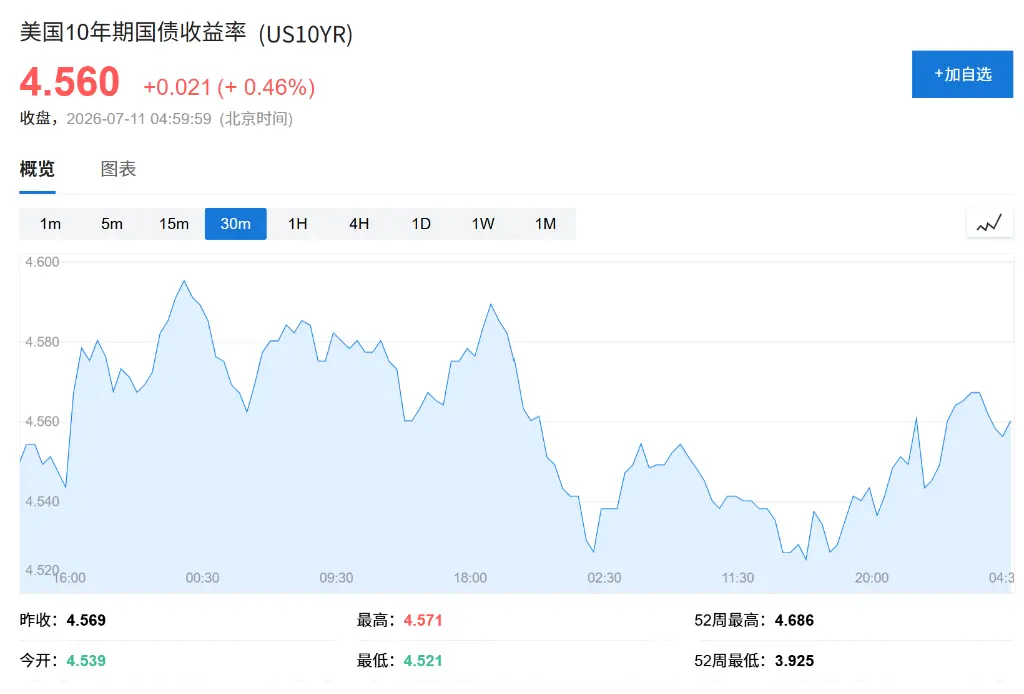
The volatility in oil prices due to geopolitical situations is exerting continuous pressure on global stock markets. Brent crude oil prices have risen below $80 per barrel, a trend that may keep inflation expectations high and lead the Federal Reserve to maintain a wait-and-see stance. Although changes in interest rate expectations were limited following the release of the Federal Reserve's meeting minutes, the yield on 10-year U.S. Treasuries has quietly risen to nearly 4.6%, and the increase in bond market volatility is sending negative signals to global stock markets, or at least suppressing further upside potential.
Citigroup's strategist team (including Alice Zheng) points out that the market currently has a misalignment in positioning for rising oil prices, particularly in Europe—due to its high reliance on imported energy and low exposure to AI-benefiting assets. "If the rise in oil prices continues, the pullback in European stock markets could be quite significant, as the market has previously digested expectations of conflict resolution," the strategists wrote.
The Credit Market Does Not Endorse the Stock Market's Rise
The performance of the credit market has sounded the alarm for the current upward momentum in the stock market. Compared to the previous record highs of stock indices, the narrowing of credit default swap (CDS) spreads has been quite limited, indicating that the credit market has not fully endorsed the stock market's rise. As the stock market has recently experienced a pullback, the two have realigned, but analysts believe that to support a stronger upward movement in the stock market, clearer tightening signals from the credit market are needed.
In light of the aforementioned risks, UBS recommends that investors capture individual stock volatility opportunities through pair-wise correlations trades. In terms of sectors, UBS believes that technology, energy, and financial sectors in the U.S. market are most suitable for pairing volatility trades, while in the European market, energy, technology, and consumer discretionary sectors are recommended.

 Risk warning



Popular articles