South Korea has started to gamble on its national fortune again
 Core Viewpoint

 51 million people's AI public service: South Korea plan
Author | Wan Lianshan
Recently, South Korea has fired the first shot in the global "AI public utility" initiative.
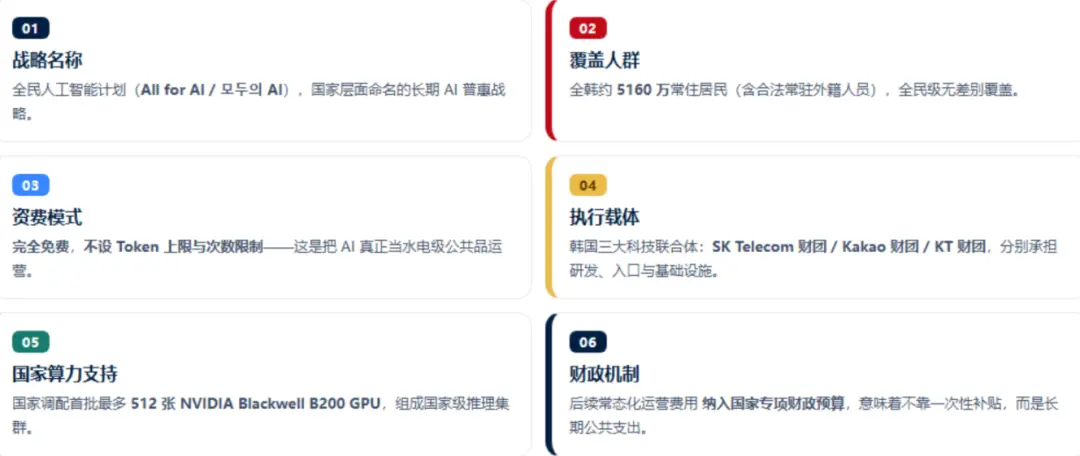
According to the "Universal AI" plan announced by the South Korean Ministry of Science and ICT, it aims to provide free, unlimited generative AI services to 51 million citizens, clearly promising "no subscription fees and no token usage limits."
Where does the money come from? It will be directly integrated with the registration for medical treatment, public housing applications, and tax filing systems, with operating costs covered directly by the fiscal budget.
Progress has already moved from slogans to selecting people to work: On August 28, three consortiums led by SK Telecom, Kakao, and KT were selected; on September 4, the government held a project launch meeting to promote the service for all citizens by the end of the year.
On the surface, this seems like the government is treating everyone.
But upon closer examination, it's far more than just a "welfare" initiative.
AI is a tool, and it will also become a means of production.
By funding and guiding policies for universal AI usage, it essentially distributes future means of production to everyone.
Regardless of whether it succeeds, this is undoubtedly a grand social experiment.
01 Let's first look at the real issues.
South Korea has indeed reaped the hardware dividends of the AI era, but who has heard any news about local large models in South Korea?
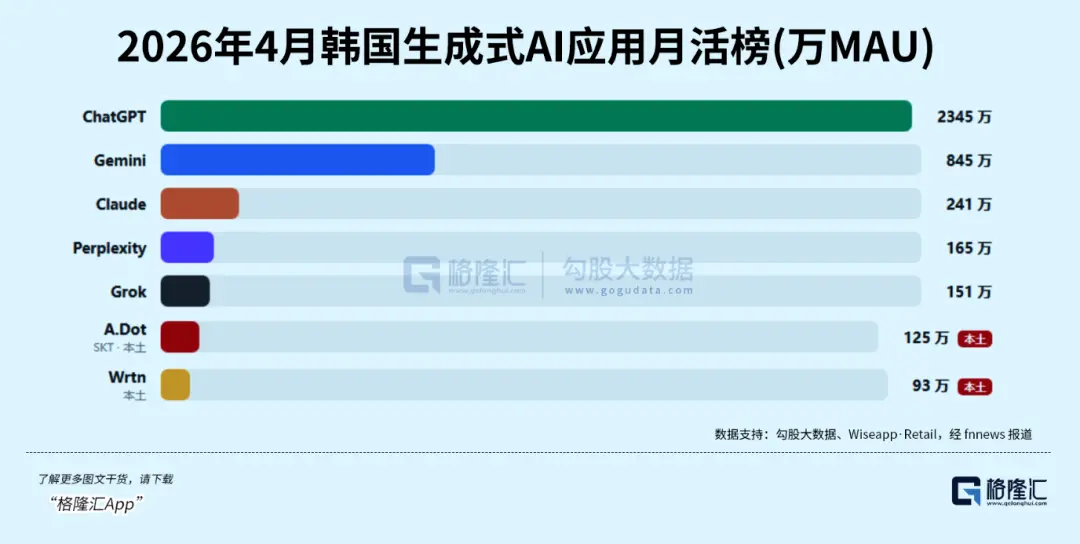
According to data from Wiseapp·Retail: In April 2026, South Korea's ChatGPT had about 23.45 million monthly active users, Gemini had about 8.45 million, and Claude had about 2.41 million.
What about local models? They are almost ignored.
AI competition has a clear scale effect. Without users, products are hard to improve, and revenues cannot support R&D; if products can't keep up, users are even less willing to come.
After a cycle, the startup team's most proficient skill may only be modifying funding proposals.
Thus, the "Universal AI" plan stipulates that at least 50% of the services must use South Korean models that meet the autonomous foundational model standards, and at least 30% must use models developed by other South Korean companies; foreign models can be used in limited necessary functions, but the related parts will not receive government support.
At the same time, it ties public procurement, industrial support, and technological sovereignty together.
Local companies will receive computing power support and application scenarios, citizens will gain free tools, and the government hopes to retain local R&D, operations, and service integration capabilities.
The government is investing money, locking 80% of computing power to domestic models, which is equivalent to helping the local industry overcome the most challenging startup phase.
How much is it specifically?
On September 4, MoneyToday reported based on departmental project descriptions obtained from a member of parliament that the plan for 2027-2030 is 250 billion Korean won per year.
170 billion won is for GPU leasing, 30 billion won is for the three consortiums, and 50 billion won is for expanding the intelligent agent ecosystem.
Divided among South Korea's approximately 51.61 million population in 2026, it amounts to about 4,800 won per person per year.
This amount is clearly insufficient, even if doubled, it would still not be enough.
So why can this calculation hold?
It relies on a mix of different usage intensities and the allocation of computing power for different tasks.

SK's plan announced on August 19 clearly states that simple questions will be handled by lightweight models, while complex tasks will be assigned to high-performance models.
Model routing, combined with caching, batch processing, and quantization for inference optimization, can reduce the cost per task.
The service is also prepared to retain commercial revenue.
According to a report by Financial News on September 7, the government is considering allowing moderate advertising and discussing charging for premium services after the second half of 2027.
Therefore, the financial path should be: first invest in startup computing power, then support services with a plan of 250 billion won per year, and finally rely on a broader range of AI R&D and infrastructure investment.
Of course, the final total cost will also include corporate investments and the expansion brought about by actual usage, which is currently unpredictable.
However, once this path is successfully navigated, South Korean companies will undoubtedly gain an advantage in local government affairs and life services.
To turn this convenience into economic growth, South Korea must also face a challenging problem.
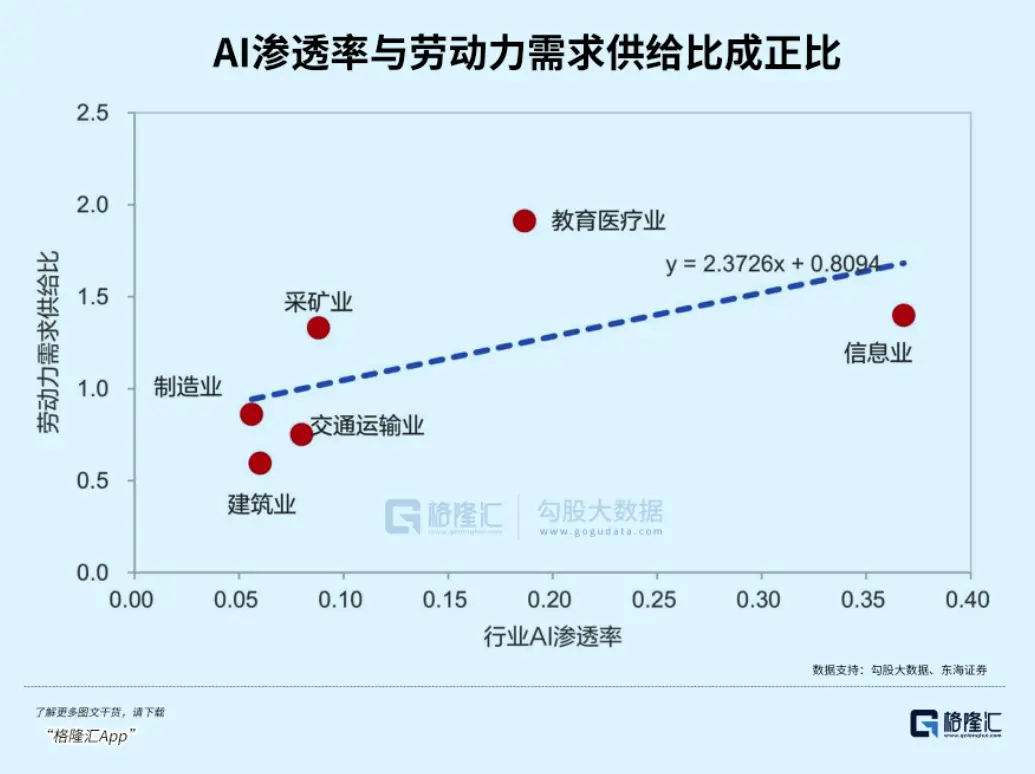
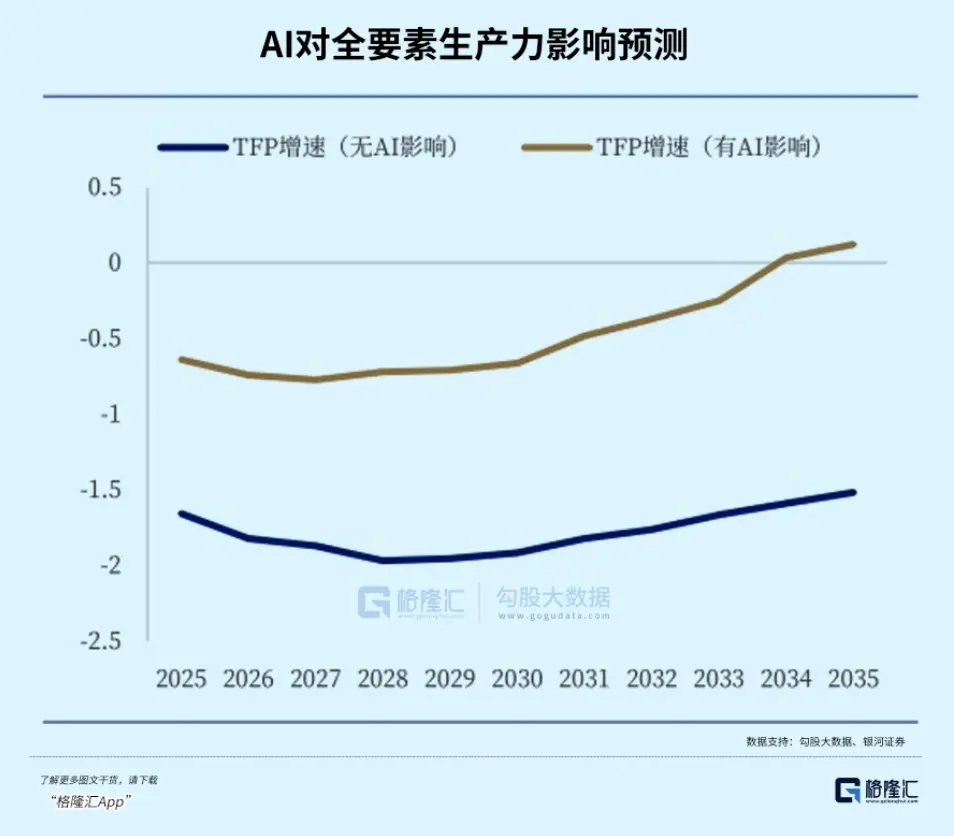
02 According to research data released by the Bank of Korea in June 2026, the average use of AI shortens working hours by 3.8%, equivalent to about 1.5 hours per week, corresponding to about a 1.0% potential productivity improvement.
However, the research found no evidence that saved time universally translates into actual output growth.
The effects are more pronounced among self-employed individuals, professionals, and high-intensity AI users.
This reflects the productivity J-curve in the diffusion of general technologies: tools enter first, followed by training, process reorganization, and organizational adjustments, with benefits gradually materializing.
Universal free access can lower the technical threshold, but to truly unleash output, businesses must be willing to adjust work methods and employees must be motivated to save time.
Otherwise, while the average "AI usage" increases, the average overtime may also likely increase.
Deeper changes will occur in the distribution of benefits.
The government pays for users, and the first to receive certain demand are the computing power suppliers, model companies, and platform operators.
For small businesses, public platforms may reduce development and customer acquisition costs; for consumers, it may lower transaction costs.
However, as the chat interface further controls appointments, shopping, and service recommendations, platforms will also gain new distribution rights.
Who gets recommended, who pays commissions, and who can access will all affect the competitive landscape.
This is also why fiscal subsidies must consider usage effectiveness.
According to a report by Financial News on September 7, GPU support will be allocated based on user and usage performance differences, with the first evaluation potentially occurring as early as March 2027.
In specific execution, task completion rates, error rates, and actual time saved will also need to be included in the evaluation.
The labor market will also adjust accordingly.
AI assistance can help inexperienced individuals complete more tasks, but it may also compress the jobs originally available for newcomers to practice.
Older workers are more likely to receive services, while whether younger workers can continue to accumulate skills and earn income will also determine how far this reform can go.
After popularizing tools, training, job adjustments, and income distribution must keep pace.
Current judgments suggest that South Korea has the conditions to make universal AI a practical public service and thereby expand the market for local models.
Ready user channels, fiscal support, and local service connections provide a foundation for its launch.
Other countries may also see a possibility: through public procurement, transforming AI from individual subscription products into universally available social services.
However, achieving widespread productivity dividends will require a longer organizational and institutional transformation.
This is a more profound change.
03 The greatest aspect of this experiment is the attempt to deliver the most important future production tools to every citizen in the form of public services.
The South Korean Ministry of Science and ICT clearly stated in the project announcement that the direction of continuous upgrades is "one AI agent for every citizen," allowing citizens to participate in economic and social activities through their own agents and share the benefits brought by AI.
Distributing money increases current purchasing power; providing production tools attempts to enhance future income-generating capabilities.
The role of fiscal expenditure extends from subsidizing consumption to supporting ordinary people’s participation in production.
For example, if a young person wants to run a small business, they need to do promotions, organize customer needs, analyze orders, and occasionally modify their website.
Even if they can use AI tools, the tokens consumed can still cost a lot.
If public AI can assist in completing part of this, the minimum investment required for their entrepreneurial attempt could decrease.
This not only lowers the entry barrier but also expands the production resources individuals can mobilize.
A person's experience, judgment, and customer relationships, combined with affordable and effective tools, have the opportunity to support businesses that were previously unfeasible.
This change may also affect workers' bargaining power.
If a person can only rely on the software, equipment, and organizational systems provided by the company to work, their cost of leaving is relatively high.
If they can leverage public AI, they can independently undertake part of the business or more easily learn new skills and switch careers, then when facing employers, they will have more external options.
Having the ability to choose a different path allows them to stand a bit taller when negotiating compensation.
This also pushes the issue of social distribution forward significantly.
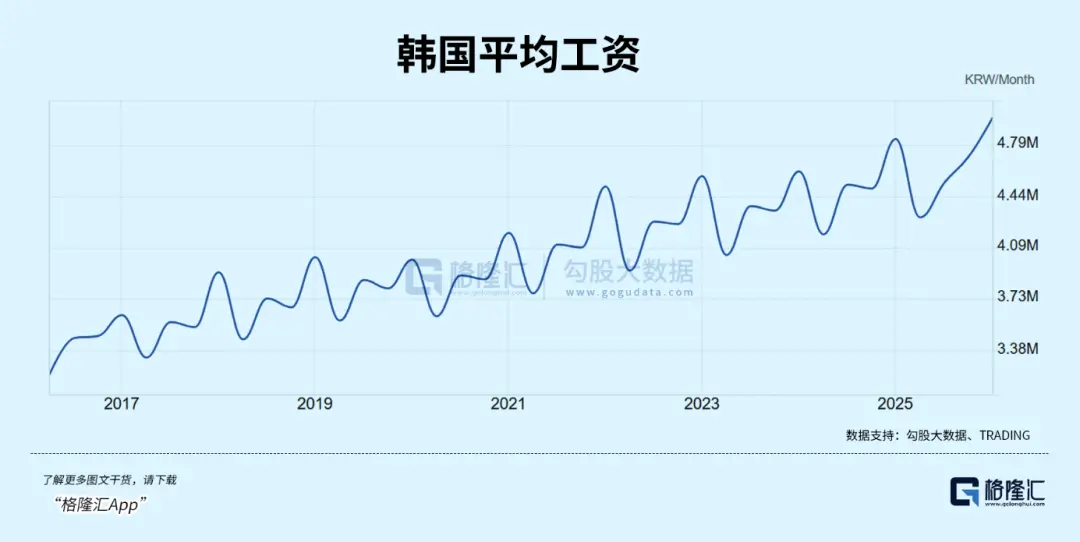
When discussing income distribution, we often think about how the government adjusts through taxes and welfare after wealth is created.
Universal AI attempts to intervene at an earlier stage: helping more people obtain the tools to participate in wealth creation before wealth is generated.
Additionally, it addresses how ordinary people participate in growth: merely as consumers purchasing products, or as individuals who can use new tools, provide services, and run businesses.
By covering part of the tool costs, the government reduces the limitations imposed by family background, business scale, and personal income on acquiring production capabilities.
When ordinary people have an additional production tool in hand, they can find another way to make a living and gain more confidence in choosing jobs, ensuring they share in the benefits created by technological progress.
Everything will be better.
 Risk warning


Popular articles