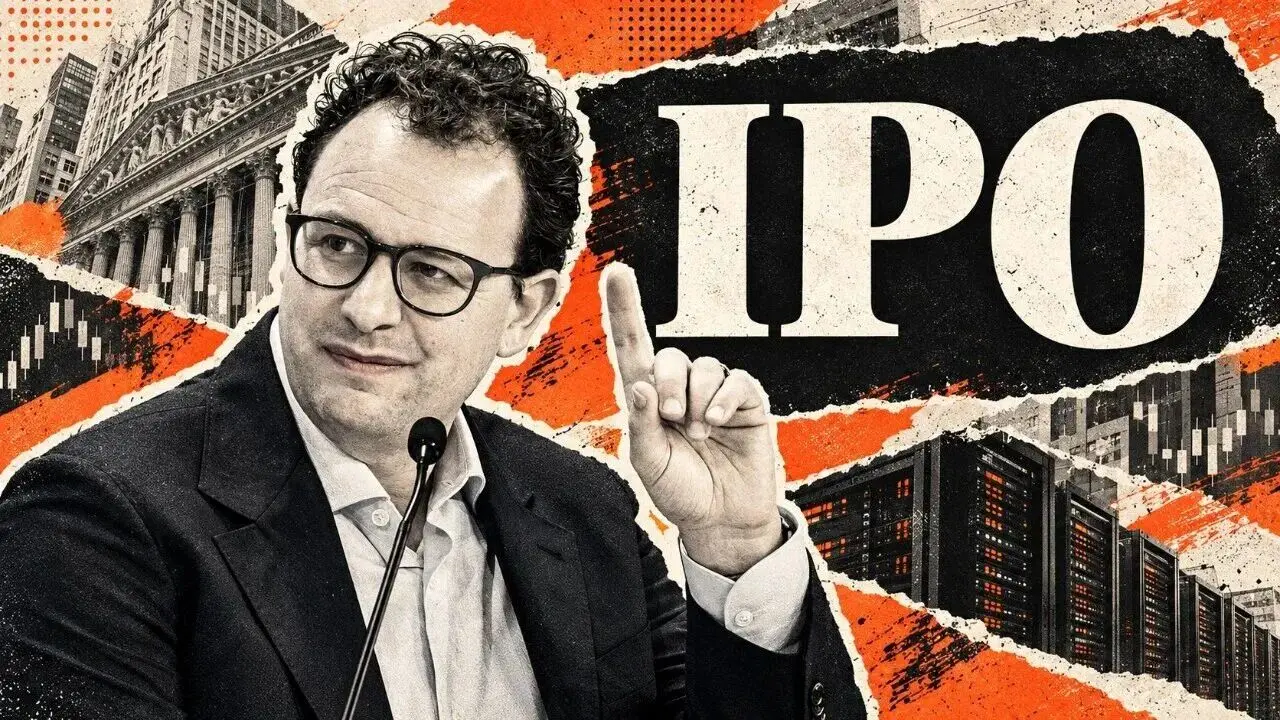
Morning Report | Yushu Robotics' stock price has fallen over 50% compared to its opening price one month after going public; Besant: The talks with the Chinese side on AI and trade were very successful
 Overview of Important Market Events on September 21
Compiled by: ChainCatcher
What important events happened in the past 24 hours?
Binance Wallet launches its first Pre-Access project pPOLY, raising $4.8 million for pre-IPO exposure
According to ChainCatcher, Binance Wallet announced the launch of the pPOLY token issued by Paimon Finance as the first Pre-Access project provided by PancakeSwap. Users can participate through Binance Wallet to gain potential indirect tokenized exposure before the public listing. The price of the PancakeSwap pPOLY event token is $15.5, with a total issuance scale of $4.8 million, and the network is BNB Smart Chain. The event time (UTC) is from September 21, 2026, 09:00 to September 24, 2026, 09:00, lasting 72 hours. Claiming pPOLY, returning unallocated funds, and trading pPOLY will all start from September 24, 2026, 09:00. The user subscription limit is mainly determined by the Alpha Points level at the time of the event announcement and the corresponding activity level based on on-chain holdings and trading volume of bStocks in the previous 15 days (from September 6, 2026, 00:00:00 to September 20, 2026, 23:59:59 UTC), with higher levels allowing for higher limits. All Alpha Points holders can subscribe without deducting points. Users can participate through Binance Keyless Wallet. Binance Wallet only displays the access entry, does not issue tokens, does not facilitate transactions, and does not grant equity or IPO rights.
Jensen Huang: AI lab warnings are dishonest and have ulterior motives
According to ChainCatcher, NVIDIA CEO Jensen Huang accused the warnings from the heads of leading AI labs of being "dishonest" in a CBS interview aired on Sunday. These warnings claimed that without more AI regulation, their products could harm humanity in various ways. Huang believes there are ulterior motives behind the warnings, stating, "Go read between the lines. They are not actually asking for more laws; they are asking for exemptions from our existing laws." He also stated that using technology to scare the public is "irresponsible" and "unnecessary." Huang's remarks align with the stance of former U.S. President Trump, who stated on Saturday that new regulations are not needed to ensure the safety of AI technology. Michael Kratsios, director of the White House Office of Science and Technology Policy, also opposed government intervention. Last week, a group of leading AI CEOs called for a slowdown in AI development, with Anthropic CEO Dario Amodei publishing related articles supported by OpenAI CEO Sam Altman and SpaceX CEO Elon Musk. Huang reiterated that slowing down development in U.S. labs would give China an advantage and stated that more regulation is not needed, only the application of existing laws.
Kyle Samani: SOL market cap will surpass ETH, no one is really using Ethereum
According to ChainCatcher, Multicoin Capital co-founder Kyle Samani predicted in Cointelegraph's Trade Secrets program that Solana will achieve a "flip" in market cap surpassing Ethereum within "this market cycle," stating, "No one is really using Ethereum these days." He believes more crypto companies will choose to build on Solana due to its ease of use and stronger functionality, suggesting that Ethereum's status as the default smart contract network may gradually diminish. This prediction implies that SOL's market cap needs to grow approximately fivefold from $58 billion to exceed ETH's current market cap of about $293 billion. Samani expressed a "pessimistic" view on Ethereum's value capture ability, describing it as "an asset worth $300 billion to $400 billion, with questionable value capture and no growth." He also pointed out that although SOL's market cap is less than one-fifth of ETH's, the Solana network has already surpassed Ethereum in weekly and monthly fees—over the past 30 days, Solana generated $23 million in fees, ranking fourth, while Ethereum generated $12.6 million, ranking sixth (DefiLlama data). For context, Samani entered the crypto space through Ethereum in 2016 but shifted to Solana due to dissatisfaction with scalability solutions, with Multicoin leading Solana's early financing in 2018.
Federal Reserve's Goolsbee: Rate hikes needed if inflation doesn't fall
According to ChainCatcher, Federal Reserve's Goolsbee stated that if inflation does not fall back to the 2% target level, interest rates need to be raised. He is open to the possibility of inflation starting to decline and is willing to accept that the current inflation issues stem from supply shocks that are about to fade, but he wants to see evidence that this shock is indeed dissipating.
On-chain perpetual contract protocol Travix completes seed round financing, Amber Group participates
According to ChainCatcher, the on-chain perpetual contract protocol Travix, centered on computing power asset trading, recently completed a seed round of financing, with Amber Group as a disclosed investor, though the financing amount has not been disclosed. The funds will be used to accelerate the deep construction of perpetual contracts for computing power assets and exotic assets like East Asian stocks, expand trading pairs for Compute-Led RWA such as chips and storage, promote the development of the "financial world model," deepen the development and deployment of a trusted AI agent trading engine, and expand global market and multilateral ecosystem construction as well as launch trading promotion incentive programs. It is reported that Travix is a next-generation PerpDEX protocol built on a modular blockchain architecture, employing a hybrid architecture of offline high-performance matching and on-chain settlement, achieving millisecond-level processing efficiency and introducing a unified account management model. Its core directions include: perpetual contracts for computing power assets, supporting hardware asset trading such as H100 chips and storage; financial world model, converting probabilistic events like policy implementation and product launches into quantifiable event trading signals; trusted AI agent trading, supporting users in deploying automated strategies through the Agent Engine. Travix aims to achieve the integration of computing power assets, probabilistic trading, and trusted agents, creating a new generation of decentralized perpetual contract entry that embodies "trading is understanding the world."
Unitree Robotics' stock price drops over 50% one month after listing
According to ChainCatcher, as reported by Nikkei Asia, Chinese startup Unitree Robotics saw its stock price drop over 50% from its opening price one month after listing on the Shanghai Stock Exchange. The company's opening price corresponded to a market cap of $66 billion. The report states that as the IPO frenzy subsides, investors are evaluating the future of humanoid robots, with retail investors paying closer attention to the potential of humanoid robots. Unitree Robotics is a Chinese robotics startup, with products covering quadrupedal and humanoid robots.
Data: Bitcoin spot ETF saw a net inflow of $6.2137 million last week, Blackrock's IBIT had the highest net inflow of $121 million
According to ChainCatcher, based on SoSoValue data, Bitcoin spot ETFs saw a net inflow of $6.2137 million during the trading days last week (Eastern Time from September 14 to September 18). The Bitcoin spot ETF with the highest net inflow last week was Blackrock's ETF IBIT, with a weekly net inflow of $121 million, bringing IBIT's historical total net inflow to $64.12 billion; followed by Fidelity's ETF FBTC, with a weekly net inflow of $79.9348 million, bringing FBTC's historical total net inflow to $10.36 billion. The Bitcoin spot ETF with the highest net outflow last week was Ark & 21 Shares ETF ARKB, with a weekly net outflow of $142 million, bringing ARKB's historical total net inflow to $1.08 billion. As of the time of publication, the total net asset value of Bitcoin spot ETFs is $102.53 billion, with an ETF net asset ratio (market cap relative to Bitcoin's total market cap) of 6.29%, and the historical cumulative net inflow has reached $55.16 billion.
Tim Draper: It is irresponsible for Apple and Meta not to hold Bitcoin
According to ChainCatcher, as disclosed by Bitcoin Magazine, billionaire investor and Draper Associates founder Tim Draper stated in the Bitcoin Magazine podcast that government spending has not slowed down, which will only lead to two outcomes: hyperinflation or interest rates high enough to collapse banks. He believes it is "irresponsible" for companies like Apple and Meta not to hold Bitcoin on their balance sheets. Draper suggested that every company should hold at least the equivalent of four weeks' operating expenses in Bitcoin, every individual should hold about six months' worth of Bitcoin reserves, and every government should also hold Bitcoin as a hedge. He further explained that when banks holding cash fail, the boards not holding any Bitcoin will expose them to legal and financial risks. Additionally, Draper linked his $250,000 Bitcoin price target to the next halving event and the subsequent supply shock.
Microsoft AI head Suleyman: Do not use China's progress as an excuse to oppose setting AI guardrails
According to ChainCatcher, Microsoft AI head Mustafa Suleyman stated in a CNN program that concerns about China's progress in AI should not be used as a reason to oppose setting guardrails for this rapidly developing technology. He said: "I think we should not use China as a scapegoat for not advancing our own AI safety work." This statement contrasts with former U.S. President Trump's call for essentially unrestricted development of AI. Microsoft’s AI team released a declaration last Tuesday, aiming to ensure that humanity always retains control over the AI systems the company develops in the future. Suleyman pointed out that regulation should not be seen as a bad thing, but rather as a means to establish common norms and standards to enhance safety, and regulation does not necessarily slow down our pace. The report time is September 21, Beijing time, according to Bloomberg.
Data: STONK's market cap briefly surpassed $300 million, hitting a new high with a 30% increase in 24 hours
ChainCatcher news, according to GMGN data, the market capitalization of the Solana-based token STONK briefly surpassed 300 million USD, reaching a new high of 2.99 billion USD, with a 24-hour increase of 33.78%. It is reported that Stonk supports users in issuing meme tokens and can pair with tokenized RWA such as tokenized stocks and Pre-IPO stock tokens. Solana co-founder Anatoly Yakovenko previously retweeted a Stonk-related tweet and inquired, "What is Stonk Token?" Meme coin prices are highly volatile, and investors are advised to participate cautiously.
Ondo: Approved institutions can mint Ondo Stocks using existing stocks
ChainCatcher news, Ondo announced that starting today, approved institutions can mint Ondo Stocks using their existing stock holdings through Alpaca's Instant Tokenization Network. This feature provides institutions with a direct path from existing stock inventory to on-chain markets, and is currently live on Ethereum and BNB Chain. Institutions can mint Ondo Stocks using the underlying stocks and can redeem the tokens to recover the stocks. This physical conversion is built on the Ondo Stocks instant liquidity model, serving as a new path beyond cash transactions.
BitMine increased its holdings by 27,562 ETH last week, total holdings rose to approximately 5.984 million
ChainCatcher news, according to PR Newswire, BitMine increased its holdings by 27,562 Ethereum last week. As of September 20, 2026, its total Ethereum holdings reached 5,983,940, accounting for approximately 4.9% of the total Ethereum supply. Currently, the total value of cryptocurrencies, cash, and other investment assets held by BitMine is approximately 17.1 billion USD, which includes 714 million USD in cash and securities, 212 Bitcoin, 180 million USD in equity assets from Beast Industries, and a 105 million USD investment in Eightco Holdings (ORBS). In addition, the amount of Ethereum staked remains at 5,067,309 (85% of total holdings), valued at approximately 13.6 billion USD, with an annualized staking yield of about 357 million USD. Furthermore, BitMine Chairman Tom Lee stated in the company's weekly report that the crypto bull market began in late June 2026, driven by the rotation of funds from AI stocks to crypto assets, the continued strengthening of crypto fundamentals centered around tokenization and AI, and the four-year cycle hitting bottom. So far in the third quarter, ETH has outperformed the S&P 500 by over 6519 basis points, making it the best macro asset globally. Lee believes that ETH's significant outperformance in the third quarter is a prelude to a stronger upward trend in the fourth quarter; due to institutions being underweight in crypto assets influenced by AI stock performance in the first half of 2026, a significant increase in allocation is expected in the fourth quarter, potentially providing additional upside to the gains since June 30. Additionally, Lee will deliver a keynote speech at the Korea Blockchain Week (KBW) in Seoul on September 30.
Data: LUNA drops over 16% in 24 hours, KNC rises over 5%
ChainCatcher news, according to Binance spot data, the market has experienced significant volatility. LUNA's 24-hour drop reached 16.44%, AVA fell by 7.2%, and LSK dropped by 12.21%. Meanwhile, MASK decreased by 9.5%, SKL by 13.62%, STRAX by 5.6%, XNO by 10.13%, and SYN by 6.1%. On the other hand, STG showed a "bottoming rebound" state, with a 24-hour increase of 7.37%, and KNC reached a new high today, rising by 5.21%.
Crypto wallet SecondFi warns against using affected wallets to claim NIGHT
ChainCatcher news, the crypto wallet application SecondFi tweeted a reminder for users of affected wallets from a previous security incident to be cautious about the risks of claiming NIGHT tokens. Some affected users will have a NIGHT token claim window on September 22, but the Midnight Foundation's system only supports claims from the original wallet address and cannot switch to other unaffected addresses, as affected wallets have permanent security risks. SecondFi advises users not to attempt to claim NIGHT through compromised wallets, or the tokens will face the risk of being stolen. SecondFi also stated that the NIGHT claiming process is independently managed by the Midnight Foundation, and its wallet migration and asset recovery tools do not cover NIGHT claims; affected users should contact the Midnight Foundation directly. Previously, SecondFi experienced a security incident from June 21 to 23, resulting in approximately 16.1 million ADA (about 2.6 million USD) being stolen, affecting 374 wallets.
01F Group's 01Fintech invests in Indonesian digital finance platform DANA
ChainCatcher news, global investment platform 01F Group announced an investment in Indonesia's leading digital finance platform DANA through its growth-stage fintech private equity division 01Fintech. This investment aims to support local technological infrastructure, promote financial inclusion, and serve Indonesia's real economy. Both parties will explore connecting credit and working capital for small and micro enterprises on the DANA platform, expanding services such as micro-insurance and digital savings, and leveraging the 01F Group network to explore cross-border payments. DANA has been providing digital payment, QRIS, transfers, and AI financial solutions since 2018.
SparkLabs and Mirae Asset plan to establish a Central Asia venture capital fund
ChainCatcher news, SparkLabs Group, Mirae Asset Venture Investment, the Qazaqstan Investment Corporation (QIC) from Kazakhstan's national fund of funds, and Uzbekistan's IT Park Ventures have signed a term sheet to establish the SparkLabs Mirae Silk Road Fund I LP venture capital fund, managed by Mirae Asset Venture Investment and SparkLabs Group. The signing ceremony took place in Seoul during the state visit of the presidents of Kazakhstan and Uzbekistan to South Korea and the first Central Asia-Korea Summit. QIC and IT Park Ventures are both anchor investors. The new fund will invest in Series A and later-stage startups in Central Asia with validated business models ready to expand outside the region, focusing on AI-native companies. Portfolio companies will receive support from SparkLabs and Mirae Asset's global networks, as well as assistance in expanding to South Korea, the United States, and the Middle East.
Goldman Sachs: AI-related companies account for about 40% of S&P 500 market capitalization
ChainCatcher news, the AI wave is breaking the traditional asset diversification logic of pension and sovereign funds, with risks spreading from tech stocks to private equity, corporate bonds, and infrastructure. Institutional investors are beginning to reassess their entire portfolio's AI exposure. Goldman Sachs estimates that AI infrastructure-related companies account for about 40% of the total market capitalization of the S&P 500; Apollo data shows that AI-related issuances have accounted for nearly half of investment-grade bond issuances this year and 87% of venture capital funding. Monte Tarbox, Chief Investment Officer of the New York City Retirement System, recently rejected a fundraising request from a private equity fund due to its heavy AI holdings. Institutions currently face the challenge of lacking a unified standard for measuring AI exposure. The Los Angeles County Employees Retirement Association estimates that 8% to 19% of its holdings are AI-related; a survey by Invesco of 90 sovereign wealth funds shows that more than half list market concentration as the primary risk of AI investments. Some large institutions are beginning to adopt a full portfolio approach to track AI-related exposure and the correlation between assets, while others are starting to use AI tools to monitor their own portfolios.
Bessent: Talks with Chinese officials on AI and trade were very successful
ChainCatcher news, U.S. Treasury Secretary Scott Bessent told reporters that his talks in New York with Chinese Vice Premier He Lifeng and other officials were "very successful," covering topics such as artificial intelligence, trade, and investment. The talks took place on September 20 at JPMorgan's headquarters, occurring before the summit between U.S. President Donald Trump and Chinese President Xi Jinping this week. Bessent stated that both sides agreed to establish an AI dialogue aimed at reaching a common understanding of goals and threats, and plan to meet again. Li Chenggang, the Chinese Ministry of Commerce's international trade negotiation representative, said the atmosphere of the talks was good, and the working group will continue discussions on Monday.
Strategy increased its holdings by 950 BTC last week, total holdings rose to 846,000
ChainCatcher news, according to an 8-K filing submitted by Strategy to the U.S. SEC, the company purchased 950 Bitcoin at an average price of approximately 79,670 USD from September 14 to 20, totaling about 75.7 million USD, funded by USD Cash. During the same period, the company did not sell any stocks through the ATM program; it also repurchased 1.7712 million shares of STRC preferred stock for 174 million USD, with a remaining balance of approximately 875.1 million USD in the preferred stock repurchase program. As of September 20, Strategy has accumulated a total of 846,000 Bitcoin, with a total holding cost of approximately 63.8 billion USD, at an average price of about 75,416 USD. The USD Reserve balance is 5.04 billion USD, down approximately 57.4 million USD from last week (used for paying preferred stock dividends and debt interest); the USD Cash balance is 1.05 billion USD, down approximately 249.7 million USD from last week (including 75.7 million USD for purchasing Bitcoin and 174 million USD for repurchasing STRC).
Kasplex KRC-20 signature bypass vulnerability caused ZEAL and NACHO funds to lose up to 99.6% in KAS side value
ChainCatcher reports that attackers exploited a signature verification bypass vulnerability in the Kasplex KRC-20 off-chain indexer, transferring 186 million ZEAL and 54.398 billion NACHO without holding the private keys of the bridge custody wallet. They sold the tokens to the Zealous Swap liquidity pool after minting them through five forged transactions on the Igra Labs EVM layer and Kasplex L2. The KAS side of the affected liquidity pool suffered a value loss of 94% to 99.6%. Igra has suspended iKAS withdrawals to Kaspa L1 and Hyperlane transfers, advising users to avoid bridging KRC-20 tokens, buying ZEAL or NACHO on L2 DEX, and adding liquidity to related pools. The Kaspa L1 consensus and unbridged Igra assets were unaffected. Zealous Swap stated that operators need to fix the indexer and re-index the history, rejecting transactions with empty signatures, abnormal tags, and scripts remaining after OP_ENDIF.
Family of French crypto practitioners kidnapped, approximately $46,000 in cryptocurrency stolen
ChainCatcher reports that a family in the northern French town of Vendin-le-Vieil was invaded and kidnapped by four masked men early Sunday morning. According to BFMTV, the suspects entered the house around 4 a.m., binding the couple and their two children with tape and holding them for over three hours. The 40-year-old father, an IT expert in the local crypto industry, was taken to another room, beaten, and forced to give up access codes, resulting in the theft of approximately 40,000 euros (about $46,000) in cryptocurrency. According to the Béthune prosecutor's office, the four suspects fled in a car after the crime and are still at large. The 12-year-old daughter was struck in the face with a car key during the incident, and the victims are in shock; they have been sent for forensic examination and supported by a victim assistance association. The case has been filed under organized gang kidnapping and extortion and is being jointly investigated by the regional judicial police and the French Cybercrime Office. France is the country most severely affected by such "ransom attacks," with the national prosecutor's office against organized crime recording over 70 kidnapping and illegal detention incidents related to cryptocurrency in the first eight months of 2026, with 88 people already prosecuted in earlier crackdowns. Previous similar cases often targeted wealthy individuals, including the father of a crypto millionaire, the wife of a co-founder of The Sandbox, and the CEO of Binance France, while the victim in this case is merely an ordinary IT practitioner. Chainalysis statistics show that global ransom attacks in 2026 caused losses of approximately $30 million, while CertiK reported losses of $124 million over six months, a 12-fold increase.
Nikkei: The release cycle of AI models in China and the U.S. shortened to an average of 44 days
ChainCatcher reports that, according to the Nikkei, the release cycle for new artificial intelligence models in China and the U.S. has averaged 44 days since April 2026, about one-third of the previous duration. The report compiled data from five U.S. companies, including Anthropic and OpenAI, and four Chinese companies, including Alibaba Group and Moonlight, showing an average interval of 125 days from January 2023 to March 2026, which shortened to 44 days from April to September 2026. By September, OpenAI and Anthropic successively released their latest models. Meta has been upgrading Muse Spark monthly since July, and Google launched an updated version of Gemini in three weeks on September 2. Grok has released new models for three consecutive months as of August. In China, DeepSeek has been updating monthly since July, and after August, Alibaba and Z.AI, which launched the GLM series, also released new models. Anthropic announced on September 17 that as of August, 26% of its development work was dominated by AI, with over 90% involving AI, whereas the proportion of AI dominance was nearly zero in February of this year. OpenAI reported that in August, AI agents operated 3.1 times longer than human researchers, with average daily usage of about $600 for ordinary researchers, and the top 10% exceeding $7,000; the amount of code written through programming reached seven times the average level of 2025.
Federal Reserve and Bank of England strengthen risk exposure review
ChainCatcher reports that, according to the Financial Times, the Federal Reserve and the Bank of England are strengthening their review of banks' and trading companies' risk exposures.
U.S. House committee advances Bitcoin reserve bill: proposes a 20-year holding period
ChainCatcher reports that the U.S. House Financial Services Committee passed the revised H.R. 8957 "U.S. Reserve Modernization Act" by a vote of 28 to 21, proposing to incorporate the U.S. strategic Bitcoin reserve and digital asset reserve program into federal law. The bill stipulates that Bitcoin legally held by the federal government with no other statutory use must be held for at least 20 years from the effective date of the bill, during which it cannot be sold, exchanged, auctioned, pledged, or otherwise disposed of. The bill still needs to be passed by the House and Senate and signed by Trump. It also requires the Treasury to establish relevant reserves within 180 days of the bill's enactment and to publish annual reserve proof reports covering holdings, transactions, and private key control. The Treasury and the Department of Commerce will explore legal and budget-neutral ways to increase Bitcoin holdings, but this provision does not authorize direct purchases.
Kalshi executive responds to allegations of volume manipulation
ChainCatcher reports that IcoBeast.eth, head of Kalshi's crypto business, posted a statement addressing external allegations regarding Kalshi's crypto prediction market volume manipulation and self-clearing members (SCM). He stated that the Artemis chart shows the proportion of prediction market trading volume, not perpetual contract trading volume; Kalshi does not provide rebates for the crypto prediction market, and the calculation method for the number of contracts and nominal amounts in the prediction market is consistent with other prediction markets, making it comparable. Regarding the claim that "SCM is selected by Kalshi as market makers," he stated that this is not true. Any institution that meets regulatory requirements can become a self-clearing member of a CFTC-regulated exchange, and "fair access" is also one of the regulatory requirements. He also noted that exchanges improve liquidity through rebates and incentive programs, including CME, Hyperliquid, and Binance. Regarding Kalshi's perpetual contract business, he acknowledged that it is still in its early stages but stated that unlike offshore perpetual contract trading platforms, Kalshi needs to publicly declare incentive programs, so relevant incentive arrangements can be publicly viewed.
Meme Popularity Rankings
According to the meme token tracking and analysis platform GMGN, as of September 22, 08:45,
The top five popular ETH tokens in the past 24 hours are: wildebeest, MOTO, ZAMA, PEPE, UNI
The top five popular Solana tokens in the past 24 hours are: STONK, CLIP, FAMILY, PAID, +++++
The top five popular Base tokens in the past 24 hours are: Basecat, VVV, SOL, PLAY, CP
What are some noteworthy articles to read in the past 24 hours?
The Holy Grail of DeFi in My Heart
Spark relies on the "central bank" as a "commercial bank," possessing a relatively complete capital distribution model (Spark liquidity layer + Sparklend lending) and establishes a foreign exchange layer for stablecoins through USDS, providing liquidity exchange for emerging stablecoins like RLUSD and pyUSD. DeFi has just begun, and the next four years will be a period of deep integration between DeFi and U.S. finance. The U.S. distributes U.S. assets through blockchain, and some of the profits from U.S. stocks are converted into BTC and gold assets, creating a cycle of mutual growth. The "central bank" of DeFi and the commercial banks relying on it will experience a significant development period.
Is Binance's Pre-Access the next round of innovative narrative? **
Pre-Access is closer to the latter category, replacing the selling method. The subscription price is set by the provider, and Binance does not verify it; the quota is allocated based on Alpha points and bStocks on-chain activity. Therefore, whether Pre-Access can become Binance's next round of innovative narrative depends on whether subsequent projects can fill in the participation of target companies, underlying assets, and payment arrangements, and whether exits no longer rely solely on the secondary market.
Binance's Shitcoin Elimination Tournament: The Survival Rules Behind 294 Delists
For Investors: Beware of False Liquidity, Track Hard Risk Control Indicators to Avoid High Volume Traps: Be cautious of assets with high trading volume but low FDV or low OI, as these assets are often illusions created by wash trading and face liquidation and delisting risks at any time. Set Delisting Warning Lines: Set a high-risk delisting threshold at spot FDV < $10M and contract OI < $1.0M, and promptly liquidate or reduce leverage to avoid liquidity discounts and liquidation losses. Differentiate Shelf Elimination Logic: Established DeFi/Gaming projects with shrinking FDV need to guard against spot delisting; new narrative projects from the past two years with scarce contract OI need to guard against chain reactions from derivative delistings.
If the threat perception of AI agents continues to rise, whether security spending can exceed current expectations will determine whether these three stocks can shift from valuation expansion to profit-driven increases. Disclaimer: This article is a compilation and interpretation of third-party brokerage research reports (Bank of America, September 18, 2026) by ChaoXiang Research, combined with publicly available market information. The ratings, target prices, earnings forecasts, and related judgments quoted in the text are the views of the brokerage analysts and only represent the position of their respective institutions, not the views of ChaoXiang Research, and do not constitute any investment advice. The market carries risks, and decisions should be made independently. This article should not be used as a basis for buying or selling any securities.
Research from the Center for Strategic and International Studies (CSIS), the Dallas Federal Reserve, and Columbia University indicates that U.S. refining capacity is highly concentrated along the Gulf Coast, with its infrastructure designed entirely for export markets. Domestic oil pipelines are currently nearing full capacity, and global tanker capacity is tight. CSIS emphasized in its report that if a ban is implemented, Gulf Coast refiners will inevitably cut back on refining activities significantly due to unprofitability. This will lead to a decrease in the supply of gasoline and diesel in the U.S., partially or completely offsetting the initial inventory buildup, ultimately creating upward pressure on domestic oil prices that the ban intended to suppress, and inevitably triggering further price surges in other regions of the world.
Nexblock and RootData Data Collaboration Launched, "Web3 Radar" Officially Online
RootData Chief Information Officer (CIO) Quanyu stated, "We are pleased that Web3 Radar is officially launched on Nexblock. This launch is an important advancement in our data collaboration that provides substantial value to users." He continued, "RootData is committed to building a comprehensive and trustworthy data infrastructure for the global Web3 ecosystem. We look forward to this data linkage enabling Nexblock users to gain deeper insights into project activities, investment and financing trends, and token market movements, allowing them to make informed decisions." Nexblock will continue to collaborate with RootData in the future to continuously upgrade data-driven services, making it easier to convey global Web3 project and investment trends, market data, token unlocking information, and more to users in South Korea.
 Risk warning Risk warning

Popular articles