Efficiently realizing value transfer between Bitcoin and Solana chains: Can Zeus Network become the hope of the bull market?

 Is there still an opportunity in the cross-chain track? How to ensure the security and efficiency of value transfer through technical means?
In the continuous evolution of blockchain technology, the emergence of Zeus Network marks an important integration between the two major cryptocurrency domains of Solana and Bitcoin. As a native, permissionless communication layer, Zeus Network not only simplifies interoperability between these two powerful networks but also expands their application potential in the decentralized finance (DeFi) sector. Bitcoin brings unparalleled security and liquidity, while Solana offers an excellent user experience with its high speed and low transaction costs.
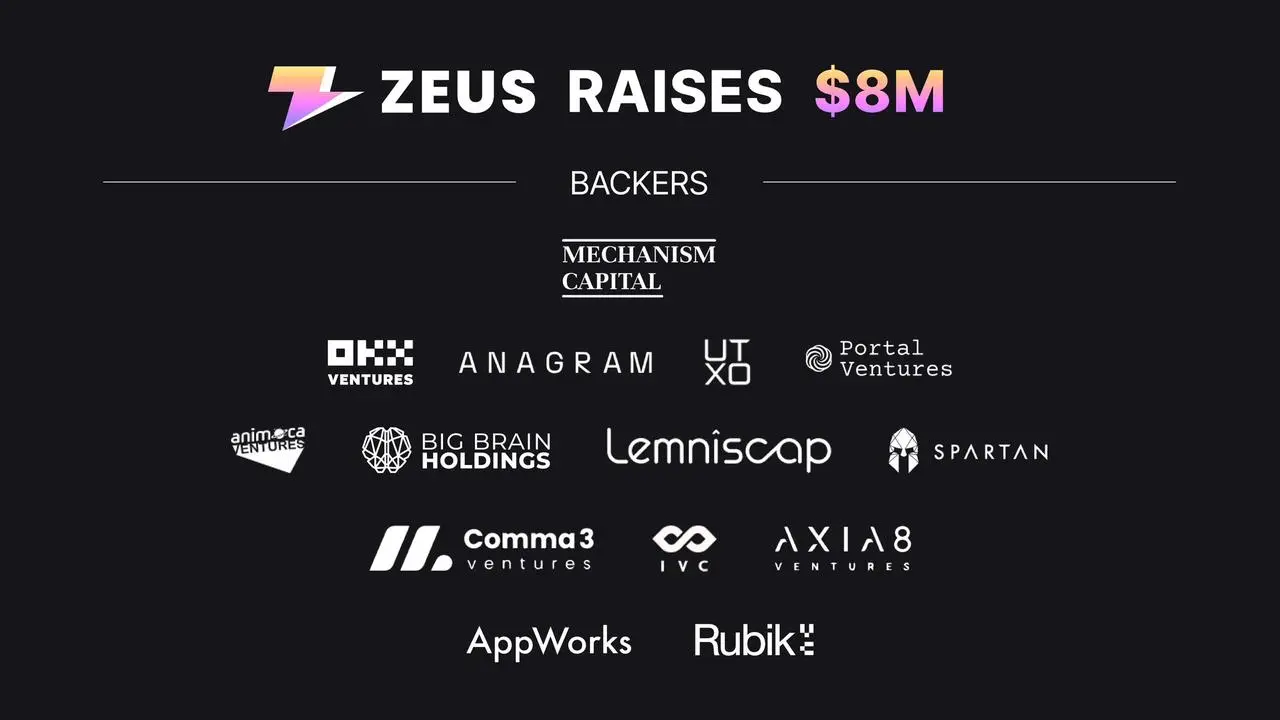
Zeus Network has attracted widespread attention within the industry due to its innovative technological architecture. Not only did its launch on April 4th through the Jupiter LFG Launchpad signify an important step for Bitcoin links within the Solana ecosystem, but it also received support from heavyweight investors, including Solana co-founder Anatoly Yakovenko and Stacks founder Muneeb Ali. Additionally, Zeus recently completed an $8 million financing round, attracting lead investment from Mechanism Capital, along with participation from several well-known investment institutions such as OKX Ventures and Animoca Ventures.
As the bridge built by Zeus Network between Solana and Bitcoin gradually improves, its market positioning has expanded from a single communication layer to a comprehensive DeFi solution provider. This move not only enhances the functionality of the network but also provides users with safer and more convenient services, heralding a future trend of multi-chain collaboration.
Zeus Network: The Connector of Bitcoin and Solana Networks, Driving Cross-Chain Value Transfer
With the continuous advancement of blockchain technology, market demand and technological innovation have jointly propelled its rapid development. To enhance the transaction throughput and scalability of the Bitcoin network while reducing transaction fees, Bitcoin Layer 2 solutions have emerged. At the same time, modular blockchains have become increasingly popular due to their excellent scalability, flexibility, and ease of project construction, effectively optimizing resource allocation by distributing the consensus layer, execution layer, data availability layer, and settlement layer across different chains.
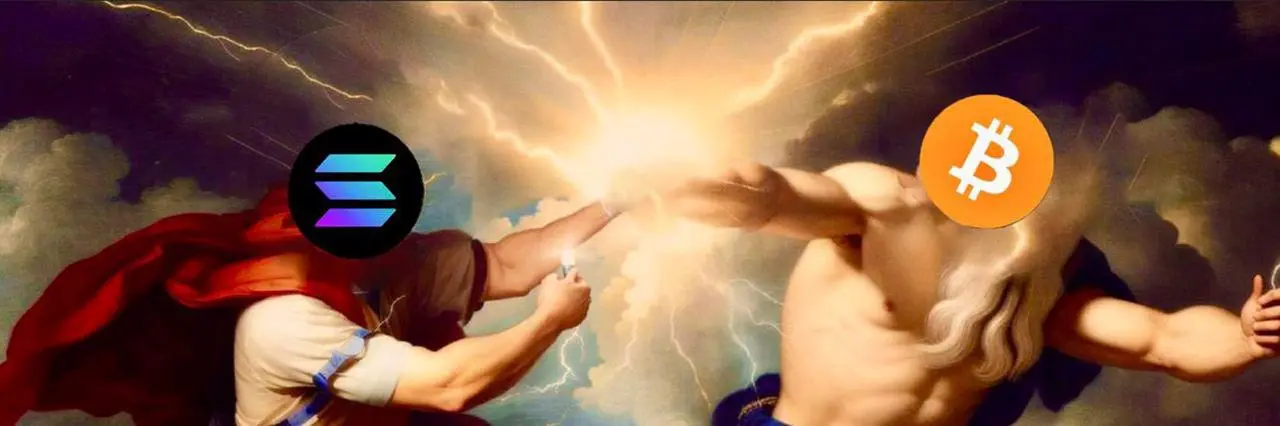
In this context, Zeus Network, as a new type of blockchain communication layer, connects the two ecosystems of Solana and Bitcoin, showcasing a new vision of interoperability. Zeus Network not only leverages Solana's high-speed transaction processing capabilities and low-cost advantages but also combines Bitcoin's security and high liquidity, striving to create unprecedented synergies between the two platforms.
Zeus Network mainly consists of Zeus nodes and the Solana Virtual Machine (SVM). Zeus nodes support peer-to-peer communication, signing, broadcasting, and validator registration, and can operate both on-chain and off-chain, improving the decentralization and operational efficiency of the network. Furthermore, any user can become a validator of the network by running their own node and retaining their private keys, a process that does not require permission from a centralized entity, ensuring the system's openness and inclusivity.
In Zeus Network, the validation process adopts a decentralized and permissionless model, allowing anyone to become a validator by simply staking SOL or LSD-SOL, the latter of which can also participate in PoS staking to earn rewards. The SVM plays a key role in this process, providing necessary peer-to-peer communication services and handling state-related program elements.
Zeus consensus is the core of the network, ensuring the security and efficiency of transactions through an advanced threshold signature mechanism (including Bitcoin's Taproot and Schnorr signatures, as well as Solana's Ed25519 signature algorithm). These transactions are first serialized and stored in a management program, from which validators can access and verify transactions without participating in direct on-chain transaction execution.
Through this mechanism, Zeus Network can improve the efficiency of transaction broadcasting without sacrificing security, and its off-chain signature aggregation further optimizes the process, making the network not just an asset transfer platform but a complex system capable of effectively protecting assets on each chain and preventing unnecessary liquidity loss.
Understanding Zeus Network's Transmission Solutions for Two Major Value Chains from a Technical Architecture Perspective
The core of Zeus Network is a crucial permissionless layer that combines Solana's fast transaction processing capabilities and scalability with Bitcoin's security, trust, and liquidity. This synergy provides developers with opportunities to build diverse applications and services, facilitating seamless connections between Solana and Bitcoin. This unique integration is expected to pave the way for a range of possibilities, from high-performance decentralized applications to efficient and secure financial services.
The architecture of Zeus Network includes two main components: Zeus nodes and the Solana Virtual Machine (SVM). Zeus nodes are key to enabling peer-to-peer communication, signing, broadcasting, and validator registration, all of which help maintain the decentralization and efficient operation of the network. The SVM enhances these processes by hosting state-related functions, including validator registration schemes and proposal management programs, which oversee adjudication activities.
This structured framework ensures the seamless integration and functionality of Zeus Network, emphasizing the peer-to-peer communication services and state-related programming elements within the SVM.
Within Zeus Network, the validation process operates in a decentralized and permissionless group model, which differs from a joint notarization system. Becoming a validator requires running a node, which is a necessary condition for maintaining private keys and signing functions. Additionally, this process involves staking SOL or LSD-SOL, with a preference for LSD, allowing stakers to contribute to Proof of Stake (PoS) consensus and two-way peg (2WP) mechanisms. Stakers also need to register in the validator registration program. The security framework relies on an over-collateralization design, addressing potential vulnerabilities through financial mitigation measures, enhancing the robustness and resilience of the validation system.
The Zeus node system consists of several complete components, including off-chain services such as peer-to-peer, broadcasting, and signing (with signature aggregation), as well as dual-function registration services that can operate both on-chain and off-chain.
To enhance the system's scalability, possible modifications include implementing alternative signature algorithms, integrating broadcasting service adapters to support various chains such as Bitcoin Layer 2, EVM, MoveVM, etc., and developing on-chain registry programs or smart contracts using various programming languages, such as Solidity and Move.
Through this multifaceted approach, adaptability and interoperability are ensured, allowing the system to evolve and integrate with different blockchain ecosystems.
In the envisioned protocol workflow, serialized Bitcoin and Solana transactions are systematically stored in the proposal management program. Validators then retrieve these proposed transactions from the Solana blockchain.
The consensus mechanism for these proposed transactions involves a unique process where validators focus solely on verification, separate from on-chain transaction proposals. Validators implement a threshold signature mechanism, with Bitcoin's main root utilizing Schnorr signatures. This concept seamlessly extends to Solana's Ed25519 signature algorithm. Off-chain signature aggregation provides efficiency improvements over on-chain voting, facilitating the smooth broadcasting of signed transactions to Solana. Additional layers of protection, including fraud proofs and assumptions of honest validator behavior, reinforce the consensus process. After consensus is reached, a challenge period is introduced, which will be further elaborated in the subsequent security section. This network infrastructure is designed to adapt to different applications and can serve as an illustrative example of its potential applicability, especially in bridge-like environments.
Security Risks Cannot Be Ignored; While Zeus Network Has Unlimited Potential, Its Future Journey Remains Long
In today's increasingly mature blockchain technology landscape, breaking the inter-chain island effect and achieving true interoperability has become a goal pursued by the industry. Zeus Network, with its unique architecture and powerful cross-chain communication capabilities, demonstrates significant potential and advantages in this field. By integrating Solana's high-speed processing capabilities with Bitcoin's stable security, Zeus Network not only optimizes transaction efficiency but also greatly enhances connectivity between different blockchains.
The core of Zeus Network—a permissionless communication layer—allows developers to interact natively between Solana and Bitcoin without the need for intermediary bridging or wrapping assets. The realization of this technology effectively addresses the current issues of blockchain fragmentation and insufficient interoperability, providing a strong foundation for building full-chain dApps and services.

However, like all innovative technologies, Zeus Network may face security risks such as external attacks while expanding new interoperability boundaries, which need to be addressed through continuous technological iteration and improvement. Currently, although Zeus Network shows leading potential in the field of cross-chain communication, other solutions in the blockchain space, such as LayerZero and Axelar, are also continuously advancing and developing.
Looking to the future, we anticipate that Zeus Network and other cross-chain technologies like LayerZero, Axelar, and Chainlink CCIP will bring ongoing innovation and progress, jointly promoting the comprehensive development and application of blockchain technology. Through the collaborative efforts of these technologies, we can foresee the arrival of a more open, connected, and efficient blockchain ecosystem.
 Risk warning Risk warning



Popular articles