BIT CCO Cynthia Wu deconstructs the pain points of the digital asset industry: being able to buy is just the starting point, being able to hold properly is the real competitive advantage
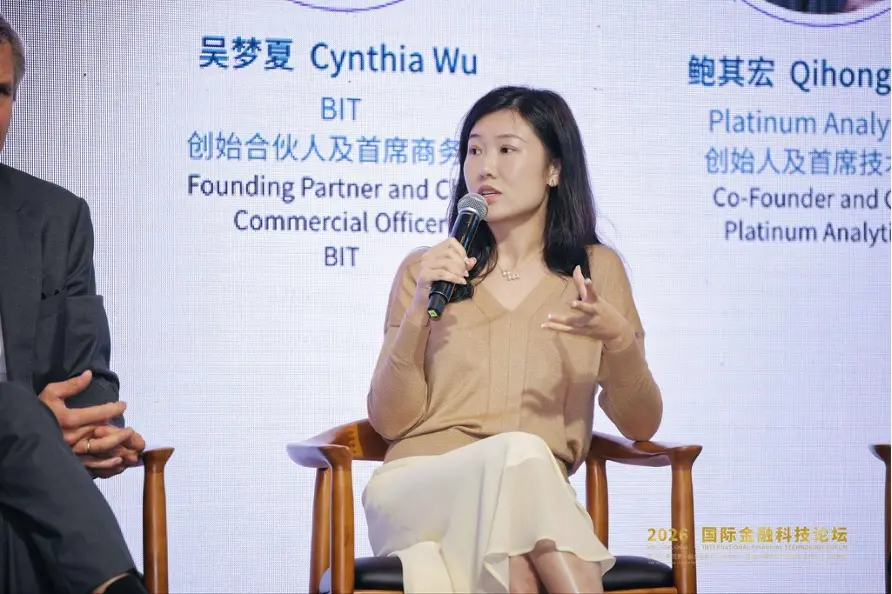
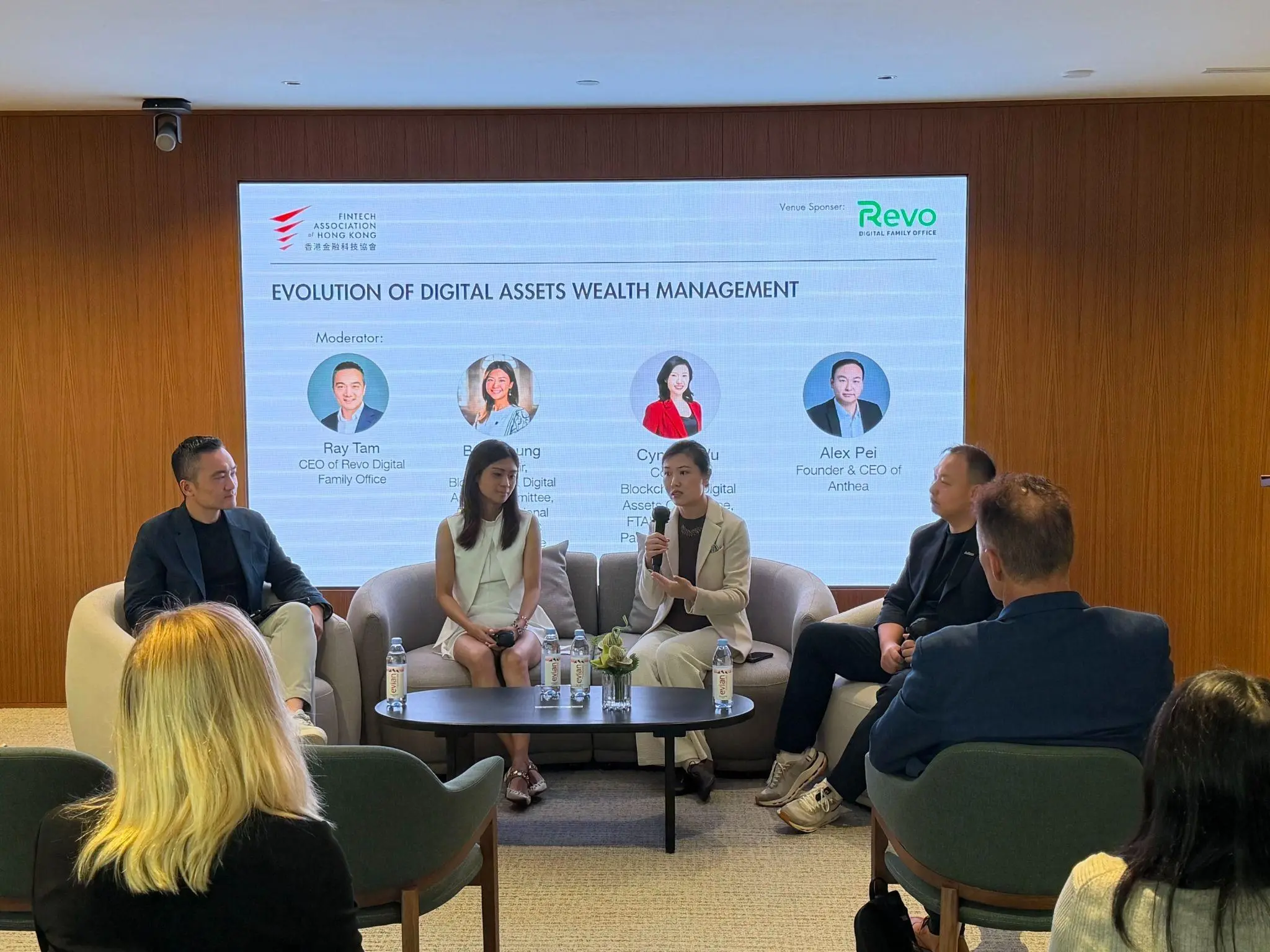
On November 3, 2026, the Hong Kong Financial Technology Association (FTAHK) held a roundtable event in Central Hong Kong at Raffles Family Office themed "The Evolution of Digital Assets Wealth Management." Cynthia Wu, founding partner and Chief Commercial Officer (CCO) of BIT, and co-chair of the FTAHK Blockchain and Digital Assets Committee, was invited to attend and exchanged ideas with Belle Leung, head of Xapo Bank for the Asia-Pacific region, and Alex Pei, founder and CEO of Anthea.
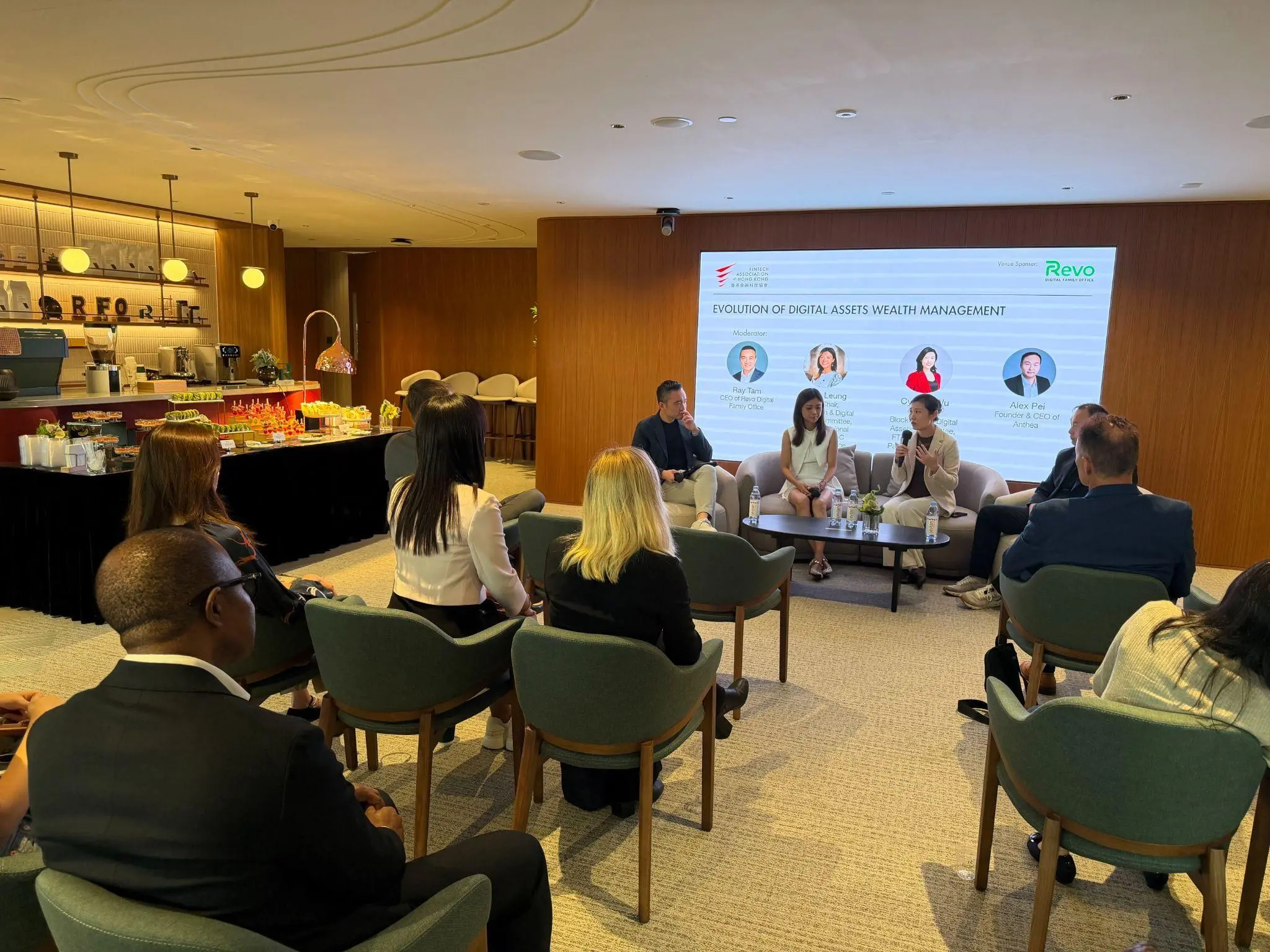
The roundtable focused on the changing needs of private wealth clients and explored how digital asset custody, insurance, yield products, structured products, and regulatory developments collectively shape the future of digital asset wealth management. After experiencing a complete market cycle, family clients' focus on digital assets has shifted from price to operational security; the issue is not the yield and structure itself, but whether the risks are clearly priced and effectively isolated.
1. Family Clients' Demands: From "Can I Buy?" to "Can I Hold Properly?"
Discussing the changes in private wealth client demands, Cynthia recalled the industry situation three years ago: at that time, the market had just experienced the collapse of FTX, trust had plummeted, and most families were not asking "What should I buy?" but rather "Is my money safe where it is placed?"; for investors looking to allocate digital assets, there were still no regulated investment tools available, and the U.S. spot Bitcoin ETF would not have a chance for approval for several months.
She pointed out that today's investors are more mature, and their questions are more specific and professional: Where exactly is the asset stored? Is it isolated? Which regulatory body oversees the institutions involved? Can it appear in the same report as other assets in the portfolio? Clients are also increasingly inclined to choose familiar forms of investment tools, which is one of the reasons BIT recently launched a spot Bitcoin ETF (BBIT) in Switzerland, as some families wish to hold Bitcoin in a manner familiar to auditors, trustees, and investment committees.
"There will definitely be new problems in the industry, but the most important concern remains unchanged: families are still asking 'Is my money safe?' but they are asking it more precisely." Cynthia stated that clients' concerns have shifted more from price to operational aspects: the memory of 2022 is still fresh, and counterparty risk remains a primary concern; wealth inheritance is another issue—"If I were to have an accident, how will these assets be handled?" The demand has shifted from "Can I buy?" to "Can I hold properly?"
2. Identifying Yield: The Issue Is Not the Yield Itself, but the Unclear Source of the Yield
Regarding the phenomenon where "yield" has become a pejorative term in the eyes of many families after the previous cycle of lending institutions collapsing, Cynthia believes: "The yield itself has never been the problem; the unclear source of the yield is."
She explained that true yield is essentially the pricing of time and risk: investors allocate assets over a period or take on a specific risk exposure and receive compensation for it. Therefore, risk is not something to be eliminated but a component of yield; the key is whether the risk is isolated, quantified, and whether investors are clear about what risks they are taking, whether there are limits to those risks, and whether they are isolated from the institution's other businesses.
She quoted Warren Buffett's famous saying, "Risk comes from not knowing what you're doing," pointing out that the crux of the previous cycle lies here: the issue is not the yield, but that the risks were neither reasonably priced nor effectively controlled. In this regard, she suggests families ask the same question to any institution, "and we also welcome everyone to ask us first": What risks correspond to the returns I receive? What are the boundaries of these risks?
3. Structured Products: Structures Can Redistribute Risk, but Cannot Eliminate All Risks
In the face of increasingly structured products such as tokenized funds, RWA, and principal-protected notes, Cynthia believes that determining whether they make digital assets safer first requires clarifying the meaning of "safety."
She pointed out that no structure can solve the problems inherent in the assets themselves: whether it is protocol-level risks such as software vulnerabilities, governance failures, or cyberattacks, or market risks such as price volatility, liquidity exhaustion, or overnight gaps, none can be eliminated through product structure. Tokenized products operate on smart contracts, which can add code risks beyond the assets themselves.
What structure can change is who bears the risk. She cited the Swiss SIX Exchange as an example: shortly after the 2009 Lehman crisis, SIX allowed structured products to be issued in the form of collateral guarantees, where issuers pledge collateral to the exchange and revalue it daily; if the issuer defaults, the exchange will dispose of the collateral to pay investors, significantly reducing the risk of issuer default. However, more often, the risk is merely transferred: while unsecured principal-protected notes reduce downside risk, the protection comes only from the issuer's promise, effectively increasing the investor's credit risk with the issuer; and the already listed Bitcoin buffered and yield ETFs in the U.S. illustrate that whether purchasing protection or obtaining additional yield, the cost is giving up some upside potential.
"The most concerning signal is when a product promises to protect you from risks that no structure can eliminate. If the network itself fails, or if the market drops 30% overnight, no product structure can change that. Only when the market is still operating can protection truly take effect."
4. AI Agent Accountability: You Can Delegate Trading, but Cannot Delegate Responsibility
Regarding the question of who should be responsible for erroneous trades managed by AI agents in the future, Cynthia stated that this issue sounds very cutting-edge, but the underlying principle has long existed: accountability.
She believes that responsibility cannot be borne by models. Today's models are merely software, lacking balance sheets, licenses, and obligations of care. "Whether AGI has arrived is still debatable; I personally remain cautious. But in any case, current laws, regulations, and social infrastructure do not regard AI as an independent entity like individuals or companies." Therefore, responsibility should lie with the party deploying the agent and defining its authority: if the agent is provided by a platform, the platform must not only enforce limits but also ensure that the agent and its authorizations are genuinely suitable for that family; if introduced by the family itself, more responsibility returns to the family, with the platform responsible for enforcing limits and maintaining complete audit records.
She also pointed out that the real difficulty lies in attribution. No matter how intelligent the agent is, it cannot be infallible; good decisions do not always lead to good outcomes. "We do not fire an asset manager for a loss in a single quarter; instead, we evaluate their decision-making process over the long term, and the same standards should apply to AI agents. Intelligence increases the odds, while boundaries determine the cost of a mistake. You can delegate trading, but you cannot delegate responsibility."
5. The Next Three Years: The First Regulated AI Agent Fund Is Expected to Appear
When asked about the most important developments in digital asset wealth management in the next three years, Cynthia provided a specific judgment: "I believe that within three years, we will see the first regulated digital asset fund managed by an AI agent, fully operating on the blockchain, and the compensation for these agents will also be paid in Bitcoin."
About BIT
BIT (formerly Matrixport) was established in 2019 and is a leading global digital asset financial services group. The group is headquartered in Singapore and has offices in seven countries and regions worldwide, connecting traditional finance and digital asset markets through a robust governance system, technological capabilities, and compliant operations.
BIT provides comprehensive digital asset services to global institutions and professional investors, covering trading, custody, asset management, liquidity, and financing services, and supports the on-chain introduction and application of real-world assets (RWA). Its entities hold corresponding licenses and are regulated locally in Singapore, Hong Kong, Switzerland, the UK, the US, and Bhutan, including a Major Payment Institution license (MPI) in Singapore and a collective asset management license issued by FINMA in Switzerland.
Currently, the group manages assets exceeding $6 billion, with a monthly trading volume exceeding $7 billion, having paid clients a total interest exceeding $2 billion, and is valued at over $1 billion, having been selected for the "2024 Hurun Global Unicorn List" and the "2025 Singapore Fintech Unicorn List."
Disclaimer
This content is for reference only and does not constitute investment advice, an investment offer, or an invitation to purchase any financial products, nor does it constitute a public offering or promotion of the products mentioned in any jurisdiction. The information contained herein should not be construed as a recommendation for any specific investment strategy or product. Digital asset prices are highly volatile, and investments involve risks; past performance does not represent future returns.
 Risk warning Risk warning