BTC $80,066.30 -1.03%
ETH $2,322.33 -0.99%
BNB $739.23 -2.30%
XRP $1.29 -2.13%
SOL $100.12 -1.81%
TRX $0.3311 -0.05%
DOGE $0.0784 -1.31%
ADA $0.2001 -2.19%
BCH $278.58 -5.90%
LINK $11.56 -0.74%
HYPE $88.15 +8.81%
AAVE $132.43 -0.63%
SUI $0.9175 -1.18%
XLM $0.1694 -0.44%
ZEC $1,270.39 -1.95%
AAPL $348.57 +0.58%
AMZN $250.29 -1.35%
GOOGL $288.79 -11.14%
MSFT $536.71 +1.06%
META $618.47 -0.65%
NVDA $214.47 -2.53%
TSLA $403.28 -1.79%
SNDK $1,364.53 +0.37%
INTC $92.49 -3.03%
SPCX $143.22 -4.05%
MU $955.88 -0.68%
AMD $565.85 -0.47%

exemption

All
Article
Flash

The SEC's conditions for tokenized securities exemptions have sparked disagreements, with the industry calling for clarification on the "public and permissionless" standard

The innovation exemption for tokenized securities trading venues launched by the U.S. SEC in September is sparking controversy within the industry regarding blockchain qualification standards. This exemption allows eligible companies to trade tokenized U.S. stocks without registering as traditional securities exchanges, but requires their smart contracts to be auditable, public, and deployed on a public, permissionless blockchain.Currently, three companies have submitted operational intent notices to the SEC. TSV LLC plans to use the privacy-focused Canton Network; OKXICE and Kephas Corp. intend to utilize their respective enterprise group's developed Ethereum Layer 2 networks.In a letter submitted on Thursday, the Solana Policy Institute requested the SEC to tighten the definition of "permissionless," focusing on who actually controls the blockchain, including who can validate or block transactions and modify network rules. Hedera advocates for an expansion of the exemption's scope, arguing that only authorized entities should participate in validation, which should not disqualify their network.The Securities Industry and Financial Markets Association (SIFMA) also called for clarification on which blockchains are eligible and questioned whether stock tokenization should require explicit prior consent from the issuing company, rather than requiring companies to opt out. The financial regulatory advocacy group Better Markets urged the SEC to withdraw the exemption and instead engage in formal rulemaking.An SEC official stated that companies can begin operations 30 days after submitting a notice, provided they meet the exemption criteria, without waiting for SEC approval, which does not imply SEC endorsement of their chosen blockchain. The official noted that the regulatory agency intends to maintain a broad definition to allow space for companies to experiment; further frequently asked questions may be released, but substantive adjustments would require action from the commission.Meanwhile, more companies are opposing the tokenization of their stocks. As of Friday, among the 62 companies initially listed by OKXICE, 22 have raised objections, exceeding one-third. New objectors include Wells Fargo, Arm, and Intuit.

Franklin Templeton manages assets of 1.79 trillion USD, exploring regulatory exemptions for tokenized fund trading

Global investment management company Franklin Templeton is exploring regulatory exemptions that would allow tokenized money market funds and ETFs to trade on blockchain trading venues. On October 9, the company met with staff from the U.S. Securities and Exchange Commission (SEC) cryptocurrency working group to discuss legal issues related to pricing, fees, and asset pools.The agenda included whether investors could exchange blockchain fund shares for tokenized national market system stocks through blockchain trading venues, and whether liquidity providers could charge service fees. Related issues involve pricing rules under the Investment Company Act and whether exemptions are needed. Regarding tokenized ETFs, Franklin Templeton also discussed forming trading pairs with tokenized stocks, approved payment stablecoins, or tokenized money market funds, as well as whether liquidity pools need to obtain investment company regulatory exemptions.As of September 30, the preliminary disclosed assets under management amounted to $1.79 trillion. Franklin Templeton's blockchain fund record-keeping business began with the launch of the Franklin Onchain U.S. Government Money Fund in 2021. The BENJI token represents shares of this fund, and transferring the token will simultaneously transfer the corresponding shares, with related transactions recorded and tracked by the Benji Technology Platform.

U.S. SEC Commissioner: Innovation exemption tailored for on-chain stock trading, clearly delineating boundaries with DeFi

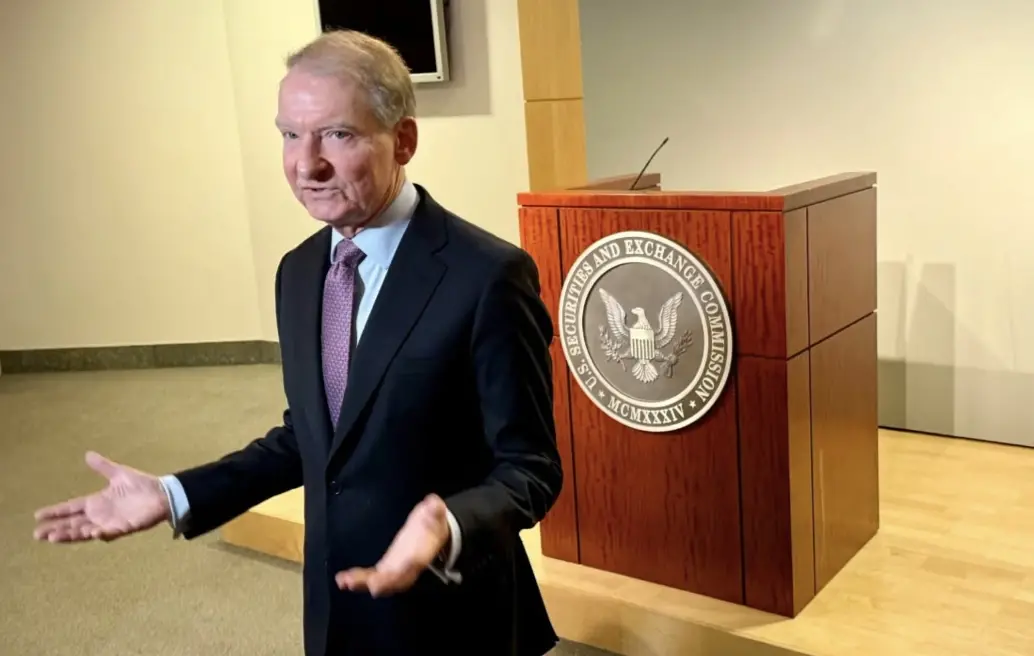
Commissioner Hester M. Peirce of the U.S. Securities and Exchange Commission (SEC) made a statement regarding the committee's approval of the "innovation exemption."This exemption is a temporary, conditional arrangement that allows "tokenized securities venues" (TSV) to trade NMS "National Market System" stocks on-chain: TSV provides automated market maker liquidity pools and sets participant admission standards, and is exempt from the definition of "exchange" under the Securities Exchange Act; specific suppliers providing liquidity to TSV are exempt from the definition of "dealer." If issuers do not wish for their stocks to trade on TSV, they can choose to opt-out. The exemption is aimed at U.S. entities, and both existing institutions and new entrants can participate.Peirce emphasized that the committee does not presuppose that parties relying on this exemption necessarily fall under the definitions of "exchange" or "dealer," but rather hopes to first observe who is using it and how it is being used before making regulatory judgments.Peirce clearly delineated the boundaries of this order: it is not about decentralized finance. Systems that are driven by automated software and are truly decentralized do not raise fundamental concerns of securities regulation, namely that intermediaries trusted by investors may be foolish, careless, or compromised; investors using permissionless smart contracts for peer-to-peer transactions do not fundamentally require an exemption. TSV is merely one model of on-chain securities trading, and the committee is open to other models, as on-chain trading models that can comply with existing Securities Exchange Act requirements may not require an exemption at all.

app_icon
ChainCatcher Building the Web3 world with innovations.