BTC $77,328.52 +0.15%
ETH $2,514.15 -0.37%
BNB $722.04 -0.66%
XRP $1.36 -0.39%
SOL $101.38 -0.17%
TRX $0.3413 +0.41%
DOGE $0.0843 -0.59%
ADA $0.2088 +0.53%
BCH $224.87 -0.39%
LINK $11.44 -0.66%
HYPE $78.81 -1.21%
AAVE $126.75 +0.61%
SUI $0.7208 -0.47%
XLM $0.1805 +0.22%
ZEC $1,105.33 -1.75%
AAPL $330.73 -0.71%
AMZN $254.40 -0.83%
GOOGL $338.37 -0.83%
MSFT $492.00 -0.61%
META $644.29 -0.69%
NVDA $215.64 -1.21%
TSLA $362.69 -1.25%
SNDK $1,573.70 -3.08%
INTC $99.25 -2.74%
SPCX $149.22 -0.58%
MU $939.31 -2.85%
AMD $502.56 -2.58%
BTC $77,328.52 +0.15%
ETH $2,514.15 -0.37%
BNB $722.04 -0.66%
XRP $1.36 -0.39%
SOL $101.38 -0.17%
TRX $0.3413 +0.41%
DOGE $0.0843 -0.59%
ADA $0.2088 +0.53%
BCH $224.87 -0.39%
LINK $11.44 -0.66%
HYPE $78.81 -1.21%
AAVE $126.75 +0.61%
SUI $0.7208 -0.47%
XLM $0.1805 +0.22%
ZEC $1,105.33 -1.75%
AAPL $330.73 -0.71%
AMZN $254.40 -0.83%
GOOGL $338.37 -0.83%
MSFT $492.00 -0.61%
META $644.29 -0.69%
NVDA $215.64 -1.21%
TSLA $362.69 -1.25%
SNDK $1,573.70 -3.08%
INTC $99.25 -2.74%
SPCX $149.22 -0.58%
MU $939.31 -2.85%
AMD $502.56 -2.58%

tokenization

All
Article
Flash

European Securities and Markets Authority report: Tokenized stocks may lead to liquidity fragmentation

According to Ledger Insights, the European Securities and Markets Authority (ESMA) recently published the "Trends, Risks, and Vulnerabilities Report for the First Half of 2026," in which digital assets and prediction markets occupy three chapters. Regarding crypto assets, the report warns that the increasing ties between cryptocurrencies and the traditional financial sector pose risks. Concerning tokenization, the report points out that issuing different tokenized versions of the same stock may lead to fragmented liquidity.As for prediction markets, the report believes that prediction markets have not yet seen significant development in Europe. This is because major platforms do not yet hold EU licenses, and in most cases, they need to obtain licenses. The European Securities and Markets Authority (ESMA) outlines some potential advantages of tokenization, including increased efficiency, expanded investor access, programmability, and atomic settlement. On the other hand, ESMA also questions how much these advantages are actually realized within these encapsulated structures.Since the ownership of the underlying stocks is off-chain, there is no single data source on-chain, and self-custody can only be achieved indirectly through these structures. Tokenization structures also introduce additional layers of intermediaries, leading to complexity and risk. The settlement advantages are also difficult to realize. Even if token transfers occur on-chain, the cash portion of the transaction is usually settled separately, whether through bank payments or other channels. This means that for certain transactions, the promised atomic settlement (i.e., simultaneous delivery of securities and cash) has not yet been achieved.

first_img Maharashtra, the richest state in India, plans to tokenize its electricity assets for financing

The wealthiest state in India, Maharashtra, is formulating policies to tokenize state government assets (including power transmission infrastructure), with the funds raised to be used for constructing new transmission lines and energy storage facilities. The Chief Minister's Chief Economic Advisor and CEO of the Maharashtra Transformation Institute (MITRA), Praveen Pardeshi, introduced this plan at an invitation-only event called "The Box Launch," hosted by the real estate tokenization company RealX and MST Blockchain at the Mumbai World Trade Center.Pardeshi stated that transmission lines could be partially tokenized, for example, 40% to 50%, allowing investors holding tokens to receive a portion of the revenue from Maharashtra Transco. The new funds generated from token sales could be used to build more transmission lines and solar energy storage centers. He pointed out that the state currently has a significant surplus of solar power but lacks the grid capacity to deliver it to where it is needed; distribution companies must pay high prices of 16 to 18 rupees per unit during peak hours, while the price during surplus periods on the power exchange is only 2 paise per unit.He also illustrated the practice of real estate tokenization with the example of the Mumbai Express Towers commercial building tokenized under a REIT structure, emphasizing that tokenization does not equate to privatization but rather allows more citizens to participate in the development activities of public asset creation. Additionally, the state is drafting the Maharashtra Digital and Land Token Asset Trading Act (DELTA Act), which, if passed, will make it the first state in India to legislate for blockchain-based property tokenization.

first_img India launches a pilot program for the tokenization of corporate bonds worth 620 billion USD, with digital rupees participating in the settlement

The Securities and Exchange Board of India (SEBI) launched the Demat 2 pilot this week, issuing corporate bonds in the form of digital tokens on a distributed ledger operated by regulated market institutions, and settling through the wholesale digital rupee of the Reserve Bank of India. The size of India's corporate bond market is approximately $620 billion.The state-owned power financing institution REC raised ₹50 billion (approximately $56 million) through this system, engineering and construction giant Larsen & Toubro refinanced ₹50 billion, and non-banking financial institution IIFL Finance raised ₹2.5 billion (approximately $2.8 million), totaling around ₹102.5 billion. The bonds retain fixed interest rates, maturity dates, and investor rights, but the tokenized bonds can be settled simultaneously with the digital rupees used for purchase, thereby reducing transaction risk.Subsequent phases will introduce smart contracts to handle corporate actions such as interest payments and redemptions, and there are plans to open secondary market trading, ultimately allowing retail investors to participate. India maintains a cautious attitude towards private cryptocurrencies, and this pilot is an attempt to introduce tokenization into its controlled financial system.

first_img Institutions like Nasdaq have written to the European Union, requesting the cancellation or increase of the tokenization cap

According to CoinDesk, European financial and cryptocurrency industry organizations have written to the EU Council and the European Parliament, urging lawmakers to remove the cap on the scale of tokenized securities platforms or set it at least at €1.5 trillion (approximately $1.74 trillion), arguing that the €100 billion cap proposed by the European Commission will hinder industry development. Signatories include the French Digital Asset Association Adan, Crypto Council for Innovation, the European Ethereum Institute, as well as companies like Nasdaq and Boerse Stuttgart.The EU's distributed ledger pilot regime allows operators to test the trading and settlement of tokenized stocks, bonds, and investment funds while exempting some existing financial rules. After observing "moderate" participation, the European Commission proposed to expand the pilot framework and raise the current €6 billion cap to €100 billion. Adan stated that considering the development of the global market, this increase is still insufficient, and their preferred option is to completely remove the cap or at least set it to €1.5 trillion, which is 15 times the proposed cap.The joint letter pointed out that some existing European projects have reached a scale of €350 billion and plan to grow further, but did not disclose specific projects or calculation methods. The letter also emphasized that the relevant threshold targets the market capitalization of admitted securities rather than trading volume and opposed giving central securities depositories a significantly higher differentiated cap than other blockchain market operators, arguing that this would be detrimental to emerging service providers.The alliance also compared the restrictive measures in Europe with an unnamed mainstream settlement platform in the United States, which can tokenize assets like stocks without a trading volume cap; if the cap is retained, the alliance hopes the Commission can flexibly raise it as the market grows, without presetting a maximum limit.

first_img Arya.ag, an agricultural loan company in India, is testing tokenized grain warehouse receipts on Avalanche

Arya.ag, an agricultural warehousing and loan company in India, is testing a system for tokenizing warehouse receipts for stored grains on the Avalanche dedicated Layer 1 blockchain. Arya.ag is collaborating with Finternet to connect grain storage, warehouse receipts, collateral commitments, and loan statuses through this network. Devika Mittal, head of Ava Labs India, stated that the testing is underway, with each tokenized warehouse receipt representing ownership of the stored goods.Sanmesh Kalyanpur, a director at Finternet Labs, mentioned that Arya.ag's samplers collect information on stored grains and input it into the company portal. Finternet will integrate farmers, commodities, warehouses, and insurance information into a "composite token" for banks to assess collateral risks. Arya.ag stores approximately $2 billion worth of agricultural products in its warehouse network and supports loans of about 120 billion Indian Rupees (approximately $1.26 billion) annually, with its loan department, Arya Dhan, disbursing around $230 million in loans each year.The concept of Finternet originated from a 2024 paper by the Bank for International Settlements (BIS), co-authored by Infosys co-founder Nandan Nilekani and then-BIS General Manager Agustín Carstens, proposing the establishment of an interconnected unified ledger for tokenized assets. In 2024, the Indian government launched a 10 billion Rupee credit guarantee scheme to encourage financing against electronic transferable warehouse receipts. The two companies have not disclosed the expected launch date or initial deployment scale.

first_img Cosmos announced the launch of the Partner Network to assist financial institutions in tokenization

According to PR Newswire, Cosmos announced the launch of the Cosmos Partner Network, uniting multiple industry service providers to assist global financial institutions in advancing digital asset-related businesses through the Cosmos Tokenization Suite and digital ledger solutions.The suite offers capabilities such as 24/7 payment settlement and fund management for banks and credit unions, and supports scenarios like programmable custody, programmable trade finance, and agency commerce. Cosmos provides tokenization and ledger platforms, while partners offer integrated services such as KYC/KYB, custody, and compliance monitoring.Cosmos Co-CEO Maghnus Mareneck stated that financial institutions understand the potential of tokenization but struggle to transition from pilot projects to high-quality real customer experiences. This network brings together relevant professional institutions to reduce the complexity of individually connecting with vendors.The first batch of the network includes 17 participants, including Anseta, Balance, BCW Group, BitGo, Blockchain.com, Blockdaemon, Coinbax, DFNS, Galaxy Digital, Hypernative, InfStones, OpenZeppelin, Peersyst Technology, Silence Laboratories, Ubyx, Utila, and Zeeve.Partners will have access to connection opportunities across Cosmos public and private networks and can participate in use cases such as tokenized deposits that Cosmos is promoting. Cosmos plans to continue expanding the network.

The Rollup founder Andy: The U.S. SEC may introduce a tokenized securities innovation exemption

The Rollup founder Andy posted that market rumors suggest the U.S. Securities and Exchange Commission (SEC) is preparing to launch the largest tokenization innovation exemption policy to date, which may allow tokenized securities to be traded solely through registered transfer agents, without the need for broker-dealer licenses, and without adhering to traditional trading platform or ATS-related rules. It is also reported that this could cover U.S. retail investors and overseas investors.Andy stated that if the above news is true, its potential impact would be significant. Tokenized funds could be issued and traded directly in the form of on-chain tokens, with transfer agents maintaining legal ownership records on-chain, while the underlying assets held by the fund, such as stocks and bonds, could also be further tokenized, thus forming an on-chain trading system of "fund tokens + underlying asset tokens."Andy later mentioned that a large fund has already received the SEC's "green light," but this has not yet been officially confirmed. He speculated that ARK, Fidelity, or BlackRock could be potential participants. If the policy is ultimately implemented, U.S. asset management firms may accelerate the issuance of native equity tokens to compete for around-the-clock liquidity and on-chain distribution channels, rather than waiting for third parties to mirror tokenize traditional securities. He further linked this potential policy change to the recent push by the Trump administration for regulatory openness in the crypto market, as well as the CFTC's efforts to bring perpetual contracts to the U.S. market, believing that the U.S. regulatory environment may be gradually opening the policy floodgates for on-chain finance.

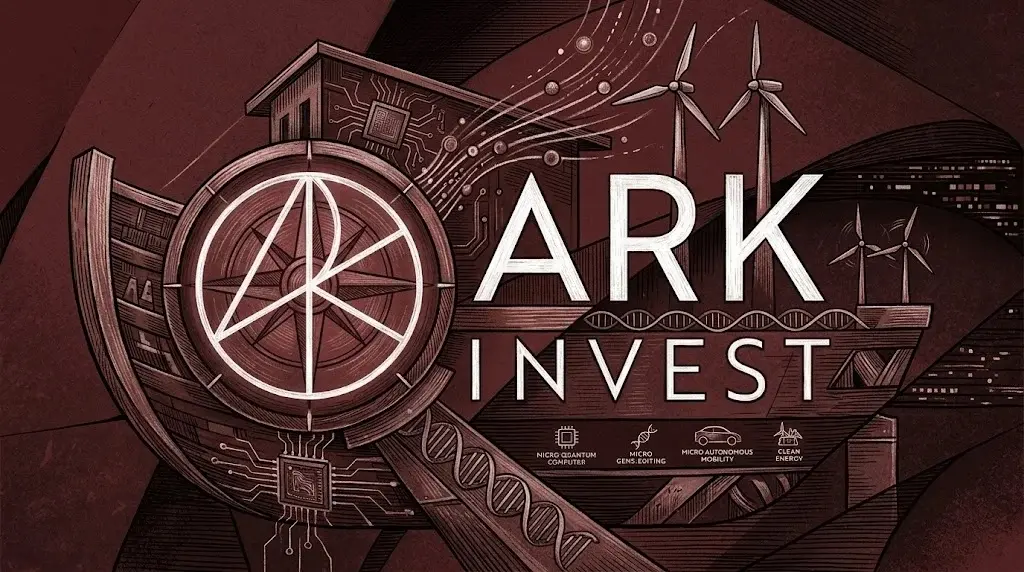
first_img ARK has received approval from the U.S. SEC for the tokenization of venture capital fund share classes

ARK Investment Management has submitted a waiver application to the U.S. SEC, seeking to issue tokenized share classes for its venture capital fund, ARK Venture Fund. The SEC issued a related notice on August 24 and set September 18 as the deadline for hearing requests. The fund is a continuously offered closed-end interval fund, with total assets of $562 million as of January 31.The application proposes to establish two categories: the exchange category will be listed on national securities exchanges, while the tokenized category will record ownership through distributed ledger technology, allowing for peer-to-peer transfers between registered alternative trading systems or whitelisted wallets. Tokenized shares will be issued at net asset value, exempt from sales fees, distributed by registered brokers or fund transfer agents, and will bear the costs of trading fees and other expenses. ARK seeks relief under Sections 6(c), 18, and 17(d) of the Investment Company Act and Rules 23c-3 and 17d-1, with Dechert serving as legal counsel.The application does not specify a tokenization service provider or blockchain, only listing the categories of "tokenization agent" and "fund transfer agent" fees. Currently, BNY Mellon serves as the fund transfer agent, manager, and custodian. The ARK Venture Fund holds equity in Securitize and $10 million in convertible notes; Securitize is the transfer agent for the BlackRock BUIDL Fund. The SEC has not yet formally approved the industry's anticipated tokenization "innovation waiver" framework, and relevant rules are still being advanced.

Tom Lee: Asset tokenization and Agentic AI may trigger a new round of ETH price increase

According to PRNewswire, Tom Lee, Chairman of the Bitcoin treasury company Bitmine, stated that during historical cryptocurrency bull market cycles, the ETH/BTC ratio typically rises as Ethereum's usage increases compared to Bitcoin, such as during the NFT boom of 2020-2021 and the stablecoins of 2025, both of which have been significant catalysts for the growth of Ethereum applications. In the next cycle, Wall Street's tokenization of assets and deployment on the blockchain, along with the use of Agentic AI on the blockchain, may further drive the ETH/BTC ratio higher.Since the third quarter of 2026, ETH has been the best-performing macro asset, outperforming the S&P 500 index by 5430 basis points as of last Friday; the three best-performing asset classes since June 30 have been ETH, BTC, and SOL, with cryptocurrency assets showing significant outperformance compared to other macro assets so far in the third quarter, which is expected to further attract institutions to increase their allocation to cryptocurrency assets.Tom Lee added that as we enter the last few months of 2026, the crypto market faces several positive catalysts, including the anticipated vote on the CLARITY Act in mid-September, South Korean investors re-entering the crypto market and shifting from AI stocks to cryptocurrencies, and what he believes will be a bottoming out of the "four-year cycle" in the coming weeks. These factors may pave the way for a large influx of institutional funds in the last few months of 2026.

first_img AMC CEO criticizes Robinhood stock tokens, stating the company has no connection

AMC Theatres CEO Adam Aron criticized the AMC stock token launched by Robinhood on the X platform on Thursday, stating that AMC has no association with this product and does not endorse it. Aron indicated that Robinhood is clearly pushing a plan involving the "tokenization of real-world assets related to AMC (including stock tokens)" and called this practice "despicable" and "outrageous." AMC will request an investigation into this matter by external securities legal counsel.Robinhood's stock tokens are derivatives that provide holders with economic exposure to U.S. stocks but do not confer ownership of the underlying stocks. Other tokenization models include custodians holding traditional stocks and issuing tokens as endorsements, as well as issuers authorizing the direct on-chain registration of stocks. This conflict comes at a time when tokenized stocks are attracting the attention of crypto exchanges, brokerages, and Wall Street institutions, as blockchain tracks enable round-the-clock trading, faster settlements, and broader distribution.Robinhood has made tokenization a core part of its crypto expansion, launching tokens last year that track hundreds of U.S. stocks and ETFs, and is building its own blockchain to support tokenized assets. Previously, OpenAI also publicly denied the tokens related to it launched by Robinhood, stating that they do not represent OpenAI equity and that it has not collaborated with or endorsed Robinhood. AMC's opposition brings this controversy to the level of publicly traded companies.

first_img Bitget is in talks with Wall Street giants like BlackRock for distribution cooperation in Asia

According to CoinDesk, Bitget CEO Gracy Chen told CoinDesk that Bitget is in talks with several large global financial institutions, including BlackRock, to help expand the distribution of digital asset products in Asia. Gracy Chen cited BlackRock, the world's largest asset management company, as an example, stating that it hopes to expand the distribution of tokenized ETFs in Asia and mentioned, "We maintain very close communication with BlackRock regarding distribution in the Asian market."A spokesperson for BlackRock responded that the company's cryptocurrency exchange-traded products (ETPs) have been launched in Asia and confirmed that it regularly collaborates with virtual asset service providers on different projects, but did not comment on specific expansion plans in the Asian market. According to an OECD report, as of June 2025, the trading volume of blockchain cryptocurrency assets in Asia is expected to grow by 69% year-on-year, the highest growth rate among all global regions.BlackRock manages assets totaling $11.6 trillion. At the 2026 Hong Kong Consensus conference, Nicholas Peach, head of BlackRock's Asia-Pacific iShares division, stated that Asian household wealth is approximately $108 trillion, and even if only 1% is allocated to cryptocurrency assets, it could lead to nearly $2 trillion in inflows. Bitget has 125 million registered users globally, with about half located in East Asia and Southeast Asia. Company data from Q1 2026 shows that 52% of users hold both cryptocurrencies and traditional stocks.
app_icon
ChainCatcher Building the Web3 world with innovations.