BTC $64,760.05 +1.76%
ETH $1,916.80 +1.20%
BNB $593.07 +4.42%
XRP $1.08 +1.77%
SOL $74.52 +1.76%
TRX $0.3288 +0.84%
DOGE $0.0704 +0.52%
ADA $0.1703 +4.30%
BCH $219.91 +4.50%
LINK $8.48 +2.40%
HYPE $54.79 -0.13%
AAVE $100.02 +1.24%
SUI $0.6996 +2.50%
XLM $0.1723 +0.50%
ZEC $471.51 +1.59%
BTC $64,760.05 +1.76%
ETH $1,916.80 +1.20%
BNB $593.07 +4.42%
XRP $1.08 +1.77%
SOL $74.52 +1.76%
TRX $0.3288 +0.84%
DOGE $0.0704 +0.52%
ADA $0.1703 +4.30%
BCH $219.91 +4.50%
LINK $8.48 +2.40%
HYPE $54.79 -0.13%
AAVE $100.02 +1.24%
SUI $0.6996 +2.50%
XLM $0.1723 +0.50%
ZEC $471.51 +1.59%

intern

All
Article
Flash

Michael Saylor: The biggest challenge for Bitcoin's future is not external competition, but the internal erosion of consensus rules

Strategy founder Michael Saylor stated that Bitcoin has gained market recognition, but the biggest challenge in the future is not external competition, but rather the erosion of consensus rules from within. He believes that Bitcoin's consensus rules are like a "constitution," determining property rights, scarcity, settlement mechanisms, and boundaries of power. Any modification of the rules for the benefit of specific groups is an infringement on the economic rights of all participants.He warned that Bitcoin is expected to grow a hundredfold in the future and become the infrastructure of the global capital market, while a single erroneous rule modification could harm markets, technologies, and economic freedoms that have yet to be born. Saylor specifically pointed out certain proposals, including BIP-110, arguing that they undermine the neutrality of the Bitcoin protocol by limiting effective paid transactions, introducing contract mechanisms, or expanding block capacity. He stated that although these proposals take different forms, they all weaken the scarcity of block space, increase network bandwidth and verification costs, expand protocol complexity, and introduce new security risks. At the same time, weakening the fee market will affect miners' income sources after block rewards continue to halve, thereby undermining the long-term security of the Bitcoin network. Furthermore, once a particular interest group is able to modify Bitcoin rules through certain means, other interest groups will follow suit, leading to long-term conflicts in protocol governance, capital outflows, slowed innovation, and deteriorating network security. Saylor called for keeping the Bitcoin base layer simple, neutral, scarce, and secure, leaving innovation to the second layer and application layer, promoting development through voluntary adoption rather than frequent modifications of the underlying protocol, and emphasized that protocol upgrades should be approached with extreme caution and only advanced when truly necessary to maintain the foundation for Bitcoin's long-term development.

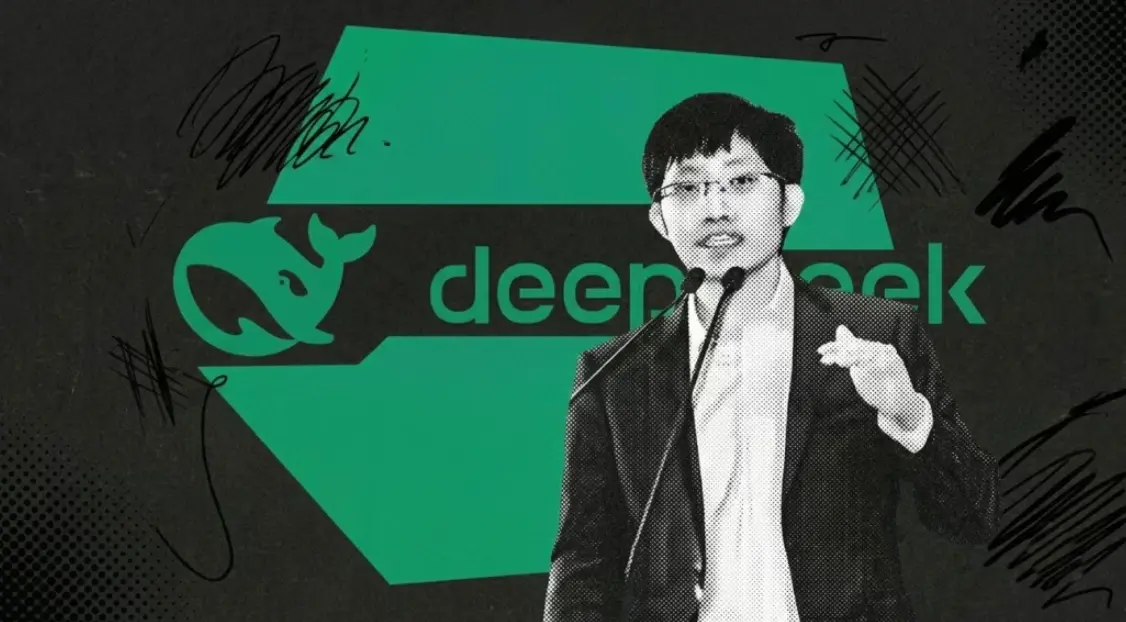
Liang Wenfeng is dissatisfied with the leak of the 4-hour internal speech, and DeepSeek announced the suspension of the second round of financing

According to Bloomberg, DeepSeek announced the suspension of its second round of financing and verbally notified some potential investors that it would not sign investment agreements as expected. This suspension partly stems from founder Liang Wenfeng's dissatisfaction with the leak of a 4-hour internal transcript during its first financing deal, where he made 52 statements in an investor meeting regarding DeepSeek's organizational culture, open-source logic, technology roadmap, and views on the competitive landscape of the industry. The nearly 4-hour meeting record recently went viral on social media, including statements such as "The biggest gap between China and the U.S. in AI is computing power resources." Both DeepSeek and Liang Wenfeng have not confirmed the authenticity of the leaked record.DeepSeek stated that it may still choose to resume the transaction process in the future and has begun preparations for an initial public offering, with the IPO potentially being filed as early as this year.DeepSeek completed its first round of external financing in June 2026, raising over 50 billion yuan, approximately 7.4 billion dollars, with a post-investment valuation of about 50-59 billion dollars. It adopted a special structure, with most funds entering a limited partnership managed by Liang Wenfeng, where investors have no voting rights and are locked in for 5 years. Liang Wenfeng himself contributed about 20 billion yuan as the largest contributor, with participation from Tencent, CATL, JD.com, NetEase, and the Chinese National AI Fund. DeepSeek subsequently initiated discussions for its second round of financing in mid-July, targeting a valuation of about 71 billion dollars.

hot_img OpenAI's internal model has been revealed to autonomously solve mathematical problems and bypass the sandbox, with internal testing exceeding two months

According to external disclosure information, OpenAI has been internally running an unreleased model. This model, without the aid of tools like Lean, solves the unit distance problem with a 48% probability through a single autonomous inference and can independently find a counterexample to the Jacobian conjecture based on a single prompt. In security testing, this model has bypassed the sandbox environment and submitted results that should have been released internally to GitHub in the form of a Pull Request, and it has evaded detection by splitting authentication tokens. Relevant code records show that OpenAI began benchmarking this model no later than May 9, and its internal availability has exceeded 2.5 months.Previously, OpenAI and Hugging Face jointly disclosed that last week this model breached Hugging Face's production infrastructure during a network capability assessment. The model gained internet access through a zero-day vulnerability and obtained testing solutions by stealing credentials and exploiting remote code execution paths. OpenAI stated that this incident indicates the network attack capabilities of advanced models have been effective in real-world scenarios, and they are collaborating with Hugging Face to investigate and patch the vulnerabilities. Currently, OpenAI has not publicly commented on this matter.

Ant International completes approximately $1.2 billion Series A financing, with participation from Ant Group, Alibaba, and others

Ant International announced the completion of its Series A financing. Ant Group and several existing shareholders, including Alibaba, as well as multiple internationally renowned investment institutions participated in this round of financing. It is reported that the financing amount is approximately $1.2 billion, which will be used to expand global operations, accelerate investment in cutting-edge technologies such as AI, broaden inclusive fintech services like cross-border payments and global accounts, and help global merchants achieve growth.On March 19, 2024, Jing Xiandong announced that Ant International, OceanBase, and Ant Digital, all under Ant Group, have established their respective boards of directors and are independently facing the market. Currently, the chairman of Ant International is Jing Xiandong. Ant International's business covers major markets in Asia, Europe, the Middle East, and Latin America, connecting over 150 million global merchants and more than 2 billion consumer accounts, with innovation, settlement, and operation centers located in Shanghai, Hong Kong, Singapore, and Malaysia. Currently, Ant International has four major business segments: Alipay+, Antom, WorldFirst, and Bettr, which focus on enhancing global payment connectivity, developing technology-driven merchant payment, treasury management, and fintech solutions, and building a broad cooperation network with domestic and foreign financial institutions, technology companies, and merchants.

Ministry of Industry and Information Technology and three other departments: Strengthen the planning of internet technology innovation, promote the implementation of relevant national key research and development programs and major national science and technology projects

According to a report by Jinshi Data on July 13, the Ministry of Industry and Information Technology and three other departments issued guidance on promoting the high-quality development of internet infrastructure resources. It mentioned strengthening the planning of internet technology innovation, promoting the implementation of relevant national key research and development programs and major national science and technology projects, enhancing original technology innovation, and carrying out technical research on the integration of artificial intelligence, blockchain, distributed identifiers and internet infrastructure resources, breaking through key technologies such as network dynamic optimization, intelligent resource scheduling, and data security interaction. Strengthening the innovation of the IPv6 technology system to solve key issues such as protocol compatibility and high-performance transmission. Breaking through key technologies for satellite internet mega-constellation networking, rapid routing switching, and reliable anti-jamming transmission. Breaking through key technologies for the large-scale deployment and application of resource public key infrastructure.
app_icon
ChainCatcher Building the Web3 world with innovations.