BTC $80,112.00 -1.62%
ETH $2,319.04 -2.13%
BNB $749.07 -0.45%
XRP $1.29 -2.96%
SOL $100.17 -2.65%
TRX $0.3310 -0.15%
DOGE $0.0782 -2.77%
ADA $0.1997 -3.81%
BCH $279.32 -8.00%
LINK $11.50 -3.01%
HYPE $79.28 -3.60%
AAVE $131.04 -3.57%
SUI $0.9148 -3.04%
XLM $0.1688 -1.82%
ZEC $1,252.68 -4.91%
AAPL $348.13 +0.48%
AMZN $252.27 -0.79%
GOOGL $292.73 -10.19%
MSFT $547.98 +3.33%
META $620.35 -0.54%
NVDA $214.18 -2.56%
TSLA $402.74 -1.71%
SNDK $1,367.15 +0.30%
INTC $91.95 -3.72%
SPCX $144.12 -3.88%
MU $953.49 -1.15%
AMD $563.20 -1.08%

nvidia

NVIDIA (NASDAQ: NVDA) is a technology company focused on innovations in accelerated computing, with GPU (graphics processing unit) as its core technology, driving the revolution in artificial intelligence (AI), graphics rendering, and high-performance computing (HPC). NVIDIA's ecosystem encompasses hardware (such as GPUs and CPUs), software platforms (such as CUDA and Omniverse), and cloud services, as well as sustainable computing and digital twin technologies.
All
Article
Flash

Huawei Ascend 950PR's matrix computing speed is only 43% of H100

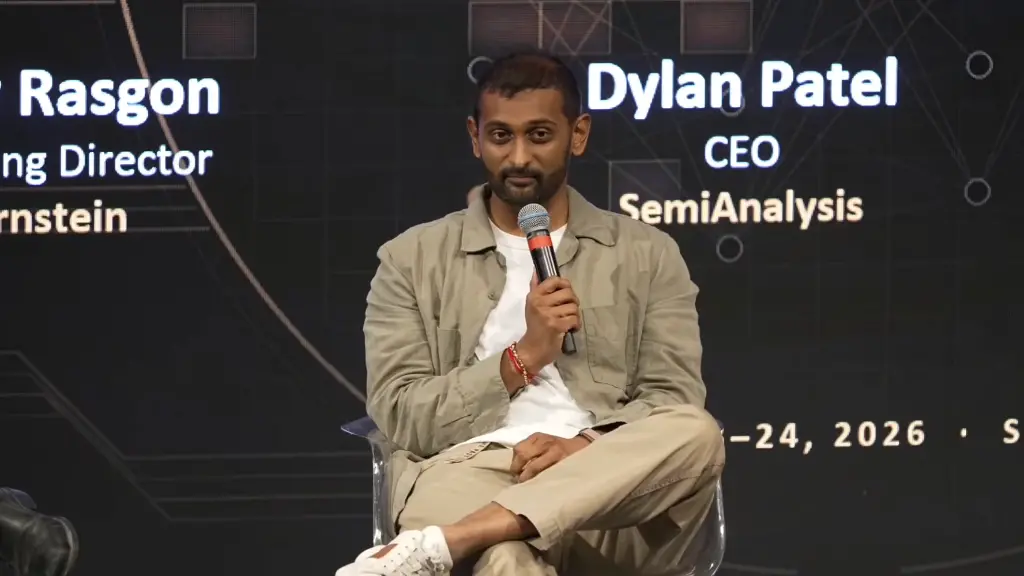
The semiconductor research organization SemiAnalysis has released the actual test results of Huawei's Ascend 950PR. The organization selected 1,055 sets of commonly used matrix calculations for large models. Huawei's own underlying program has allowed the 950PR to achieve 86% of its theoretical computing power, higher than NVIDIA's H100 at 75.5%; however, the actual computation speed is still only 43% of the H100, and only 21% compared to the relatively newer B300. This set of results has not yet utilized the newly ported operators from DeepSeek.DeepSeek is working on reducing data movement and waiting from the software side. In attention computation, after adjusting storage with FlashMLA, the two sets of data that originally needed to be read separately can now be retrieved at once; TileLang allows the chip to compute while preloading the next batch of data. SemiAnalysis measured that automatic scheduling has reduced the time for some small computing tasks by up to about 40%. DeepSeek has also ported DeepEP, which is responsible for MoE expert communication, but communication and computation will still compete for memory bandwidth, and Huawei plans to continue improving the firmware.Last year, DeepSeek attempted to train R2 using Huawei's Ascend chips, but even with Huawei engineers on-site for assistance, it could not be completed due to issues related to chip stability, inter-card communication, and software support. This year, both parties continue to collaborate, and by the end of September, DeepSeek focused on publicly releasing six sets of Ascend adaptation code. In October, it was reported that Huawei is adjusting the next generation of chip designs according to DeepSeek's model requirements. The 950PR tested this time is mainly aimed at inference input processing, while DeepSeek is preparing to use the 950DT for large-scale pre-training as early as the end of the year. Previously, both parties had conducted tests at the thousand-card level, but to enable tens of thousands of chips to complete a round of large model training continuously, more complex coordination and stability issues still need to be resolved.

Goldman Sachs: Global technology stocks had a net sell-off of 20 billion USD in two weeks

According to Goldman Sachs data, in the past two weeks, global technology stocks have experienced a net sell-off of approximately $20 billion, with the intensity of the sell-off reaching an extreme level of -3.3 standard deviations. The sell-off scale in the TMT sector is close to the $23 billion seen in July of this year. Meanwhile, the volatility spread between the Nasdaq 100 Index and the S&P 500 Index has risen to the 98th percentile of the past five years, indicating a significant increase in market demand for hedging against technology stocks.According to JPMorgan, the scale of debt financing for AI infrastructure has exceeded $500 billion this year, with the financing costs for large-scale cloud service providers rising by about 120 basis points compared to before. As Google, Microsoft, and Amazon release their earnings reports this week, the market will focus on whether AI capital expenditures can be converted into actual revenue, as well as the sustainability of financing for subsequent investment expansions.JPMorgan believes that the financing relationship between Nvidia and GPU operators may become a channel for credit risk transmission. If operator financing tightens, pressure may spread upstream along the supply chain. The bank maintains a constructive view on the fundamentals of the technology sector, believing that a buying window may appear in early November, but it is still necessary to observe signals such as further market position clearing, corporate earnings realization, and credit spread narrowing.
app_icon
ChainCatcher Building the Web3 world with innovations.