BTC $80,244.03 -1.48%
ETH $2,325.98 -1.74%
BNB $741.35 -2.16%
XRP $1.29 -2.75%
SOL $100.55 -2.30%
TRX $0.3311 -0.24%
DOGE $0.0785 -2.00%
ADA $0.2018 -2.67%
BCH $281.33 -6.23%
LINK $11.59 -1.77%
HYPE $85.43 +4.21%
AAVE $133.16 -1.75%
SUI $0.9239 -1.97%
XLM $0.1701 -0.95%
ZEC $1,270.33 -3.15%
AAPL $348.51 +0.80%
AMZN $252.27 -0.65%
GOOGL $292.32 -10.38%
MSFT $546.89 +3.23%
META $618.57 -0.80%
NVDA $214.64 -2.40%
TSLA $404.06 -1.32%
SNDK $1,375.23 +0.22%
INTC $92.52 -3.47%
SPCX $144.33 -3.72%
MU $958.05 -1.21%
AMD $564.66 -1.07%

rag

All
Article
Flash

first_img Anchorage expands cooperation with Bitso, custodians of the stablecoin channel between the United States and Mexico

Anchorage Digital announced the expansion of its custody and listing arrangements with the Latin American cryptocurrency platform Bitso, extending its custody layer to cover both ends of the stablecoin corridor between the United States and Mexico. According to the agreement announced on Tuesday, the Mexican peso stablecoin MXNB issued by Bitso is now being custodied by this federally chartered crypto bank across six blockchains: Arbitrum, Base, Ethereum, Polygon, Avalanche, and Arc.Meanwhile, Bitso has launched the USD stablecoins USDPT and USAT, which are issued and custodied by Anchorage, with the former coming from Western Union and the latter from Tether. The financial terms were not disclosed by either party. This collaboration targets one of the largest cross-border payment flows in the world, the U.S.-Mexico remittance corridor, which transfers billions of dollars annually, with approximately 15% currently operating through Bitso's infrastructure.Nathan McCauley, CEO and co-founder of Anchorage, stated that the U.S.-Mexico corridor is where stablecoins transition from theory to large-scale real money flows, and the company has now become the institutional custody layer at both ends of that flow. Ben Reid, head of stablecoins at Bitso, mentioned that customers can now access the complete dollar-peso corridor through a fully on-chain method supported by a federally chartered bank. This move also continues the trend of Circle's recent expansion of Latin American stablecoins with the launch of a USDC settlement pilot in Colombia.

first_img Crypto.com and OG.com launched U.S. crypto perpetual contracts with up to 5x leverage

Crypto.com and its derivatives partner OG.com began offering crypto perpetual contracts to eligible U.S. traders on Tuesday. The contract offers up to 5x leverage, allowing traders to bet on the price movements of crypto assets without an expiration date, and provides take-profit and stop-loss orders as well as isolated margin features.Crypto.com stated that it has recently registered as an introducing broker with the National Futures Association in the U.S. to offer the aforementioned perpetual contract products. These products operate through OG.com on exchanges, clearinghouses, and futures commission merchants regulated by the Commodity Futures Trading Commission. This launch follows the Commodity Futures Trading Commission's decision in May to open the U.S. market to crypto perpetual contracts.Previously, the agency approved Kalshi's Bitcoin perpetual contracts and provided Coinbase with no-action relief to offer digital commodity derivatives; Kraken launched U.S. perpetual contracts on Kraken Pro in June after acquiring Bitnomial. Crypto.com is also advancing its stock derivatives business, with OG.com’s exchange Nadex registering last month with the Securities and Exchange Commission to trade securities futures. CEO Kris Marszalek stated at that time that the company is working with the Securities and Exchange Commission and the Commodity Futures Trading Commission to offer individual stock perpetual futures.

first_img bitcoin++ will hold the Antarctic Cold Storage Conference in January 2028, with only 22 spots available

The Bitcoin Technology Conference Series bitcoin++ has announced the launch of "Antarctica: Cold Storage Edition," scheduled from January 24 to February 5, 2028, with only 22 spots available. This event combines a technology conference with polar exploration, bringing discussions to a colder place in line with Bitcoin's "cold storage" (the practice of keeping private keys offline). Since its launch in Austin in 2022, bitcoin++ has held about 20 events in cities such as Berlin, Buenos Aires, Taipei, and Seoul, each with a specific theme, with the next event scheduled for November 5 to 6, 2026, in Seoul focusing on privacy.Participants will depart from Ushuaia, Argentina, cross the Drake Passage to the Antarctic Peninsula, and return, with a total duration of 13 days and 12 nights. Possible stops include Neko Harbour, Paradise Bay, Port Lockroy, and Lemaire Channel. Activities include kayaking, camping, hiking, snowshoeing, and Zodiac landings, with specific landing points depending on weather, ice conditions, and the expedition team's decisions. The conference will take a non-conference format, allowing participants to propose their own talks, presentations, and discussions, with Starlink available on board and independent rooms for temporary hackathons and workshops.Reservations are currently open, with ticket prices quoted in US dollars: a four-person cabin costs $14,900, and a double cabin costs $16,700, with the option to pay in five equal installments or pay in full at the time of registration; paying in full with Bitcoin offers a 5% discount. The ticket price includes a cold-weather jacket. The final payment must be completed by October 1, 2027, and medical, evacuation, and repatriation insurance must be purchased separately. Sponsors can print their brands on the expedition jackets, with sponsorship amounts ranging from $5,000 to $25,000, each covering approximately 22 jackets. The itinerary covers the Antarctic Peninsula, not the geographic South Pole.

first_img Blink Wallet charges a monthly fee of 1 USD for idle custodial accounts, encouraging users to switch to self-custody

Blink Wallet, a Bitcoin wallet, announced a monthly idle fee of $1 for custodial accounts that have not logged into the app for 12 consecutive months. This adjustment was initiated at the beginning of September through a change in the terms of service and push notifications were sent to inactive users, with the first deduction completed in mid-October. According to a blog post released by the company, users who log back in within 12 months will have the deducted fees refunded.This fee applies only to custodial accounts and aims to alleviate the burden that inactive accounts place on the startup. The announcement stated that these accounts incur ongoing costs related to ledger and infrastructure maintenance, record verification retention, compliance monitoring and reporting, as well as support for claims, which were previously shared by active users through regular in-app transaction fees. Sources told Bitcoin Magazine that approximately 100,000 accounts met the criteria for inactivity at the time of the first deduction, with a total balance exceeding $800,000. The first deduction collected about $45,000, primarily from accounts that had been idle for over a year with small Bitcoin balances. Blink Wallet originated from the Bitcoin adoption wave in El Salvador, initially named Bitcoin Beach Wallet, and was an early custodial Lightning Network wallet that introduced the Stable Sats feature to hedge value against the US dollar. The wallet was spun off from the founding company Galoy in October 2024, operated by Lukas Duczko and a new board, with Duczko holding a controlling stake, while Galoy continues as a service provider and minority shareholder, also establishing the Bitcoin Beach Fund.In recent years, custodial wallets have faced overall pressure, with Wallet of Satoshi, Alby, and Blue Wallet successively halting custodial wallet services and shifting to self-custody infrastructures like Spark. The EU MiCA regulations regarding licensing and KYC compliance requirements are an important backdrop. Blink launched a self-custody wallet supported by Spark in June 2026, and its user base is still adapting to this transition. On September 19, hackers withdrew 6.61 Bitcoins from custodial wallet users through compromised management tools, and the company's investors subsequently announced that they would fully compensate affected users.

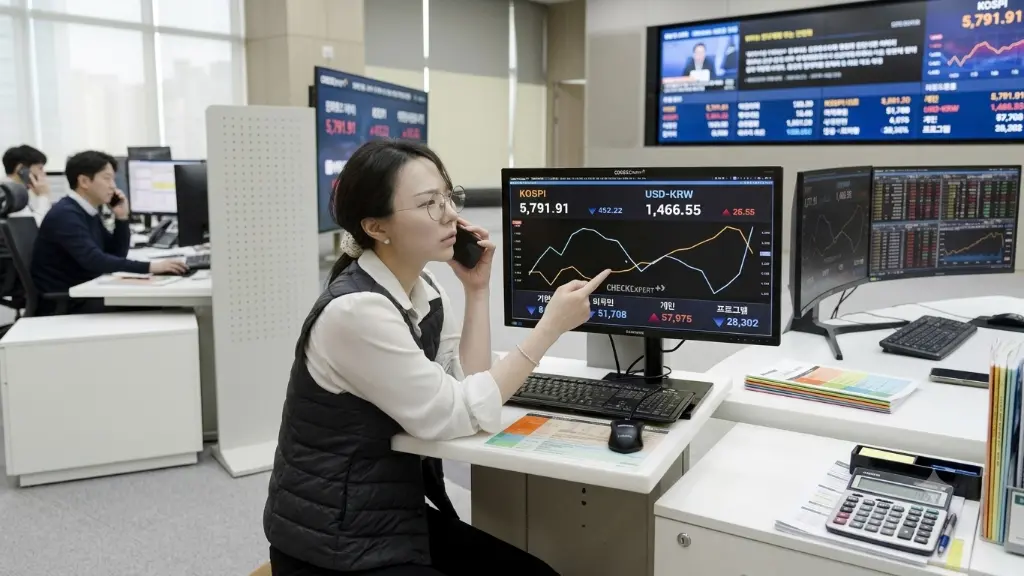
first_img South Korean retail investors have resumed buying leveraged single stocks in chips, with a net purchase of approximately 4.7 trillion won in SOXL

According to North Korean Commerce reported on October 25, after a sharp decline in the South Korean stock market, individual investors have re-entered to buy leveraged products betting on the rebound of Samsung Electronics and SK Hynix. Data from the Korea Exchange and Koscom ETF Check shows that from October 1 to 23, individual net purchases of 14 related products amounted to 315.4 billion Korean won, of which 7 related to SK Hynix accounted for 226.3 billion won, and 7 related to Samsung Electronics accounted for 89.1 billion won.The aforementioned 14 products had a net purchase of 27.728 trillion won in July, but turned to net selling after regulatory tightening such as the increase in depositary receipts on July 31. In August and September, there were net sales of 648.4 billion won and 497.9 billion won, respectively, and this month individuals have first turned back to net buying. During the same period, KODEX SK Hynix leveraged product saw a net purchase of 15.294 billion won, ranking 11th among ETFs listed in South Korea; individuals also net bought KODEX Leverage 10.448 trillion won and KODEX Semiconductor Leverage 256.4 billion won. The South Korean Composite Index fell by 18.83% in October.Data from the Korea Securities Depository shows that from October 1 to 22, South Korean investors net bought U.S. stocks worth 4.8009 billion dollars, approximately 63.621 trillion won. Among them, the net purchase of SOXL, which tracks the daily returns of the U.S. semiconductor index at 3 times, was 3.54764 billion dollars, about 47.041 trillion won, accounting for 73.9% of the net purchases of U.S. stocks during the same period. The article also noted that leveraged products track daily returns by multiples, and when the market reverses, losses can also be magnified by 2 or 3 times, and during repeated sharp rises and falls, negative compounding effects may also occur.
app_icon
ChainCatcher Building the Web3 world with innovations.