BTC $80,025.72 -1.59%
ETH $2,315.38 -2.09%
BNB $749.75 +0.05%
XRP $1.29 -2.85%
SOL $100.04 -2.34%
TRX $0.3311 -0.12%
DOGE $0.0780 -2.56%
ADA $0.1993 -3.59%
BCH $279.75 -6.95%
LINK $11.46 -2.86%
HYPE $79.01 -3.65%
AAVE $130.44 -3.23%
SUI $0.9113 -3.09%
XLM $0.1683 -1.89%
ZEC $1,248.07 -4.81%
AAPL $347.50 +0.32%
AMZN $251.84 -0.89%
GOOGL $292.30 -10.01%
MSFT $549.45 +3.53%
META $620.94 -0.34%
NVDA $213.84 -2.56%
TSLA $401.74 -1.91%
SNDK $1,356.91 -0.16%
INTC $91.73 -3.54%
SPCX $143.84 -3.97%
MU $950.10 -1.31%
AMD $561.29 -1.12%

tea

All
Article
Flash

first_img Ipsos survey: 22% of Americans have held cryptocurrency, with an annual usage rate remaining steady at 13%

According to a report by Decrypt, a national survey commissioned by the cryptocurrency policy advocacy organization DeFi Education Fund and conducted by Ipsos shows that 22% of American adults have held or used cryptocurrency, up from 18% in 2025, but the usage rate over the past 12 months remains flat at 13%. The survey, conducted from September 8 to 16, interviewed 1,545 adults, with a margin of error of ±2.8 percentage points. The growth almost entirely comes from users who have dropped out: among those who have not used cryptocurrency in the past year, the proportion who had held or used it rose from 5% to 11%; the willingness to purchase in the future also remains flat, with 17% indicating they might hold or use it in the future, compared to 16% last year.In terms of user demographics, the usage rate for men in the past year was 18%, while for women it was 8%, with the former being more than double the latter. Adults under 60 showed a significantly higher usage rate than older individuals. The primary reason for trying cryptocurrency is curiosity (34%), followed by long-term investment (25%). Respondents expressed significant unease about the traditional financial system: only 19% believe it is safe, and 63% think it needs to be upgraded to address cybercrime and AI threats; 60% are concerned about data breaches at large financial institutions, and 54% doubt their ability to withstand AI-driven threats, while 74% indicate that financial privacy is important.This skepticism has not translated into trust in cryptocurrency. Only 4% have high trust in cryptocurrency exchanges, and 5% have high trust in decentralized platforms, while large national banks and credit unions have trust levels of 42% and 48%, respectively. The knowledge gap is also significant: only 2% of Americans are very familiar with DeFi, 6% can identify all four characteristics of cryptocurrency listed in the survey, and 35% are completely uncertain about how to describe cryptocurrency. However, 40% indicate that if DeFi were available, there is at least some possibility they would try it, with over 80% stating they would use it to save money, earn interest, or send money to friends and family; the desire to understand stablecoins and DeFi decreased from 11% to 7% and 8%, respectively.

Cryptocurrency casino Gamdom was extorted by the organization Whitearmor for a ransom of 15 million dollars in Bitcoin

According to Bitcoin.com, the cyber extortion group Whitearmor claimed on October 26 that it had stolen 15,420,003 account records from the crypto casino Gamdom, with each account containing 146 data fields, and demanded a payment of 15 million dollars in Bitcoin, or else they would expose sensitive customer information.The group has published a JSON sample of about 437KB, containing approximately 100 records as so-called evidence on its ransom website, claiming that the cumulative profits corresponding to these accounts exceed 1 billion dollars, but did not specify how this was calculated. It is reported that the attackers exploited an internal machine account with administrator privileges that had not rotated its credentials for a long time.Previously, Gamdom suffered a hot wallet attack on October 13, with founder Felix Römer admitting losses exceeding 3 million dollars, and blockchain researcher vxdb estimating the stolen amount across multiple networks to be about 4.2 million dollars. After suspending operations, the platform resumed on October 16, stating that user balances were unaffected. Gamdom disputed the scale of 15.4 million accounts but acknowledged that usernames, email addresses, and gambling activity information may have been exposed, while stating that verification documents were not affected.

Slow Fog: Udesk customer service script was implanted with malicious code that can steal user session data and replace recharge addresses

According to Slow Fog's disclosure, its security personnel discovered that the script udeskApi.2026-10-16.cached.js related to the Udesk customer service system was implanted with a malicious loader during routine threat intelligence checks. This loader hides the address through hexadecimal encoding and asynchronously loads the remote script deeps.js (sourced from udeskqlobal[.]com, note that the domain name starts with the letter q). This script reads accessible Cookies, localStorage, and sessionStorage on the page, intercepts form and login/authentication requests, and sends data to udeskqlobal[.]com/c.php. Attackers may use this to impersonate sessions or take over accounts. This data collection behavior is not restricted by the target site's rules, and unmatched pages may also be affected.According to Slow Fog's analysis, this script also targets three types of sites: mgbx[.]com, bikingex[.], and bitxex[.]io, scanning the recharge page every 200 milliseconds and replacing identified recharge addresses with preset BTC, EVM, TRON, Solana, LTC, and DOGE addresses. At the same time, the script manipulates the clipboard API, replaces copy buttons, and intercepts copy events, making users see and copy tampered addresses. If users transfer funds to this address, the money will flow into the attacker's address.

The New York Times: The market expects the Federal Reserve to hold steady this week, and Waller must explain the reasons

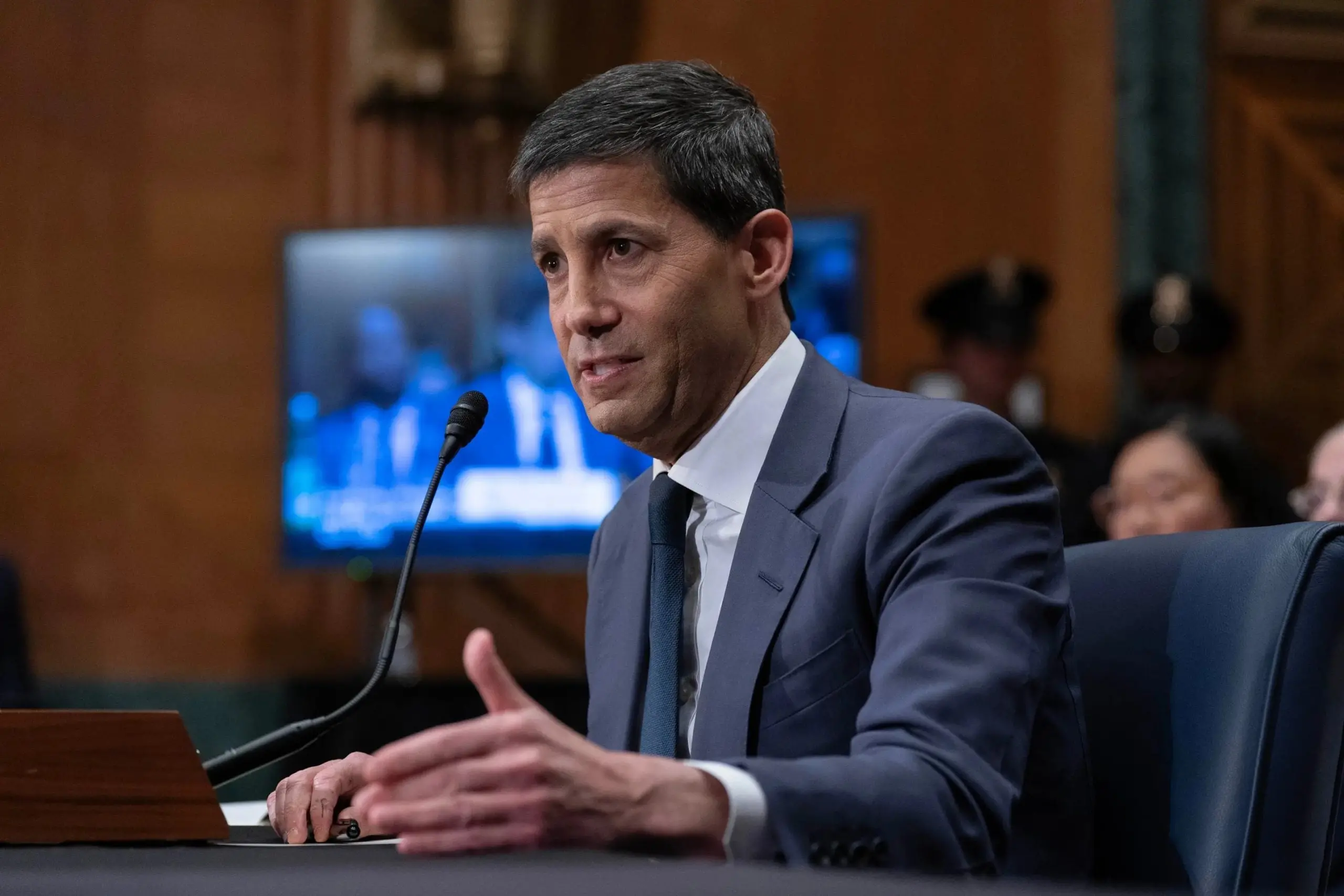
According to The New York Times, the market generally expects the Federal Reserve to maintain interest rates at the FOMC meeting this week (October 27 to 28). Federal Reserve Chairman Kevin Walsh needs to explain why he is not raising interest rates while inflationary pressures remain high, while also indicating that the determination to combat inflation has not weakened and keeping the possibility of another rate hike this year.The report states that the Federal Reserve raised rates once in September, and the market had once priced in another rate hike in October. New York Fed President John Williams, Vice President Jefferson, and Governor Waller expressed at the end of September to early October that they could wait a bit longer, causing the probability of an October rate hike to drop from over 70% to less than 30%. High oil prices and the demand for materials and electricity driven by AI infrastructure increased price pressures in September. The Nasdaq 100 index has fallen more than 7% since its historical high on October 6, and the yield on the 10-year U.S. Treasury bond had previously stood above 5% for several consecutive weeks.Stephen Stanley, Chief Economist at Santander U.S. Capital Markets, stated that he expects interest rates to remain unchanged this week but believes there may still be another rate hike in December. Walsh needs to explain why he is not taking action in October while also clarifying why December is still under consideration. Since taking office in May, Walsh has provided little forward guidance on the interest rate path. The press conference after the decision to hold rates steady in July caused market volatility due to overly brief wording, and subsequent hawkish remarks in August, along with the rate hike in September and signals of another hike this year, somewhat repaired communication. This week's decision is approaching the U.S. midterm elections on November 3, and Trump had previously criticized the rate hike in September.
app_icon
ChainCatcher Building the Web3 world with innovations.