BTC $77,350.64 +0.26%
ETH $2,513.98 -0.37%
BNB $722.08 -0.61%
XRP $1.36 -0.32%
SOL $101.40 +0.03%
TRX $0.3413 +0.43%
DOGE $0.0843 -0.54%
ADA $0.2088 +0.67%
BCH $224.89 -0.36%
LINK $11.45 -0.41%
HYPE $78.83 -1.00%
AAVE $126.82 +0.88%
SUI $0.7209 -0.37%
XLM $0.1806 +0.38%
ZEC $1,107.01 -1.13%
AAPL $330.73 -0.71%
AMZN $254.47 -0.88%
GOOGL $338.37 -0.82%
MSFT $491.99 -0.61%
META $644.78 -0.56%
NVDA $215.67 -1.20%
TSLA $362.83 -1.21%
SNDK $1,574.14 -3.19%
INTC $99.25 -2.75%
SPCX $149.28 -0.52%
MU $939.17 -2.95%
AMD $502.40 -2.63%
BTC $77,350.64 +0.26%
ETH $2,513.98 -0.37%
BNB $722.08 -0.61%
XRP $1.36 -0.32%
SOL $101.40 +0.03%
TRX $0.3413 +0.43%
DOGE $0.0843 -0.54%
ADA $0.2088 +0.67%
BCH $224.89 -0.36%
LINK $11.45 -0.41%
HYPE $78.83 -1.00%
AAVE $126.82 +0.88%
SUI $0.7209 -0.37%
XLM $0.1806 +0.38%
ZEC $1,107.01 -1.13%
AAPL $330.73 -0.71%
AMZN $254.47 -0.88%
GOOGL $338.37 -0.82%
MSFT $491.99 -0.61%
META $644.78 -0.56%
NVDA $215.67 -1.20%
TSLA $362.83 -1.21%
SNDK $1,574.14 -3.19%
INTC $99.25 -2.75%
SPCX $149.28 -0.52%
MU $939.17 -2.95%
AMD $502.40 -2.63%

wyoming

All
Article
Flash

first_img Wyoming stablecoin adopts Chainlink reserve proof, FRNT circulation is less than one million coins

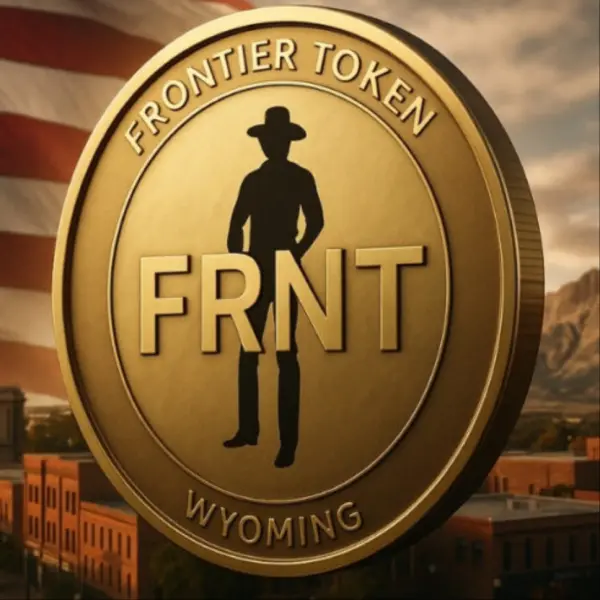
On September 2, the Wyoming Stable Token Committee announced the adoption of Chainlink Proof of Reserve as the exclusive on-chain reserve verification layer for the Frontier Stable Token (FRNT), with reserves and supply balances audited by The Network Firm published to on-chain readable feeds. The current scale available for verification is not large: according to CoinGecko data, the total supply of FRNT is 967,900 tokens, with a unit price of approximately $0.99884, which only accounts for about 0.2% of the base scenario estimate (508.7 million tokens) submitted by the committee to the state legislature's budget meeting materials; the 24-hour trading volume is $160, all occurring on Kraken.The announcement separates the two products, with only Proof of Reserve currently online. The Proof of Reserve Secure Mint component, which programmatically prevents minting when reserves cannot cover total supply, is said by the committee to still be in the "adoption process." The committee previously published daily proofs on its official website, and this adjustment changes the method of data delivery rather than the update frequency. Committee Executive Director Anthony Apollo stated that adopting Chainlink's reserve proof provides transparent and verifiable confirmation that FRNT is fully backed by high-quality reserve assets; Chainlink Labs Chief Business Officer Johann Eid remarked that this demonstrates that governments can utilize the Chainlink platform to put trustworthy, fully verifiable on-chain financial infrastructure into production.

first_img Wyoming will migrate the FRNT stablecoin from LayerZero to Chainlink CCIP

The Wyoming Stablecoin Committee has migrated its issued Frontier Stable Token (FRNT) from LayerZero to Chainlink's cross-chain interoperability protocol CCIP, and will completely discontinue the LayerZero token implementation after completing a comprehensive security review. CCIP will serve as the sole cross-chain infrastructure for FRNT under a multi-year contract. This is the first time a U.S. government entity has publicly changed blockchain infrastructure for security reasons, and FRNT is currently the only stablecoin issued by a U.S. public institution, fully backed by fiat reserves, with reserve earnings used to support the state's school foundation projects. The token has been deployed on chains such as Ethereum, Base, and Avalanche, with a current market cap of less than $1 million.This decision was announced four months after the Kelp DAO bridge based on LayerZero was attacked, resulting in the theft of approximately 116,500 rsETH (worth about $292 million at the time), an incident that triggered a wave of industry security reviews and migrations. To date, nearly $15 billion in related assets have migrated from LayerZero to Chainlink, with early movers including Kelp, Solv Protocol, Re, and Kraken. Subsequently, BitGo chose CCIP and completed a migration of approximately $7.7 billion in wrapped Bitcoin, bringing the total to the current level. According to a case study by LayerZero in January of this year, Wyoming had previously operated its own decentralized validation network and controlled validation and compliance functions.

4E: Federal Reserve Board member says employees should be allowed to hold a small amount of crypto assets, Wyoming issues first state-level stablecoin

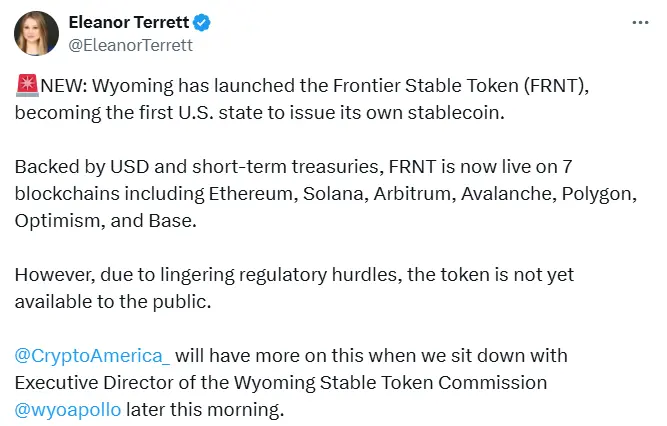
ChainCatcher news reports that, according to 4E observations, Federal Reserve Governor Bowman stated that Federal Reserve employees should be allowed to hold a small amount of cryptocurrency, which would help in understanding digital asset products. Overly restrictive measures may hinder the recruitment and retention of professional talent. She also called for the industry to strengthen communication with regulators to promote the application of blockchain in areas such as fraud prevention.U.S. Treasury Secretary Bessent stated that the implementation of the GENIUS Act is crucial for maintaining the leadership of the U.S. digital asset sector. Stablecoins will expand the global use of the dollar and drive a surge in demand for U.S. Treasury bonds.Korean Central Bank Governor Lee Chang-yong stated in Congress that a won stablecoin is inevitable in the future, but it should be gradually introduced from the banking system, emphasizing the need for careful assessment of potential risks.On the market side, BitMine Chairman Tom Lee shared a fund analyst's view that Ethereum may pull back to $4075-$4150 mid-week, which is considered a healthy adjustment. On the other hand, the verifiable computing layer Boundless released its tokenomics: its native token ZKC has a total supply of 1 billion, with 49% allocated for ecosystem development, 23.5% for the team and contributors, 21.5% for investors, and 6% for community sales and airdrops.Additionally, Wyoming has officially launched the first state-level stablecoin in the U.S., FRNT, which is backed by the dollar and short-term U.S. Treasury bonds, and has been launched on seven public chains: Ethereum, Solana, Arbitrum, Avalanche, Polygon, Optimism, and Base.4E reminds investors that policy signals and stablecoin innovations are accelerating the formation of the global digital financial system, and investors may pay attention to the interconnected effects of the Ethereum ecosystem and various countries' digitalization explorations.
app_icon
ChainCatcher Building the Web3 world with innovations.