BTC $64,735.33 +0.52%
ETH $1,921.67 +0.49%
BNB $589.33 +3.40%
XRP $1.08 -0.05%
SOL $74.14 +0.39%
TRX $0.3282 +0.42%
DOGE $0.0700 -0.62%
ADA $0.1639 +0.21%
BCH $210.80 -0.57%
LINK $8.44 +0.62%
HYPE $53.15 -3.12%
AAVE $98.21 +0.57%
SUI $0.6938 +0.82%
XLM $0.1726 -0.76%
ZEC $476.40 +3.54%
BTC $64,735.33 +0.52%
ETH $1,921.67 +0.49%
BNB $589.33 +3.40%
XRP $1.08 -0.05%
SOL $74.14 +0.39%
TRX $0.3282 +0.42%
DOGE $0.0700 -0.62%
ADA $0.1639 +0.21%
BCH $210.80 -0.57%
LINK $8.44 +0.62%
HYPE $53.15 -3.12%
AAVE $98.21 +0.57%
SUI $0.6938 +0.82%
XLM $0.1726 -0.76%
ZEC $476.40 +3.54%

roadmap

All
Article
Flash

Pendle announces H2 roadmap, doubling down on RWA and institutional markets, Boros will focus on on-chain interest rate derivatives

Pendle co-founder TN and Head of Growth Dan reviewed the developments in the first half of 2026 during the latest community meeting and announced the roadmap for the second half of the year. The team stated that in the first half, Pendle's ecosystem focused on building fixed income infrastructure, with Pendle V2 continuing to solidify its position as an on-chain fixed income protocol, while Boros made initial progress in the on-chain interest rate derivatives market.Data shows that Pendle V2 had an average daily TVL of approximately $1.3 billion in the first half of the year, with 9 out of the 11 major markets on the platform adopting real-world assets (RWA) as collateral, reflecting that institutional funds are continuously flowing into the RWA sector. Additionally, Pendle has launched on the Monad network and within less than a month became one of the top five protocols by TVL on that network, with a locked amount of approximately $150 million. In terms of protocol upgrades, Pendle has completed the migration from vePENDLE to sPENDLE, with about 36% of PENDLE currently staked, of which 93% of stakers have not yet unstaked. The protocol has also utilized revenue to repurchase approximately 2 million PENDLE and significantly reduced weekly liquidity incentives from about 90,000 to 21,000, further enhancing capital efficiency.At the same time, Pendle launched an in-app one-click Loop feature to simplify the operational process of leveraged yield strategies. Another core product, Boros, has surpassed $14 billion in cumulative trading volume within less than a year since its launch, with the number of users increasing by 50% since the beginning of the year. It has also introduced four-legged arbitrage strategies, acceptance of block trades, and a funding rate data dashboard to meet professional trading needs. Looking ahead to the second half of 2026, Pendle will focus on advancing curation infrastructure, allowing external teams to create PT/YT markets, and promoting PT assets as collateral for lending protocols; at the same time, it will collaborate with partners like Morpho to launch Pendle-branded yield vaults, expanding distribution channels for fixed income products. In terms of institutional business, the team is working with several RWA issuers in New York, planning to introduce tokenized ETFs, single bonds, and other on-chain yield products to Pendle, creating a platform for institutional RWA yield discovery and distribution. Boros will shift its strategic focus to cross-exchange funding rate arbitrage, prioritizing services for institutional arbitrageurs, and plans to launch a peer-to-peer acceptance market, funding rate visualization tools, and one-click strategy products for ordinary users, further improving the on-chain interest rate derivatives ecosystem.

first_img Brave releases BAT roadmap 4.0, introducing a new unified wallet and stablecoin payment protocol

According to the official blog, Brave officially released the Basic Attention Token (BAT) roadmap 4.0 on July 9. This update aims to address the new challenges brought by artificial intelligence and a cashless economy, fully integrating BAT, Brave Rewards, and Brave Creators into a transactional attention economy. The core initiatives of the roadmap include the launch of a new unified version of Brave Wallet that integrates traditional payment methods with self-custodied crypto assets, as well as the construction of a privacy payment protocol layer, BravePay, based on stablecoins, thereby providing foundational support for autonomous agent payment features such as x402 and Machine Payment Protocol (MPP) within the browser.In addition, the roadmap also plans several new products to expand the ecological boundaries. Brave plans to launch virtual and physical payment cards for Brave Rewards that support daily consumption and return BAT rewards, while also developing a new creator contribution protocol to ensure that creators receive micro-royalty compensation when their content is utilized by AI products. In terms of token economics, a portion of the net income generated from Brave Wallet's revenue features, payment cards, and the BravePay protocol will be directly used to repurchase BAT to support user rewards and ecological growth. With the advancement of the above new features, Brave will gradually phase out traditional advertising notification units by the end of 2026 and fully shift the user reward mechanism towards personalized offer walls and a new loyalty program.

Vitalik published an overview of Ethereum's long-term roadmap, Lean Ethereum will become the third major iteration

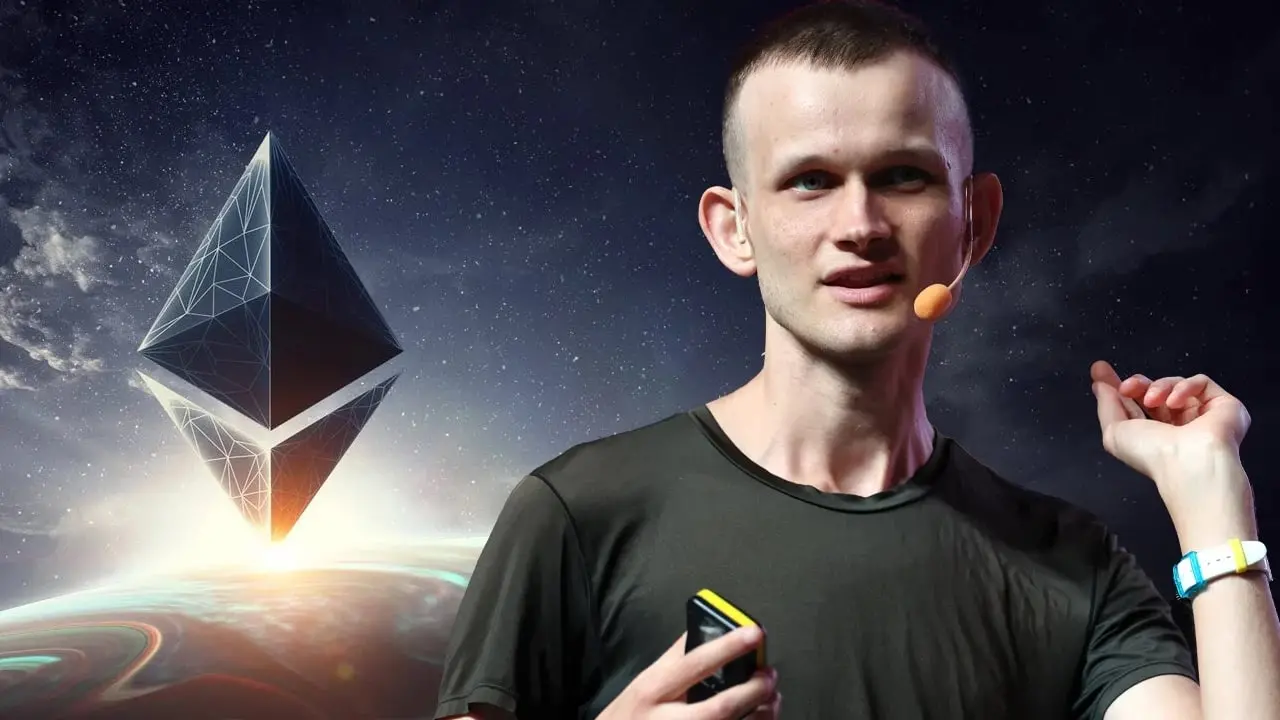
According to a post by Vitalik Buterin, Ethereum researchers recently held a meeting in Berlin to update the long-term development roadmap of the protocol (strawmap.org). Vitalik pointed out that "Lean Ethereum" is not a one-time upgrade, but a series of improvements that will be phased in over the next three to four years, with an importance comparable to the "Merge," covering almost every core module of the protocol.The main content includes: Verification Mechanism: Introducing recursive STARKs to replace the existing direct re-execution method, becoming a core component at the protocol level; Quantum Security: Significantly elevated priority, all quantum-vulnerable components will be replaced, and the design for quantum-safe Blobs is in progress; Consensus Layer: Decoupling usable chains from finality, achieving one to two rounds of finality, with better security and lower latency; State Layer: The existing dynamic state remains unchanged, but new types of states with greater scalability (such as UTXO storage, circular buffers, etc.) will be added, with an expectation that by 2030 Ethereum will have 2 TB of dynamic state + 100 TB of new type state, allowing for over 10 times reduction in Gas fees after the migration of applications like ERC20 and NFTs; Privacy: Upgrading from an additional feature to a primary goal, integrated into designs such as Mempool and state trees; VM: Introducing leanISA or RISC-V beyond EVM, with the long-term goal of direct protocol layer only.

first_img Bittensor co-founders release decentralized roadmap, aiming to complete it within a year and a half

Bittensor co-founder const posted on the X platform, detailing the current state of decentralization of the project, future roadmap, and goals. Bittensor has not yet achieved decentralization at the economic incentive layer, which is still led by the core team, including const himself, two engineers, and a core group of contributors. The project has been live for over 5 years, with no pre-mining, and has 128 subnet teams and over 20 core validator teams, achieving decentralization at the ownership distribution level. The team chose to rapidly iterate at the cost of "maintaining centralization" rather than slowly advancing "democratic" decision-making.Regarding future update plans, Bittensor will promote validators to re-enter the competitive mechanism while opening liquidity pools for two-way investment to symmetrize the market and prevent on-chain signals from being manipulated. Additionally, a belief mechanism will be introduced to grant voting rights to Alpha token holders. In the coming weeks, updates will also be made to TaoFlow and its derivatives, further fine-tuning the issuance distribution algorithm to optimize the distribution method of inflation. Const expects to complete the construction of core mechanisms within the next year and a half, at which point the three pillars of incentive alignment, value optimization, and true ownership will operate in synergy, ultimately achieving complete decentralization by abandoning centralized control.

Ethereum Foundation releases progress on the Glamsterdam upgrade: the development network is now online, and the Hegotá expansion roadmap is advancing simultaneously

The Ethereum Foundation disclosed the results of a recent interoperability meeting held by core developers in the Svalbard archipelago of Norway and updated the key technical progress for the next phase upgrade, Glamsterdam. During the meeting, multiple client teams collaborated on network scalability and execution layer optimization, making progress in several directions. Developers confirmed that based on the comprehensive results of ePBS, BAL optimization, and the EIP-8037 repricing mechanism, a consensus on the "trusted path" after Glamsterdam has been reached.In terms of the execution layer, ePBS (External Proposer Separation Architecture) has been stably running in the multi-client Glamsterdam-devnet, and the external block builder process has completed end-to-end testing, covering almost all client implementations. Meanwhile, EIP-8037 has been finalized, establishing the fixed cost_per_state_byte model, and complete repricing parameter output has been achieved in bal-devnet-6. The scalability direction Hegotá has also made progress. The FOCIL-related prototype has a runnable implementation, and the scope of account abstraction (AA) requirements has been defined, with the next phase entering the multi-client development network verification stage.Current development focus remains on the final implementation of Glamsterdam while advancing the Hegotá scalability design and subsequent Strawmap route evolution. The development network is online, and functionalities such as FOCIL are expected to continue deepening in the next phase of testing. At the organizational level, this interop meeting also marks the formal initiation of leadership structure adjustments within the Protocol Cluster. The new leaders include Will Corcoran, Kev Wedderburn, and Fredrik. Will Corcoran is responsible for zkVM proof and post-quantum consensus coordination, Kev Wedderburn leads zkEVM development, and Fredrik is in charge of protocol security and the Trillion Dollar Security project.Original Protocol Cluster leadership team members Barnabé Monnot and Tim Beiko will gradually step back from management roles, and Alex Stokes is entering a leave period. The foundation stated that during its term, the Protocol has completed modular advancement and facilitated the launch of the Fusaka upgrade (December 2025), introduced PeerDAS, and enhanced mainnet gas capacity.
app_icon
ChainCatcher Building the Web3 world with innovations.