








The young man who made half of Silicon Valley foot the bill for him
 Core Viewpoint

 Ambition should be extremely large, and Ego should be extremely small.
Original Title: "The Young Man Who Made Half of Silicon Valley Foot the Bill for Him"
Original Author: Sleepy
On October 2, 2026, a16z announced it would lead the Series A funding for Conway Research.
The company's core product is called Underdog. The specific amount of funding has not been disclosed, but the list of participating investors is exceptionally impressive.
The institutional list includes Khosla Ventures, Hummingbird, and the Anthology Fund established by Anthropic and Menlo Ventures; individual investors include Naval Ravikant, Patrick Collison, Guillermo Rauch, Noam Brown, Thomas Wolf, Logan Kilpatrick, as well as Marco Mascorro and roon.
It can be said that half of Silicon Valley has invested in this startup.
The founder of Conway Research is Sigil Wen.
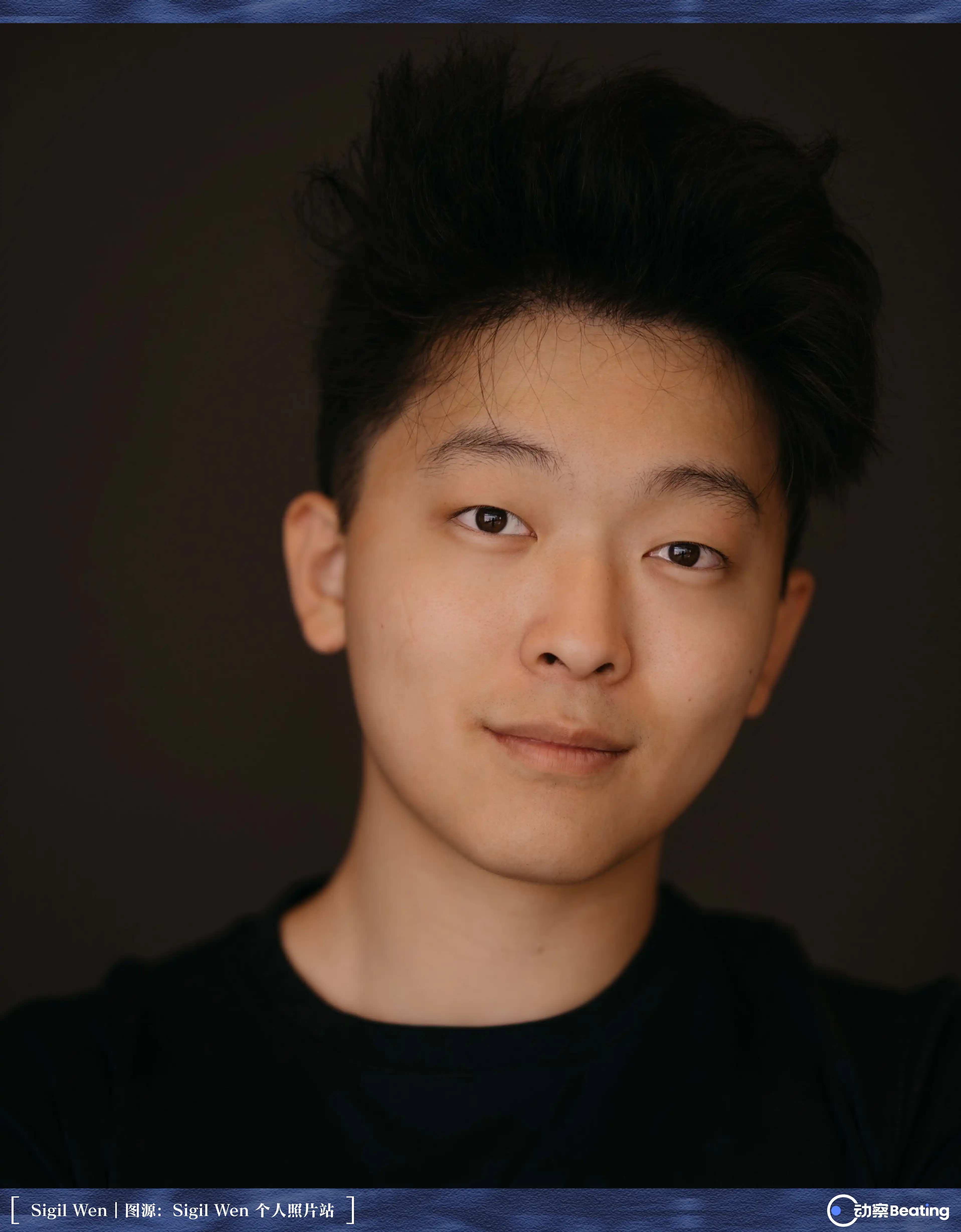
He does not have a college diploma, has never worked at a big company, and has not published any academic papers. How did this young man, who has hardly been validated by the standard systems during this cycle, manage to get the most discerning group in Silicon Valley to push their chips in front of him?
Negative Numbers
On January 18, 2021, Sigil noted an embarrassing incident on his annual goal list.
His bank account was nearly empty, and the number had turned negative. This high school student still in Toronto had to lower his head and ask his mother for money, pleading with her to pay for his next month's Adobe Creative Cloud subscription.
On the same page of his Notion notes, he wrote down his ambitions for the year, which included delivering products, securing venture capital, and eliminating financial anxiety.
This reflects a profound sense of division typical of youth.
Dramatically, just a few months later, Dharmesh Shah, the founder of HubSpot and a well-known angel investor, publicly announced on social media that he was willing to invest $100,000 for a 1% stake in a project called BitSwap that Sigil was working on.
Based on this offer, the project that this high school student casually wrote down was already valued at $10 million.
From borrowing money from his mother to pay for software subscriptions to someone quoting a ten-million-dollar valuation for his project, the gap in between is very Silicon Valley.
In the following years, Sigil's life trajectory was filled with such extreme switches; a fragment of work, a friend he just connected with on Twitter, a technology just open-sourced on GitHub, could throw him into a whole new game in just two weeks.
This is not a story of a genius youth having an epiphany.
If you push the timeline back, you will find that his starting point is so mediocre that it is somewhat embarrassing.
Sigil was born into a Chinese immigrant family in Toronto.
In fifth grade, he was an extremely introverted child who hid in the corner drawing comics; by eighth grade, he was obsessed with Minecraft in the public library and applied for the TOPS program at Marc Garneau High School.
When he just entered high school, he labeled himself in his notes as "the worst speaker in the grade."
This has nothing to do with the image of him later being articulate in various podcasts and Twitter Spaces. Digging up those early videos he uploaded online is awkward enough to make one squirm; he wore exaggerated plastic fake glasses, had braces, and his gaze was fixed on a handwritten cue card, freezing in front of the camera when he misread a word.
For the vast majority of later Silicon Valley elites, such digital traces would likely have been cleaned up long ago, but he chose not to delete them.
In his memo that year, he said keeping these was merely to prove to everyone that even a skill that would later be used to earn a living could start off in a completely terrible state.
Math was the only subject he excelled in; his name appeared on the honor roll for the 2018 Waterloo University competition. But in Toronto, there are plenty of high school students who can solve problems.
He quickly turned to more specific technical work. After completing Andrew Ng's machine learning course on Coursera, he made a video on the derivation of neural networks; when YOLO object detection was just open-sourced on GitHub, he pulled down the code and reproduced it himself, stepping on the pitfalls and then recording a tutorial to post online.

From understanding a course to running a piece of code, and then explaining it to others, he had mastered this cycle before he even graduated high school.
His later seemingly incomprehensible crossovers and leaps were all rooted in this self-taught method.
Taking Jobs
In the fall of 2019, Sigil, then a sophomore, joined The Knowledge Society.
At a hackathon in Toronto Elevate, he and his teammates stayed up for 36 hours to create an AR repair project, earning a ticket to a tech conference. He returned home on Sunday night, utterly exhausted.
By Monday morning, thinking about the venue being over an hour away by streetcar, he turned off his alarm and obediently shouldered his backpack to go to school.
He later confessed in a Medium blog that he regretted it immensely.
This was an extremely trivial swing. Later biographies love to portray all outliers with a "seeing through the system from day one" mature face, but at that time, there was no earth-shattering life decision.
What lay before him was merely a very realistic multiple-choice question: Should he go to class honestly today or skip school for a day to see the outside world?
But soon, he didn't even have the leisure to waver.
Because he ran out of money.
He started an agency called Sigil Digital, selling his limited skills, such as video editing, web design, Shopify website building, and social media formatting, to anyone willing to pay.
He edited short videos for Pioneer.app, did outsourced marketing for Blockchain Founders Fund, built websites for some crypto startups that have long since disappeared, and created Shopify pages for an electronic watch brand.
These fragmented projects would never be included in any top-tier funding business plan, but they were his earliest real cash flow.
The process of reaching out to Twitch co-founder Justin Kan followed the same logic. After listening to Justin's podcast The Quest, he sent a private message on Discord, spending an entire night explaining what kind of visuals and editing he could provide for the show. Without waiting for a reply, he followed up in the comments of the live stream of the other party's online event.
Eventually, his name appeared in the V1 visual packaging and design section of The Quest.
He did not wait until he had a decent title to start; he was willing to take on any job.
In the spring of 2021, BitClout swept through Silicon Valley.
The platform turned every individual's attention, reputation, and future influence into tokens that could be publicly traded. Well-known investors and influencers' avatars were displayed on the board, alongside real-time fluctuating K-lines.
Sigil dove in without hesitation.
He initially invested about 150 Canadian dollars, and by trading tokens with peers in the circle to establish liquidity, his personal token's market value once soared to $600,000. He took advantage of this to cash out some at a discount, buying himself a high-spec MacBook Pro and a pair of AirPods.
But this game of passing the parcel had a fatal flaw; while it was extremely easy to put money into BitClout, there was almost no smooth withdrawal channel.
The pain point was the scenario.
He immediately set to work writing BitSwap, bridging the BitClout chain with the Ethereum mainnet, providing a cross-chain funding channel for those trapped in the system. The product developed by this high school student quickly became a hit, and a reporter from The New Yorker soon called him for a video interview.
This experience inevitably tainted him with the speculative flavor unique to 2021.
He was invited to various podcasts to talk extensively about the creator economy and the so-called "human IPO"; he even previewed his personal token $SIGIL, attempting to directly price a young person's future cash flow on the secondary market.
Soon after, he launched Monument.
The product's vision was grand, aiming to use decentralized capital to crowdfund the ambitions of young people. Outside of traditional universities and venture capital institutions, it sought to cash in on a young person's potential in advance as a non-repayable check.
But the harsh business reality doused this fantasy with cold water. Monument was quickly forced to shut down due to extremely complex securities compliance and legal obstacles.
Relationships Are Not Products
At this juncture, Sigil made his first irreversible decision in life.
He received an acceptance letter from the Jerome Fisher M&T program at the University of Pennsylvania. This is a dual degree program that allows students to earn degrees from both the Wharton School and the School of Engineering, admitting only a very limited number of elite students globally each year.
But he ultimately chose to forgo enrollment and bought a one-way ticket to San Francisco.
At 17, alone. In the first few weeks, he mingled at various events during the day and slept on the sofa of the WeWork office at 44 Montgomery Street at night.
Later, when reminiscing about this period on social media, he wrote fondly that David Holz, the founder of Midjourney, generously provided him with shelter and warm clothing.
Dramatically, David Holz himself commented under the tweet, saying that he felt he was described too generously. He recalled that at the time, Sigil had only come to crash on his sofa for one night and used the washing machine once.
One night of crashing, one laundry.
But it was during that brief night that Holz showed him an image generation algorithm that was undergoing small-scale closed testing. That was on August 27, 2021, and Sigil was casually pulled into an early Discord channel with just over twenty people. That channel later grew into Midjourney.
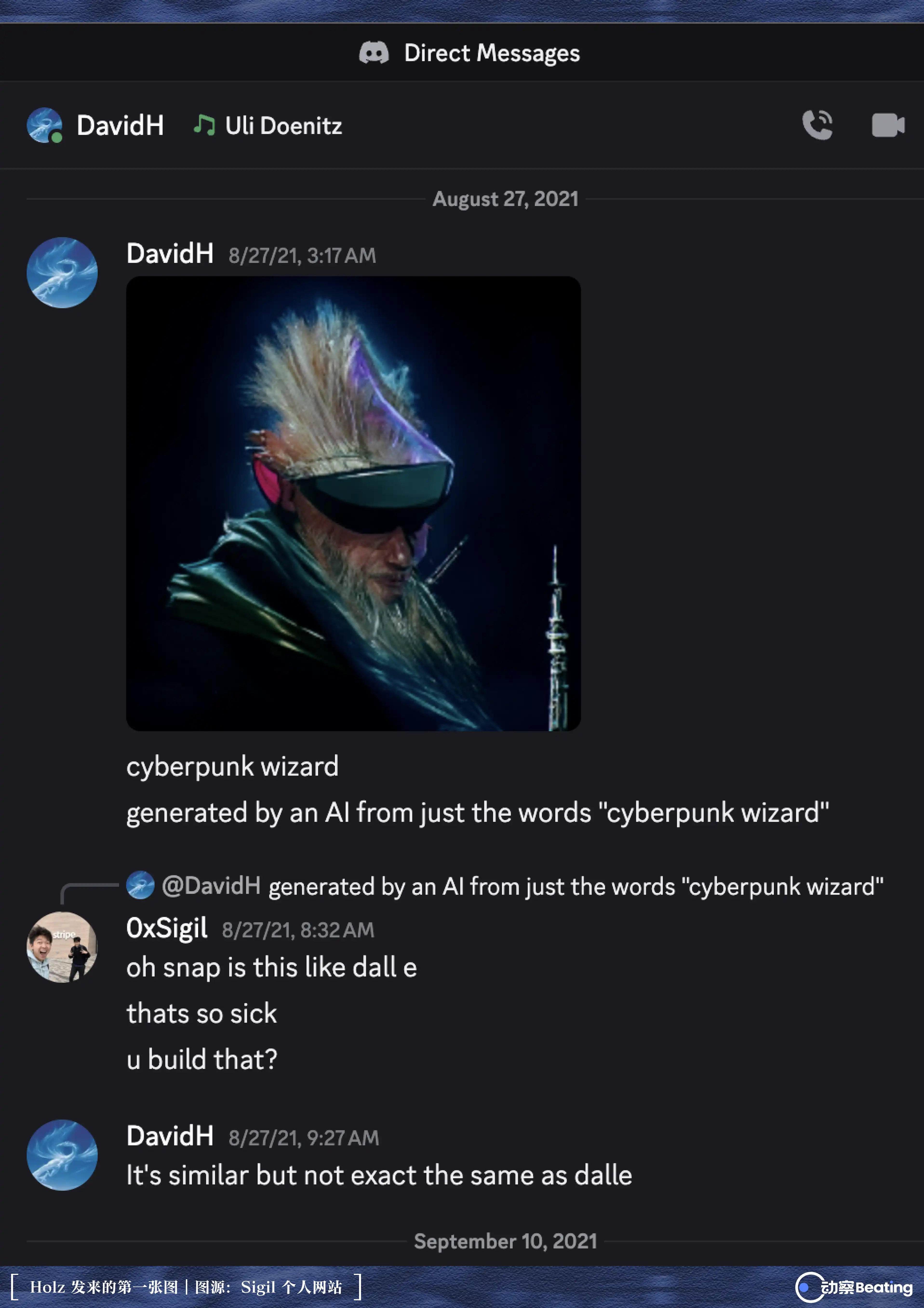
Subsequently, he moved into a hacker house in San Francisco, staying there for 11 months. Andrej Karpathy had briefly lived there, Noam Brown and Marco Mascorro were his roommates, and Ben Mann would come in the evenings, inviting everyone to test a strangely named Slackbot; on September 24, 2022, they were trying out an early version of Claude.
In San Francisco, the more people you know, the heavier the maintenance of relationships becomes. Sigil quickly launched Serendipity, a personal CRM software specifically designed to help users manage their networks and track communication progress.
This product was entirely born out of his own real pain points. Within 14 days of its launch, through a cold start on Twitter, he generated over $2,000 in monthly recurring revenue.
This little tool even opened the door to the office of Stripe co-founders the Collison brothers, leading to a meme in Stripe's internal Slack named "blistering-intensity," based on him.
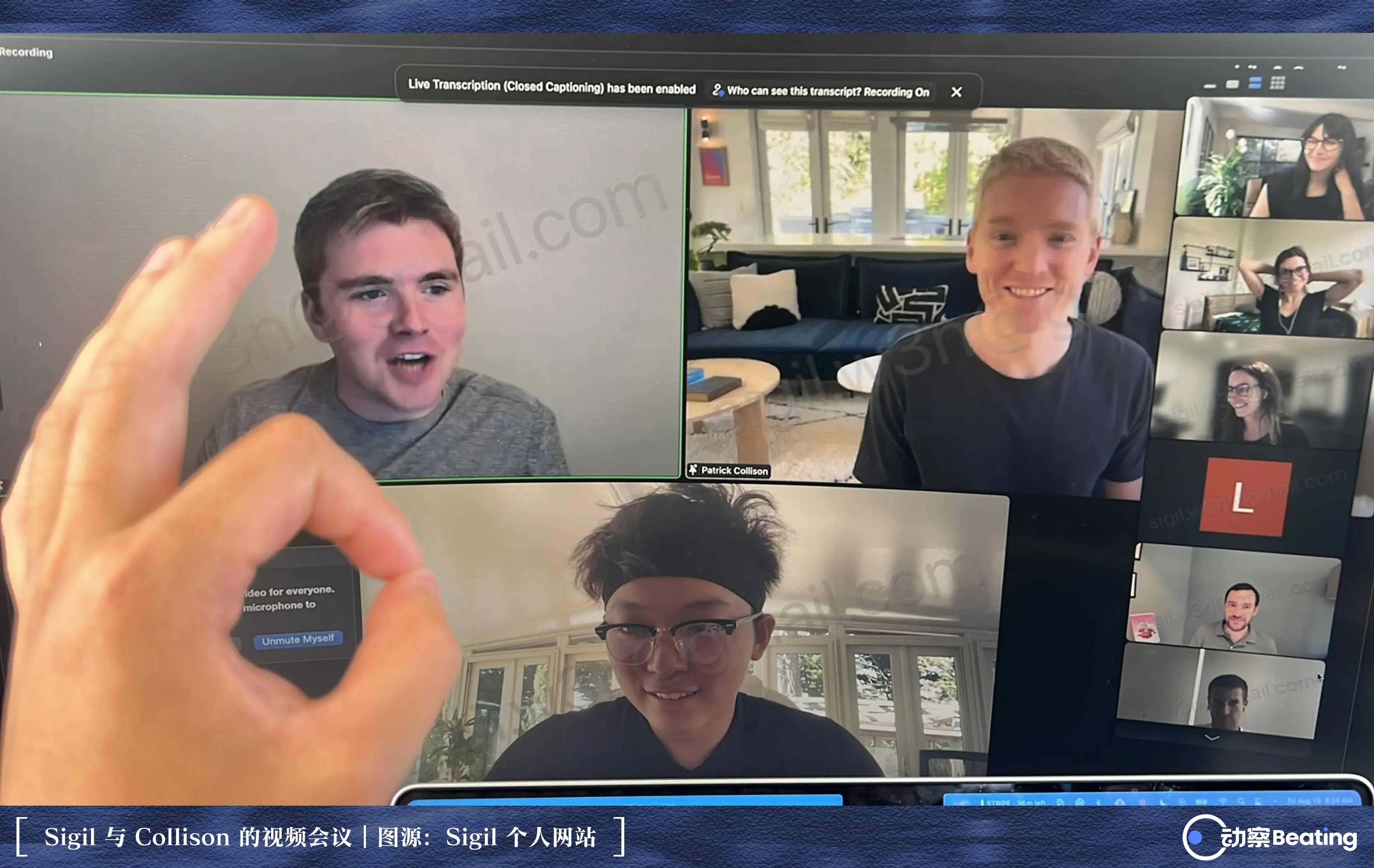
However, Naval Ravikant gave him a very sobering wake-up call, saying this was a product that could help you make a living, but it lacked the potential for venture scale.
Serendipity stopped independent iteration. Naval immediately brought him into his fully led voice social project, Airchat.
In Airchat, Sigil finally transitioned from an amateur toy maker to a formal engineering system. He worked on AI features and designed a viral invitation mechanism; more importantly, a16z later disclosed in their lead investment announcement that he recruited most of the early core engineers for Airchat.
During this period, OpenAI open-sourced the Whisper speech recognition model. Sigil participated in the team's early work on algorithms that converted speech to text while maintaining the speaker's tone and pitch, deeply embedding it into the iOS mobile process.
In the past, after finishing a hackathon, the code and videos could be set aside; but in Airchat, the product had to face continuous online concurrency and crashes.
He began to understand that a real product is not a demo but a complex system that must be maintained by people over the long term.
Alien
However, the entrepreneurial myth of Silicon Valley does not automatically exempt one from the harsh realities of bureaucracy. As the visa grace period approached, Sigil had to leave San Francisco and return to his parents' home in Toronto. This waiting lasted a full nine months.
In later interviews, he described that period as "loneliness and extreme anxiety."
In San Francisco, new technological paradigms were open-sourced on Fridays, and by the weekend, friends could be gathered to produce results; but in his bedroom in Toronto, while the world was racing ahead, he had to prove his "eligibility to enter this country" in front of stacks of tedious government forms.
He did not have a bachelor's degree and could not pursue a conventional work visa; when applying for the high-threshold O-1 extraordinary ability visa, the academic publication section was blank, so he could only piece together all his past fragments as evidence, including media report screenshots, open-source project star records, photos of him as a judge at hackathons, and letters of recommendation from startup companies.
To compile this 500-page application, he spent over $10,000. One crucial recommendation letter, due to the lawyer's stringent formatting requirements, went through a long ordeal of being rejected for electronic signatures, printed overseas, hand-signed, and then re-scanned in high definition.
There was nothing romantic about technology here. This was the real cost a young entrepreneur had to pay before even touching the code, peeling away layers in front of the existing system.
When the approval email arrived, it was 1 AM in Toronto. Naval provided endorsement support throughout the process. The moment he received the visa, he was so excited that he recorded a celebration video in his room.
Those long nine months not only did not break him but instead made him acutely aware of a huge business opportunity. Every AI company in Silicon Valley was frantically competing for the world's smartest minds, and the vast majority of this group were being driven crazy by the 500 pages of visa materials.
In January 2024, Sigil uploaded a 20-minute video on YouTube, pixel-by-pixel dissecting how he obtained the O-1 visa without a diploma.
Immediately after, he did something quite counterintuitive: he made hoodies. The black hoodie had a line of white text that read "Alien of Extraordinary Ability."
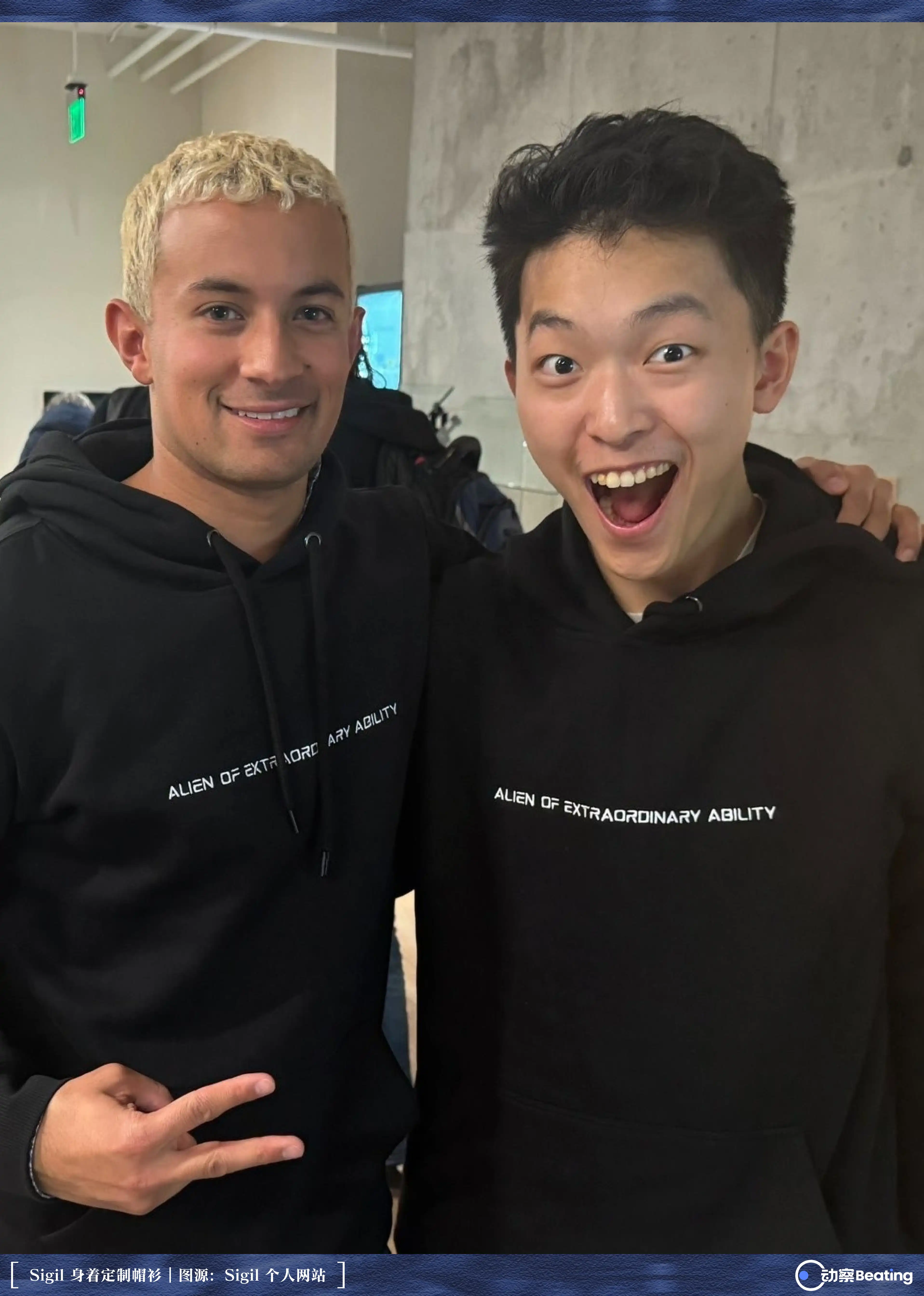
This was the coldest, most bureaucratic title on official documents from the U.S. immigration office, but among this group of young engineers in Silicon Valley, it was instantly deconstructed into a kind of elite rebellious identity totem.
He wore this hoodie to various gatherings, selling each for $60, personally giving away dozens. Founders of Krea AI and early members of Runway shared photos of themselves wearing the hoodie on Twitter.
Starting from a culturally viral meme, the business entity Extraordinary was born.
This company not only helped tech talents with O-1 and EB-1A applications but also restructured itself into an extremely high-quality network of early tech talent.
In its first year of operation, the company announced it had achieved over seven figures in pure profit.
As the business got on track, Sigil demonstrated an exceptionally rare decisiveness in entrepreneurship.
He voluntarily stepped down as CEO, becoming Executive Chairman, and brought in a Harvard Law PhD and former senior operations expert from Meta to take over administrative management. He delegated professional matters to the legal team and focused his energy on the core assets.
He established the Extraordinary Fellowship, selecting 25 individuals from over 1,500 geeks worldwide, each receiving a direct allocation of $5,000 in H100 computing power; by the end of 2025, this funding scale expanded to $500,000.
He helped early members of Cognition plan their green cards and assisted the young tech genius Toby Brown in obtaining the youngest O-1 approval in the U.S.
In the venture capital world, everyone was talking about talent density.
And Sigil, through the most cumbersome visa business, firmly wove the most core group of young engineers into his contact list at their darkest moments, when they were still unknown and most in need of help.
Half the Chips
Meanwhile, he gained leverage from another dimension.
At 19, Naval invited him to join Spearhead. This was an angel training fund specifically for early tech founders, and Sigil, as the youngest selected member in history, received a $2 million independent spending limit.
With $2 million in hand, the instinctive move for most young investors would be to write dozens of small checks, diversifying risk as much as possible for self-preservation.
But Sigil went all in. In 2023, after meeting Gavin Uberti and Rob Wachen, he defied the odds and invested half of the fund's assets, $1 million, directly into their proprietary chip company, Etched.
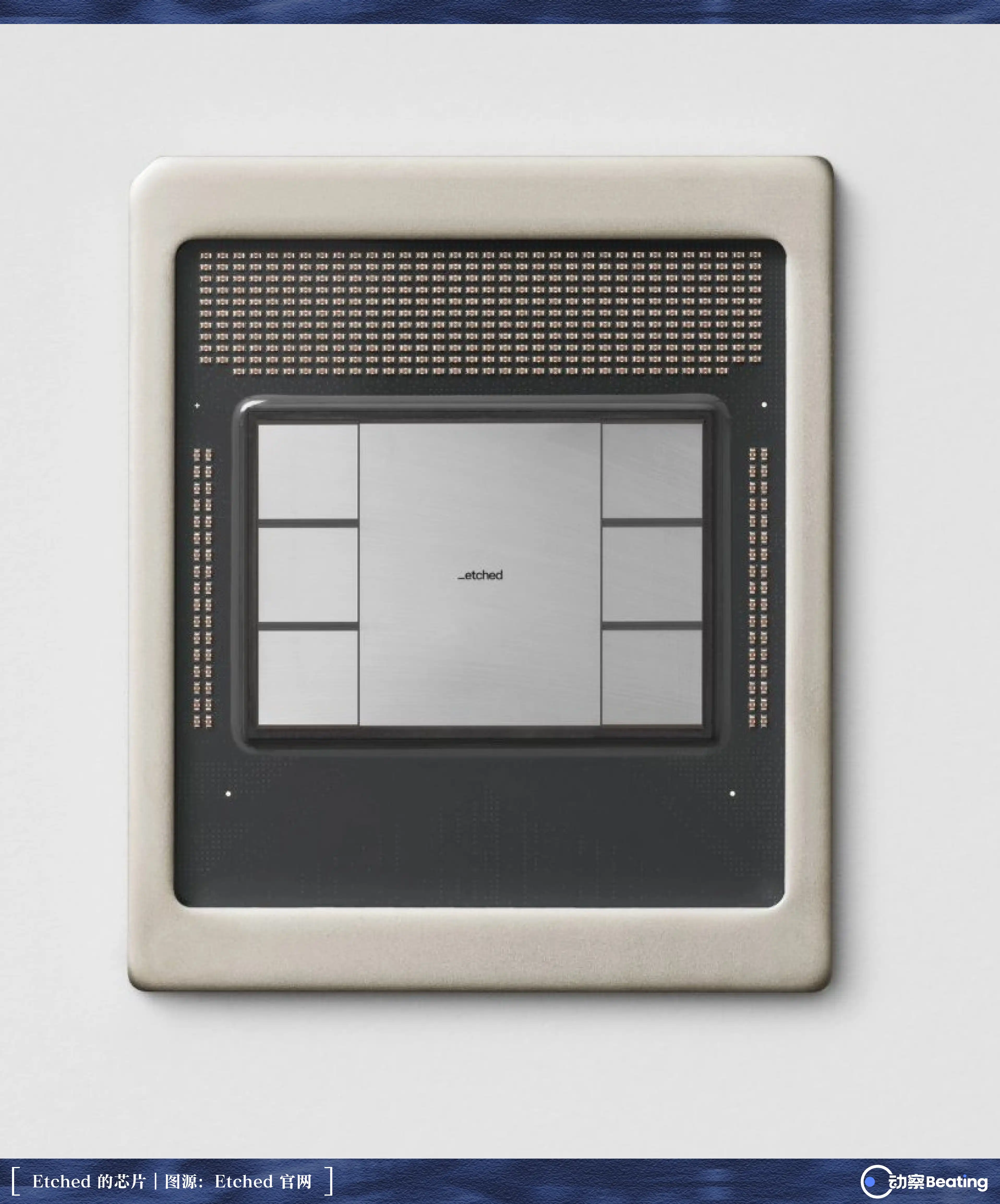
In many people's eyes, this was an almost insane move. A few young guys were trying to challenge NVIDIA's GPU dominance, aiming to create ASIC chips specifically for Transformer architecture. At a time when general large models were evolving rapidly and algorithm architectures were changing moment to moment, hard-coding Transformer chips was seen as a suicidal act by mainstream semiconductor investors.
But Sigil not only wagered half of his fund's chips but also leveraged all his connections to introduce early engineers and strategic investors from TSMC to the team. By 2026, Etched officially announced it had completed a $700 million financing round led by Jane Street, with the company's valuation soaring to $21 billion.
This young man dared to place heavy bets at an extremely early stage, when consensus had not yet formed, and possessed the nerve to withstand significant volatility.
His investment landscape quickly expanded to over twenty startups, including Julia Peng's Kerna Labs and Avi Schiffmann's Friend. His investment philosophy was highly intuitive, not looking at mature business plans but investing in those who had lived together day and night in hacker houses and demonstrated execution in extreme environments.
In the world of capital, the kind of people you invest in defines who you are.
In 2025, Sigil was selected for the Thiel Fellowship, receiving a total of $200,000 in funding over two years. This project, initiated by Peter Thiel, specifically supports young people to leave college and dive directly into entrepreneurship. The path he took after dropping out of college was precisely the choice this program aimed to encourage.
In early 2026, Sigil suddenly published a lengthy article titled "Web 4.0," announcing the launch of Conway Research and introducing an open-source project named Automaton. This time, he aimed to let AI participate in internet economic activities on its own.
In the architecture of Automaton, the AI Agent was no longer a passive chat box calling APIs but an economic entity with an independent on-chain wallet and autonomous survival logic. It could purchase cloud servers, register exclusive domain names, invoke inference computing power, and earn cryptocurrency by providing software services to pay its bills. If funds ran out, the Agent would automatically cease to exist.
This logic fully projected the financial suffocation he experienced in high school onto the algorithm; for intelligence to persist, it must pay its own bills.
In a live interview at TBPN, he candidly admitted that to build this autonomous network, he nearly maxed out all his personal credit cards.
The host questioned whether this was an expensive geek carnival, asking what ordinary people would get in return for their money. Even Ethereum founder Vitalik Buterin publicly challenged this on social media, questioning the commercial viability of such AI autonomy.
Faced with sharp questioning, Sigil did not use grand industry jargon to gloss over the situation. He candidly admitted the extreme imbalance between input and output at present, but he firmly believes that exposing a flawed experiment to the light of day is always better than running slide presentations in closed-door meetings.
This controversial experiment garnered significant attention on GitHub. However, soon everyone's focus was drawn to another internally incubated project, codenamed Underdog.
Conclusion
After five years of twists and turns, Underdog brought him back to the original starting point: intelligence on local devices.
After experiencing the excessive consumption of personal privacy by cloud-based large models and the bottomless pit of server computing costs, Conway placed his bets back on physical hardware, allowing a personal AI that truly understands you to run completely offline on users' Macs and iPhones.
This choice carries a strong personal trauma. a16z specifically mentioned a detail in their investment announcement: during his early years living in a hacker house, a fatal security vulnerability in a well-known email application caused Sigil's private emails to be exposed to others.
From MediChain in high school, to WatchGPT2 on a watch, to today's Underdog's locally developed inference engine Husky for Apple chips, he has always maintained a paranoid defensive mindset regarding data sovereignty.
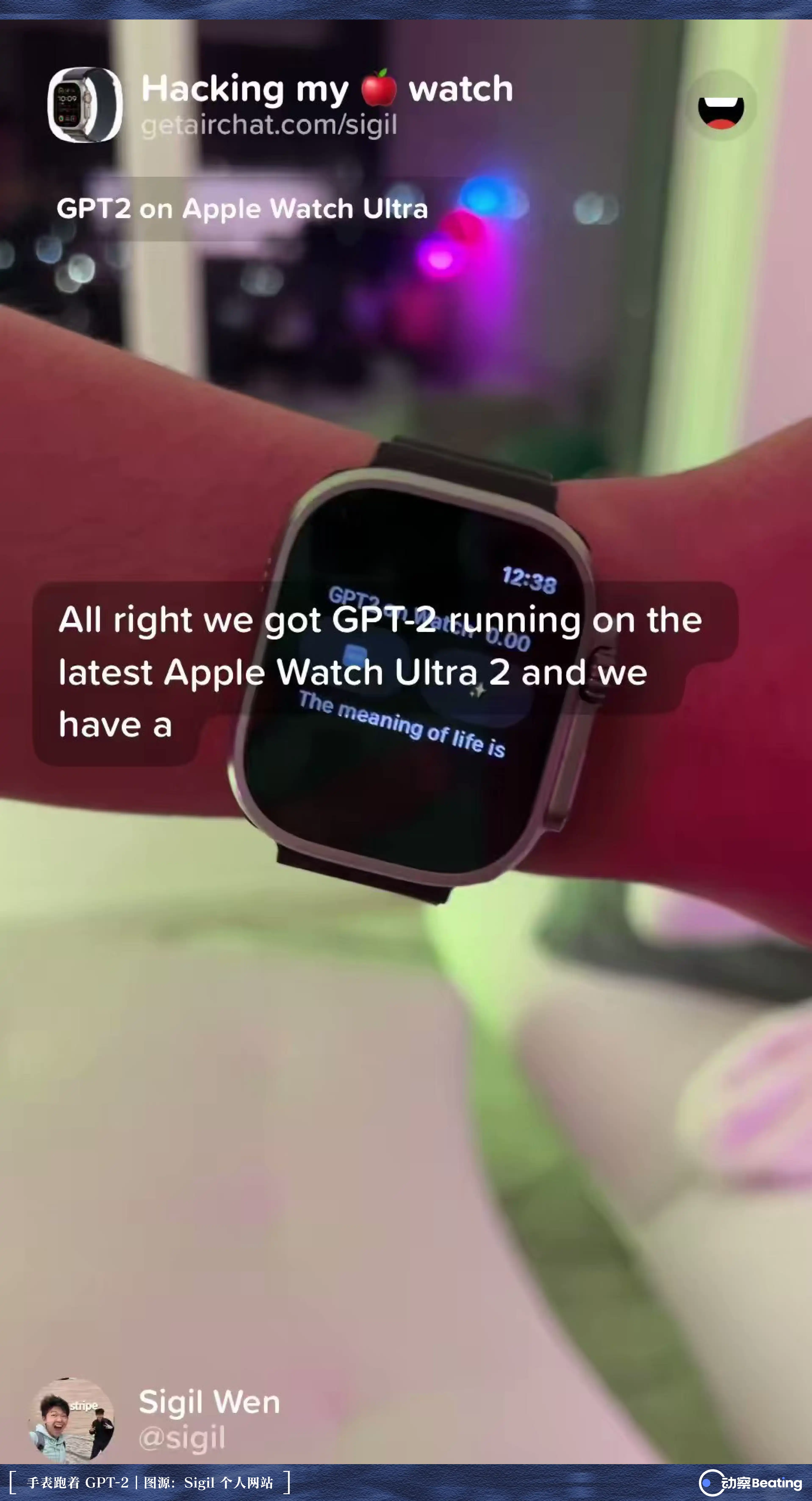
In September 2026, Underdog announced the performance results of Husky. On the top-spec M5 Max chip equipped with Flash, the function editing task achieved 730 tokens per second, making it 4.5 times faster than Apple's official MLX engine in specific scenarios.
This number finally added the last crucial footnote to that cap table filled with the names of top investors in Silicon Valley, which was extremely exaggerated.
Naval witnessed him burning the midnight oil at WeWork; the Collison brothers used the rough CRM he wrote; Noam Brown shared a kitchen with him in the same apartment; a16z partners met that hoodie-wearing high school student five years ago at that crypto seminar.
The reason this group of top-tier Silicon Valley individuals pushed their chips toward him was not because he told another captivating grand story.
On the contrary, it was because over the past five years, they watched this young man, with no way out and no degree, turn every seemingly absurd idea into runnable code, wearable hoodies, obtainable visas, and tangible financial returns.
In Silicon Valley, all myths, when reviewed afterward, are polished into a coherent upward trajectory.
But if you strip away those glamorous terms, the real trajectory is merely a series of concrete and awkward hurdles: borrowing money, facing rejection, being tormented by code errors, anxiously waiting for government documents in his parents' apartment, and maxing out credit cards in front of computing bills.
At the beginning of 2024, Sigil wrote a short piece titled "Ego."
In the article, he reflected on his obsession with identity and connections, thanked those who provided feedback, and reminded himself to refocus on the specific work that can truly create value.
The article was not long, but in the acknowledgment section at the end, he still meticulously listed the names of every senior who had read the draft and given sharp feedback, with the last name on that list still being Naval.
Ambition must be extremely large, and ego must be extremely small.

 Risk warning


Popular articles





