BTC $80,146.32 -1.57%
ETH $2,320.34 -2.00%
BNB $752.54 +0.48%
XRP $1.29 -2.83%
SOL $100.29 -2.26%
TRX $0.3309 -0.20%
DOGE $0.0782 -2.45%
ADA $0.1995 -3.66%
BCH $280.42 -6.19%
LINK $11.50 -2.47%
HYPE $79.31 -3.15%
AAVE $131.01 -3.28%
SUI $0.9156 -2.46%
XLM $0.1688 -1.70%
ZEC $1,250.66 -4.98%
AAPL $347.82 +0.36%
AMZN $251.82 -0.89%
GOOGL $292.01 -10.16%
MSFT $550.91 +3.89%
META $620.48 -0.54%
NVDA $214.24 -2.53%
TSLA $402.54 -1.78%
SNDK $1,362.58 -0.12%
INTC $92.34 -3.26%
SPCX $144.15 -3.93%
MU $954.03 -1.16%
AMD $563.54 -1.05%

coreweave

All
Article
Flash

first_img Morgan Stanley: The adjustment of chip stocks has entered its final stage, with a year-end target of 8000 points for the S&P 500

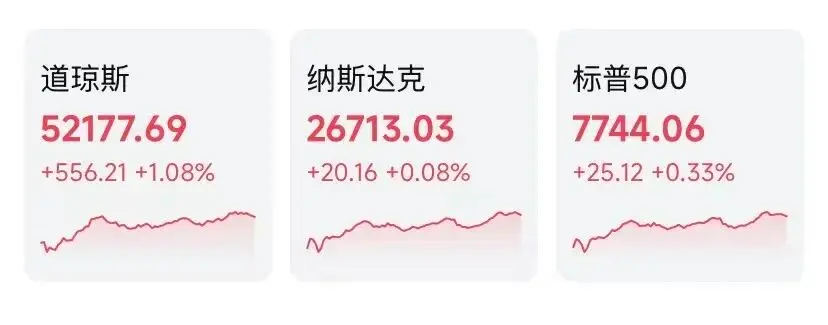
Morgan Stanley's Chief Equity Strategist Mike Wilson stated that despite the cooling enthusiasm for artificial intelligence trading and recent pressure on U.S. stocks, he maintains his forecast for the S&P 500 index to close at 8000 points by the end of the year. Morgan Stanley has set a tactical downside target for the S&P 500 at 7100 to 7200 points, slightly below the 200-day moving average, while the basic year-end target remains at 8000 points. Wilson noted that several upcoming clearing events, including the midterm elections, should mark the end of the current stock market adjustment.Wilson is relatively cautious about the semiconductor sector, believing that support levels may be significantly lower than current levels, but selling pressure may ease next month. The strategy team stated that as the market questions the timing and scale of revenue realization related to artificial intelligence, the semiconductor and other capital expenditure beneficiary sectors have become the epicenter of financing concerns; there are new doubts about the cost of capital for some participants and whether the credit market can provide sufficient funds to support related expenditures, as governments and non-AI-related capital expenditures are also competing for funds. The team indicated that given the possibility of more financing plans in the future, it is normal for the market to focus on the supply side, but this concern will persist until financing is completed.The five-year credit default swaps of the highly leveraged new cloud service provider CoreWeave closed above 1100 basis points last week, implying a default probability of about 50% on its debt within five years. Wilson's team believes that the adjustment in the semiconductor sector has entered its final stage, expecting this round of adjustment to end by mid-November; however, based on technical analysis and comparisons with the once-hot silver market, the sector may decline another 10% to 15% from current levels, with the Philadelphia Semiconductor Index potentially dipping to around 9500 points. Last week, the Nasdaq Composite Index fell a cumulative 0.7%, with a total decline of over 5% in the past two weeks; on Monday, Anthropic's public IPO prospectus boosted the AI sector, leading chip stocks to rise, and the Nasdaq Composite Index increased by 0.82%, closing at 26169.38 points.

first_img Grayscale Research Director: The decline in computing power stocks, demand will still be maintained

Grayscale Research Director Zach Pandl stated in "The Stack" published on October 20, 2026: AI computing infrastructure stocks have recently declined due to investors' concerns about rising borrowing costs, while the financing needs of related companies are high. The stock index, which includes AI cloud service providers CoreWeave and Nebius, has fallen by approximately 27% since the end of September, according to data from Bloomberg and Grayscale Investments, based on the Indxx High-Performance Computing Index, as of October 19, 2026.Pandl noted: Most of these companies are in early stages and capital-intensive, with some neocloud capital expenditures being several times their current revenue. The top five holdings in the index have a capital expenditure to sales ratio exceeding 230% over the past 12 months, with data as of October 19, 2026. He believes that while stock prices are correcting, the demand and prices for computing power remain stable, with demand for computing power increasing rather than decreasing.He also anticipates: The decline in token prices and the increase in AI agent usage will lead to higher inference demand, thereby supporting the growth of computing power demand; if demand increases and computing power prices remain high, these companies may benefit. He also mentioned the slowdown in GPU depreciation, as well as the overlap between AI computing power and the Bitcoin mining industry, with the possibility of rising Bitcoin prices. Pandl believes: Higher borrowing costs have suppressed computing infrastructure stocks, but the fundamental trend of rising computing power demand remains valid, and this correction should be seen as an opportunity to increase exposure to the energized compute layer.

Financial Times: Data center bonds are being sold off, AI borrowers are under pressure

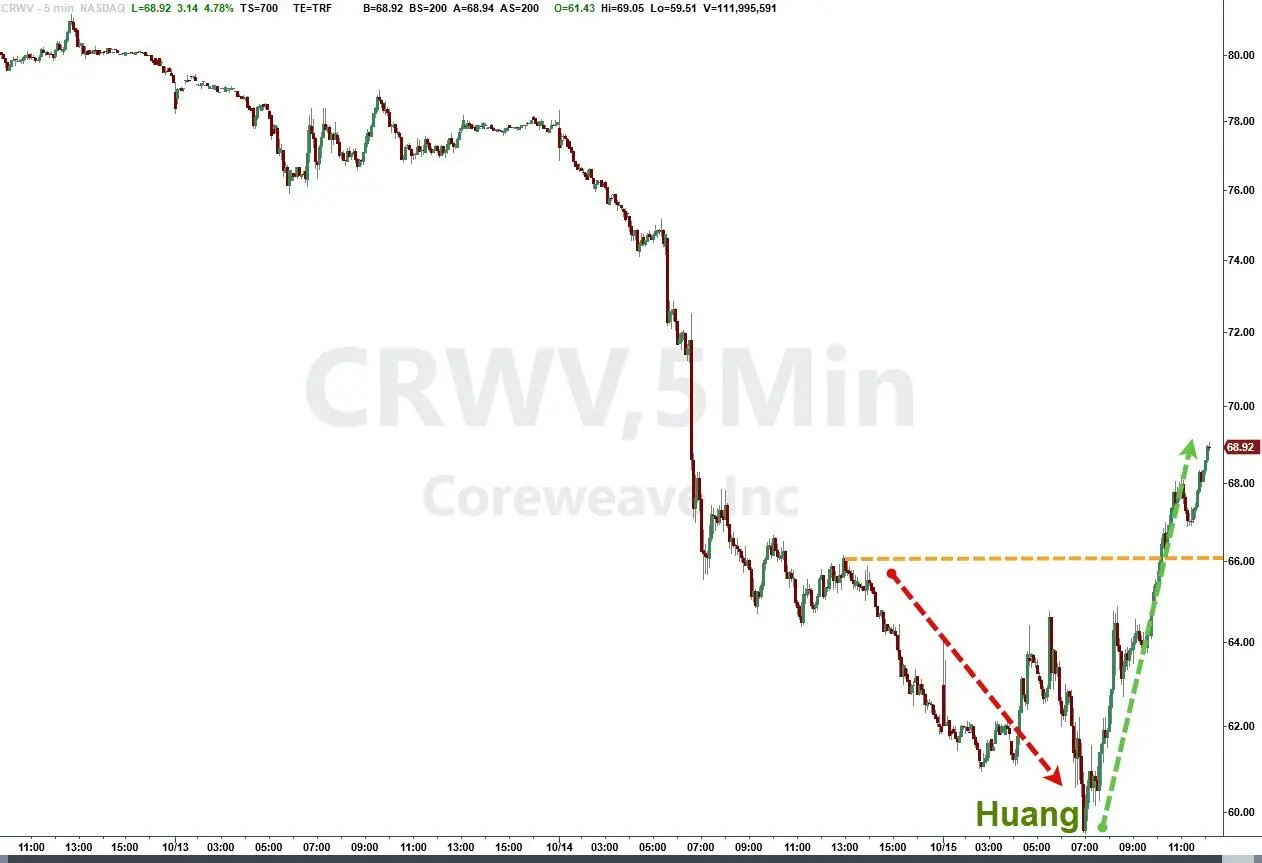
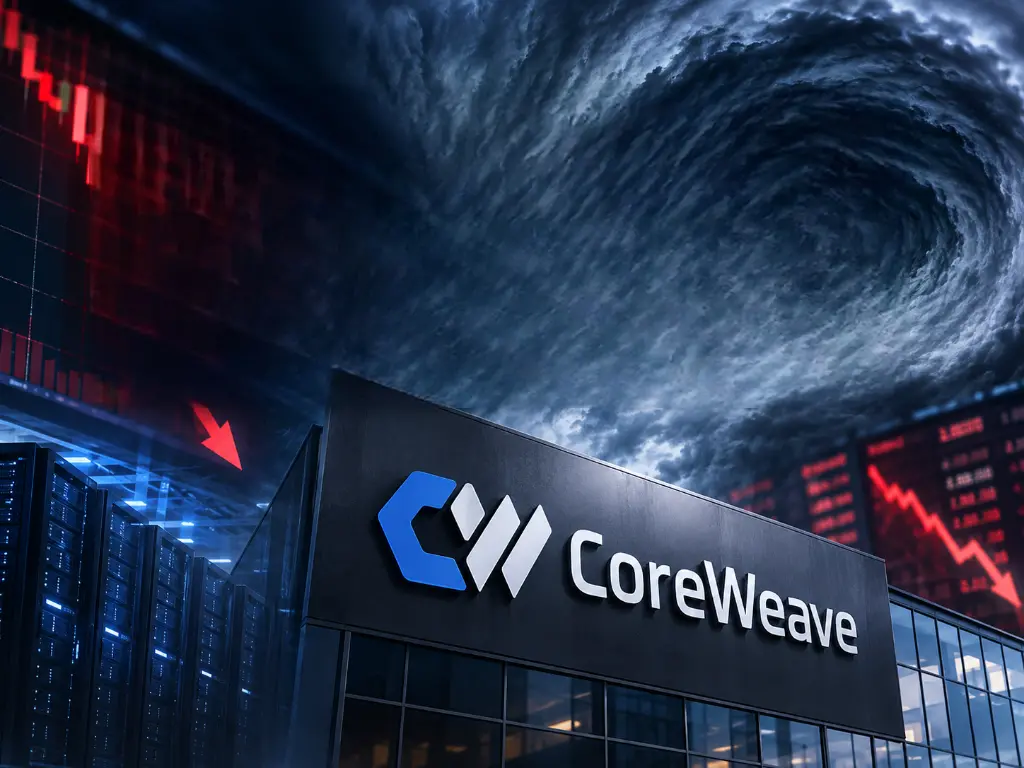
According to the Financial Times, investor confidence in whether the artificial intelligence boom can generate enough revenue to support the massive debts of data centers is weakening, leading to a significant drop in the financing bond prices of some large data center projects in the United States. Some bonds that provide funding for data center construction for companies like Meta, Nvidia, and Oracle have fallen below par value. For example, the bonds of CoreWeave, a cloud computing infrastructure provider invested in by Nvidia, have dropped to below 80 cents on the dollar, reaching levels typically considered distressed bonds, with yields nearing 15% on Thursday. The company's stock price fell 17% this week, while competitor Nebius dropped 18%, and Nvidia's market value evaporated by about $270 billion over the past week.Ludovic Subran, Chief Investment Officer of Allianz Group, stated that data center bonds are entering a "Darwinian moment," where projects with weaker credit quality will face survival challenges. He noted that power supply issues and construction delays have led to widening credit spreads, reflecting that the market had previously been overly optimistic in pricing the execution risks of data center debt. The core concern in the market is the significant gap between the scale of AI infrastructure investment and future revenues. OpenAI has postponed its IPO until next year, and Anthropic's quarterly sales growth has slowed, exacerbating doubts about the sustainability of growth in the AI industry.Research firm Gartner predicts that by 2030, 80% of new cloud service providers may not be able to continue operating independently. It estimates that AI data center owners will need to achieve $8.5 trillion in revenue by the end of 2030 to cover capital and financing costs and achieve reasonable returns, but consumer and enterprise spending on AI services is expected to reach only $3.6 trillion at most, indicating that over $4 trillion in assets may face impairment risks by 2032. In some areas of the United States, restrictions have been tightened due to issues related to water usage, noise, and air pollution from data centers, and delays in power supply approvals have further hindered project progress. Investors remain cautious about the circular financing model where clients and suppliers within the industry finance each other. Nvidia CEO Jensen Huang stated on Thursday that he believes CoreWeave does not need Nvidia to provide backstop support and mentioned that the company's capital costs are decreasing and operational strength is continuously improving.
first_img Grayscale Research Director: Cheaper Proxy AI Will Drive Up Computing Power Demand

Grayscale's Research Director Zach Pandl stated in his column The Stack on October 8 that the rising demand for AI is due to decreasing usage costs and technology's ability to perform tasks more autonomously, thereby increasing the demand for computing power and the physical infrastructure that supports AI. Lower costs can unleash more AI activities, and the low-cost competition of open-source weight models is driving down token prices, making cheaper intelligence economically viable for more applications and automated workflows.The article cites that Anthropic's latest Sonnet model claims to reduce the cost of each task by up to 30%; OpenAI's always-on agent dots, launched on September 29, can work towards user goals around the clock, potentially significantly increasing the demand for computing power. Pandl compares that chatbots primarily answer questions, while agents execute multi-step processes to achieve goals, with tasks like preparing for client meetings potentially consuming 5 to 50 times the tokens of a single chat interaction, and always-on agents may extend processing beyond a single conversation.Pandl cites Goldman Sachs' prediction that by 2030, token consumption could increase 24 times, primarily driven by agents; even with improved efficiency, if usage grows faster, the total demand for computing power may still rise. He points out that digital activities still rely on physical infrastructure that requires time to deliver, such as electricity, data centers, and GPUs, and cheaper AI can coexist with tight computing power supply, mentioning that CoreWeave recently signed new contracts at higher computing power prices. His conclusion is that cheaper intelligence and stronger agents may expand use cases and usage enough to offset efficiency gains, thereby supporting the demand for scarce computing power and benefiting its owners.
app_icon
ChainCatcher Building the Web3 world with innovations.