BTC $79,840.32 -1.99%
ETH $2,312.46 -2.56%
BNB $751.71 +0.13%
XRP $1.29 -3.23%
SOL $99.90 -2.70%
TRX $0.3311 -0.06%
DOGE $0.0777 -2.95%
ADA $0.1980 -4.45%
BCH $278.89 -6.57%
LINK $11.43 -3.18%
HYPE $78.94 -3.17%
AAVE $130.27 -3.78%
SUI $0.9087 -3.53%
XLM $0.1676 -2.43%
ZEC $1,242.10 -5.43%
AAPL $347.68 +0.22%
AMZN $252.37 -0.70%
GOOGL $292.25 -9.98%
MSFT $549.73 +3.69%
META $620.73 -0.54%
NVDA $213.45 -2.81%
TSLA $400.19 -2.22%
SNDK $1,349.67 -0.97%
INTC $91.56 -4.04%
SPCX $143.47 -4.30%
MU $945.48 -2.05%
AMD $558.08 -1.86%

ppi

All
Article
Flash

first_img China's artificial intelligence stocks have significantly declined, with the STAR50 dropping 40% in the past four months

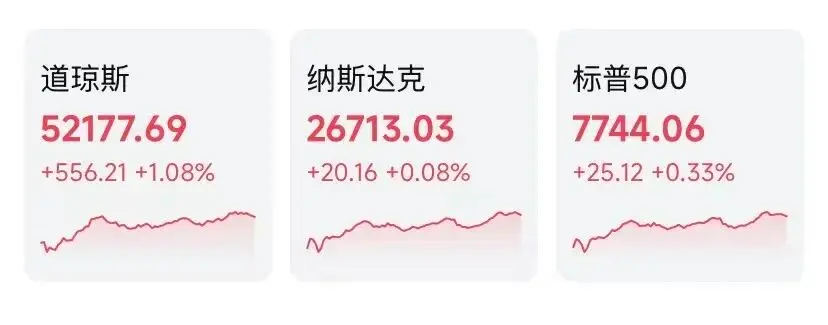
Reuters reported on October 26 that amid fluctuations in global tech stocks, Chinese artificial intelligence and semiconductor-related stocks have already declined. The STAR50 index, dominated by mainland artificial intelligence and semiconductor leaders, has dropped 40% in less than four months, with a market value evaporating by about $480 billion. The CSI 300 index has fallen about 20% from its June peak, interrupting nearly two years of gains. Beijing fund manager Dong Baozhen said: The stock market has evolved into a speculative frenzy bull market, and now the bubble is bursting. Traders noted that the decline does not have a clear single trigger factor; high prices, tax bills, and the possibility of the U.S. or other countries banning Chinese equipment from entering data centers have all had an impact. During the same period, the Nasdaq has retreated 6% from its record high three weeks ago.Goldman Sachs stated that AI stocks account for 42% of China's market value and 57% of the trading volume of mainland A-shares and Hong Kong H-shares. When the robotics company Yushu went public, retail investors oversubscribed by about 8,000 times, and since trading began in August, its stock price has fallen by about half; chip company Changxin Storage has dropped more than a quarter in the past month. Mu Xi Integrated Circuit and Moore Threads saw their stock prices rise by about 700% and 400% respectively on their first day of trading last year, but have also fallen by about half since July. Optical module companies Zhongji Xuchuang and Guangxun Technology have dropped about 60% from their June and July peaks, partly due to the U.S. moving towards banning these companies from supplying to U.S. data centers. Hainan investor Chen Wensheng said: He bought Yushu because he felt official support and that there were state-owned background funds investing, but he is currently suffering losses with friends.The STAR50 is currently still about 100 times its past earnings, having fallen from a high of nearly 250 times, with investors comparing it to the Nasdaq 100's price-to-earnings ratio of about 30 times. Hong Hao, Managing Director and Chief Investment Officer of Lotus Asset Management in Hong Kong, said: The current situation will cause many companies trying to go public to pause. Leo Wang, a partner at Beijing Qianchuang Capital, said: Overemphasizing the market capitalization weight of tech companies in major indices will create serious bubbles in certain industries and siphon off funds from other sectors. Wang Zhuo, a partner at Shanghai Zhuozhu Investment Management, said: Chip manufacturers and AI suppliers will ultimately fall into price wars like other Chinese manufacturers. HSBC Research stated that Asian funds have generally been selling over the past three months but are still overweight in China; Goldman Sachs' updated recommendation list this month includes Zhongji Xuchuang and Changxin Storage. The China Securities Regulatory Commission did not immediately respond to Reuters' inquiries; Chairman Wu Qing met with market participants earlier this month to hear suggestions for improving the capital market.

Waller refused to predict the remaining interest rate decisions for the year, with the probability of an interest rate hike in October dropping to about 17%

During the IMF meeting in Bangkok, Federal Reserve Chairman Kevin Walsh stated that he would not predict the outcomes of the remaining two interest rate meetings this year and was unwilling to disclose potential actions in advance. He said, "This is a new chapter for the Federal Reserve; we no longer do this." Regarding the recent signals from colleagues indicating "no urgency to raise interest rates this month," he neither explicitly supported nor refuted them. Walsh reiterated that the Federal Reserve will achieve price stability and noted that the global economy has largely aligned with central bank expectations since the interest rate hike in September, while describing the recent actions of various central banks as a synchronized tightening of monetary policy in most regions of the world.In September, the Federal Reserve unanimously raised interest rates by 25 basis points, increasing the target range for the federal funds rate to 3.75% to 4%. At that time, most officials expected at least one more rate hike this year. Despite the core CPI rising by 0.33% month-on-month in September, marking a strong increase for the second consecutive month, and the latest producer price data also being robust, Walsh hardly mentioned this week's inflation report and did not significantly attempt to change market expectations for the October meeting. Reports indicated that during his speech, the dollar weakened, and market bets on an interest rate hike in October dropped from about 30% to around 17%.Additionally, Walsh believes that the U.S. is experiencing significant investment growth and holds an optimistic view on economic resilience and the productivity boost brought by AI, but he warned that the development path will be "very bumpy," and the short-term impact of AI on employment remains unclear. DBS Bank macro strategist Wei Liang Chang stated that Walsh reiterated that artificial intelligence will improve productivity in the medium term, which may help ease inflation expectations and alleviate concerns about the Federal Reserve's consecutive rate hikes. Saxo Markets Chief Investment Strategist Charu Chanana noted that Walsh's refusal to commit to another rate hike led to some bets on Federal Reserve rate hikes falling flat, and related comments did not help the dollar following the release of strong inflation data.
app_icon
ChainCatcher Building the Web3 world with innovations.