BTC $77,267.67 -0.71%
ETH $2,525.40 -1.96%
BNB $731.24 +0.17%
XRP $1.37 -0.41%
SOL $102.03 -0.28%
TRX $0.3398 +1.07%
DOGE $0.0848 -0.72%
ADA $0.2074 -0.61%
BCH $228.35 -1.87%
LINK $11.51 -2.23%
HYPE $80.64 -1.67%
AAVE $125.83 -0.11%
SUI $0.7252 -1.80%
XLM $0.1813 +0.05%
ZEC $1,139.41 -3.47%
AAPL $333.38 +0.05%
AMZN $256.81 +0.21%
GOOGL $339.50 -0.39%
MSFT $495.21 -0.03%
META $649.13 -0.08%
NVDA $219.46 -0.02%
TSLA $365.98 -0.03%
SNDK $1,634.14 -0.10%
INTC $102.84 -0.47%
SPCX $150.06 +0.27%
MU $974.22 -0.31%
AMD $517.66 +0.34%
BTC $77,267.67 -0.71%
ETH $2,525.40 -1.96%
BNB $731.24 +0.17%
XRP $1.37 -0.41%
SOL $102.03 -0.28%
TRX $0.3398 +1.07%
DOGE $0.0848 -0.72%
ADA $0.2074 -0.61%
BCH $228.35 -1.87%
LINK $11.51 -2.23%
HYPE $80.64 -1.67%
AAVE $125.83 -0.11%
SUI $0.7252 -1.80%
XLM $0.1813 +0.05%
ZEC $1,139.41 -3.47%
AAPL $333.38 +0.05%
AMZN $256.81 +0.21%
GOOGL $339.50 -0.39%
MSFT $495.21 -0.03%
META $649.13 -0.08%
NVDA $219.46 -0.02%
TSLA $365.98 -0.03%
SNDK $1,634.14 -0.10%
INTC $102.84 -0.47%
SPCX $150.06 +0.27%
MU $974.22 -0.31%
AMD $517.66 +0.34%

cpo

All
Article
Flash

first_img Market news: It is rumored that TSMC is investing over 30 billion yuan to acquire AUO's two factories, laying out the CPU ecosystem

According to the Industrial and Commercial Times, there are widespread rumors in the market that TSMC intends to invest over 30 billion New Taiwan dollars to acquire AUO's two old-generation panel factories, L7 and L5C, located in the Central Taiwan Science Park, adjacent to TSMC's plant, to reserve space for large-size packaging such as CoPoS and FOPLP. Informed sources indicate that TSMC has sent personnel to complete on-site audits, and AUO plans to prioritize the disposal of the two factories, aiming to submit to the board of directors in October, with an estimated completion of production line relocation and factory vacating by the end of the first quarter next year. Both TSMC and AUO have not confirmed this transaction.Semiconductor industry analysts suggest that TSMC is extending from the A14 advanced process and advanced packaging to the COUPE silicon photonics platform, leveraging Taichung's role as a hub for precision optical components to build the Central Taiwan Science Park into a CPO ecosystem. TSMC's existing Fab 15A in the Science Park mainly uses a 28-nanometer process and can support the manufacturing of silicon interposers; the second phase of the Science Park, Fab 25, is planned to build four A14 wafer fabs, with the first two already entering steel structure construction, and the first factory striving for completion before April 2027. The existing advanced packaging and testing facility AP5 in the Science Park has already started CoWoS production, and in the future, it will integrate electronic and photonic chips through the COUPE platform.On the optical side, Largan Precision has recently acquired land and factories in Nantun, Taichung Industrial Zone, and nearby precision machinery clusters, with three transactions totaling approximately 2.568 billion, interpreted by the market as a warm-up for CPO mass production. The company has obtained its first mass production order for fiber optic arrays, with the first automated trial production line aiming for completion by the end of the third quarter, and mass production expected as early as mid-2027, while also laying out micro-lens arrays and integrated FAUs.

Western Digital CPO: Flash memory handles the present, HDD manages the entire lifecycle

Ahmed Shihab, Chief Product Officer of Western Digital, stated that the key to AI storage competition is not simply pursuing the fastest medium, but whether it can continuously scale capacity at an affordable cost. He believes that many architectures run well in the early stages, but when the data scale grows from several PB to hundreds of PB or even EB levels, issues may arise due to uncontrolled costs.Flash storage is suitable for high-performance, low-latency scenarios such as model weights, GPU overflow, KV caches, and session contexts; HDDs are more suitable for large-scale, long-term storage, and cost-sensitive data such as training corpora, logs, checkpoints, compliance records, synthetic data, and inference outputs. He summarized: "Flash handles the present, HDD handles the entire lifecycle."At the scale of AI, storage costs themselves will become an architectural issue. Long-term storage of large volumes of data on high-performance media will crowd out budgets for computing, networking, power, and personnel. For many bulk storage workloads, the issue is not whether flash can store, but whether customers can afford the total cost of using flash in the long term.In the future, AI storage will not be dominated by a single technology, but should be designed in layers based on performance, cost, power consumption, density, reliability, and data lifecycle. He emphasized that this is not a competition between flash and HDD, but rather a need to match the appropriate medium for different workloads from the very beginning; otherwise, the architecture may impact business sustainability as it scales.

NVIDIA announces the mass production of Co-Packaged Optics (CPO), related concept stocks may see a rebound

Gilad Shainer, Senior Vice President of NVIDIA, announced at a recent technology forum that CPO has entered the mass production stage. The switches co-developed with the supply chain have begun delivery to closely collaborating customers and are being deployed in-house. It is expected that starting this year, switches equipped with CPO technology will be widely adopted in AI factories around the world.Shainer pointed out that the biggest opportunity in the future optical communication market lies in vertical scaling, which will require bandwidth efficiency more than ten times that of horizontal scaling. Previously, Shainer was responsible for R&D at Mellanox, and after the company was acquired by NVIDIA, he led the AI platform network transmission department and co-developed the COUPE silicon photonics packaging platform with TSMC. This announcement helps to dispel market concerns about the upgrade of optical communication specifications and boosts the operational outlook for related manufacturers.It is reported that NVIDIA has already implemented CPO on Spectrum-X, aiming to align with the upcoming large-scale deployment of the Vera Rubin AI platform (which has a computing speed at least three times faster than GB300). Trendforce estimates that the CPO/NPO market size will exceed $39 billion by 2030, with significant acceleration in growth momentum from 2028 to 2029 as optical interconnects are introduced with Scale-up.

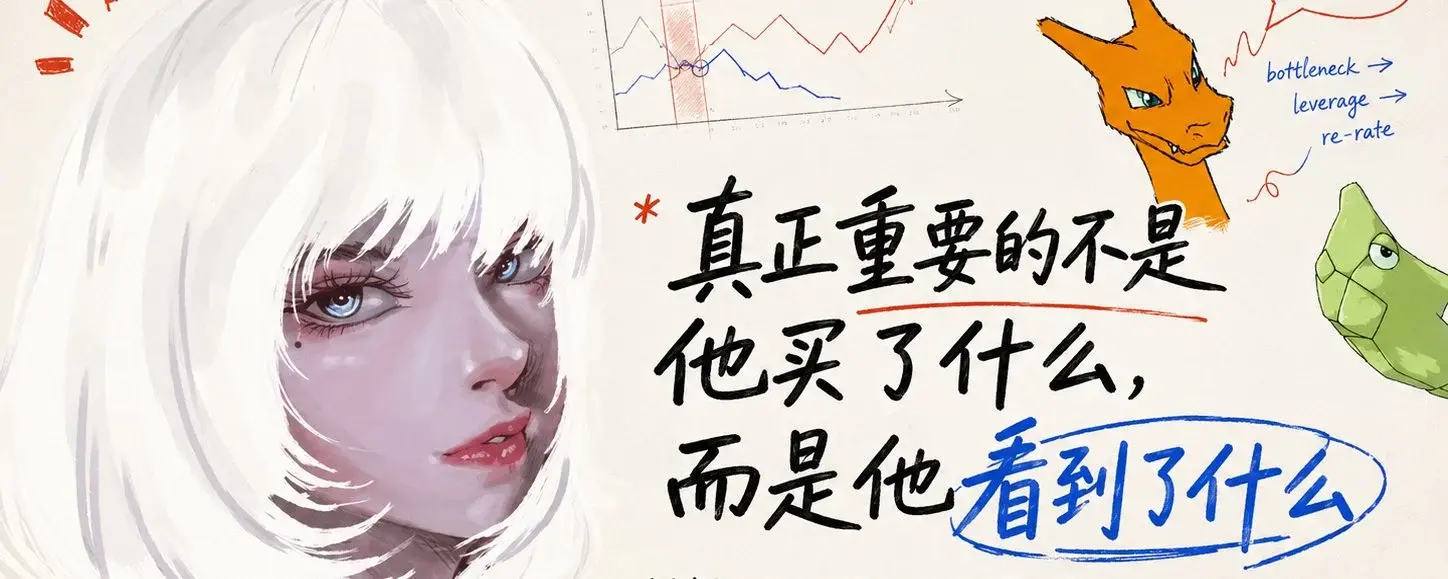
"New Stock God" Serenity: Sivers may become a key bottleneck and "choke point" in the CPO industry

The "New Stock God" Serenity published an analysis stating that as Co-Packaged Optics (CPO) technology is expected to enter large-scale deployment in the second half of 2027, Sivers Semiconductors (SIVE) may play both a bottleneck and a key node role in the industry.It pointed out that there are signs of tight supply for Continuous Wave (CW) lasers. Affected by previous orders from NVIDIA, the capacities of companies such as Sumitomo Electric, Furukawa Electric, and Win Semi are highly saturated. Meanwhile, Sivers, which adopts a fab-lite model, has effectively secured a significant amount of CW laser supply by locking in capacity with foundries like Win Semi in advance.The analysis believes that multiple CPO routes, including ASIC projects from Ayar Labs, Jabil, Marvell Celestial, and other large-scale cloud providers, are highly dependent on Sivers' laser solutions, lacking mature alternative sources in the short term, which positions it as a structural "bottleneck" in the entire ecosystem.Additionally, Sivers is the default reference laser design solution for GlobalFoundries, with relevant ecosystem participants including AMD and several CPO chip suppliers. Aside from vertically integrated companies like NVIDIA and Broadcom, most ASIC and commercial CPO projects are likely to revolve around Sivers.Serenity expects that as the CPO market size grows from nearly zero to between $81 billion and $91 billion in about a year and a half, Sivers is likely to replicate Lumentum's growth path and may grow into a company with a market value of around $75 billion in the coming years. However, the above views only represent the personal judgment of market analysts.
app_icon
ChainCatcher Building the Web3 world with innovations.