BTC $77,348.13 -0.63%
ETH $2,533.21 -1.32%
BNB $734.45 +0.41%
XRP $1.37 -0.68%
SOL $102.01 -0.10%
TRX $0.3402 +1.31%
DOGE $0.0850 -0.30%
ADA $0.2080 -0.25%
BCH $230.51 -1.39%
LINK $11.58 -1.42%
HYPE $80.17 -2.63%
AAVE $126.20 +0.02%
SUI $0.7281 -1.95%
XLM $0.1823 +0.63%
ZEC $1,141.42 -2.68%
AAPL $333.30 -0.37%
AMZN $256.67 +0.24%
GOOGL $339.59 -0.55%
MSFT $495.20 -0.13%
META $648.82 -0.26%
NVDA $219.46 -0.11%
TSLA $365.90 +0.25%
SNDK $1,633.00 +0.05%
INTC $103.14 -0.08%
SPCX $150.11 +0.97%
MU $975.25 +0.15%
AMD $517.66 +0.64%
BTC $77,348.13 -0.63%
ETH $2,533.21 -1.32%
BNB $734.45 +0.41%
XRP $1.37 -0.68%
SOL $102.01 -0.10%
TRX $0.3402 +1.31%
DOGE $0.0850 -0.30%
ADA $0.2080 -0.25%
BCH $230.51 -1.39%
LINK $11.58 -1.42%
HYPE $80.17 -2.63%
AAVE $126.20 +0.02%
SUI $0.7281 -1.95%
XLM $0.1823 +0.63%
ZEC $1,141.42 -2.68%
AAPL $333.30 -0.37%
AMZN $256.67 +0.24%
GOOGL $339.59 -0.55%
MSFT $495.20 -0.13%
META $648.82 -0.26%
NVDA $219.46 -0.11%
TSLA $365.90 +0.25%
SNDK $1,633.00 +0.05%
INTC $103.14 -0.08%
SPCX $150.11 +0.97%
MU $975.25 +0.15%
AMD $517.66 +0.64%

g20

All
Article
Flash

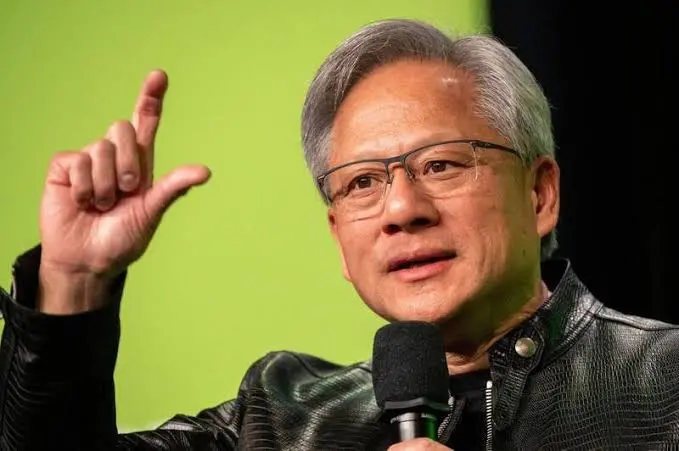
first_img Jensen Huang stated at the G20 that computing power has become a national-level infrastructure, with an investment of about 50 to 60 billion dollars for 1 GW

On Wednesday, local time in the United States, NVIDIA CEO Jensen Huang appeared at the G20 Innovation Ministerial Meeting and engaged in a fireside chat with U.S. Secretary of Commerce Gina Raimondo. Huang stated that AI is evolving into a national economic infrastructure similar to electricity and the internet, and the biggest risk countries face is not sufficiently investing in and adopting AI, ultimately being left behind by the industrial revolution.Huang mentioned that currently, building 1 gigawatt of AI infrastructure requires an investment of about $50 billion to $60 billion, and he expects that from now until the end of this decade, the scale of related construction will reach approximately 100 gigawatts. He also referenced the "five-layer cake" model of energy, chips, infrastructure, models, and applications, indicating that every country needs to build AI infrastructure and decide which aspects they wish to participate in.Huang anticipates that in the coming years, AI will essentially achieve AGI, and the next phase will transition from large language models to intelligent agents and embodied intelligence. He believes that AI is more likely to replace tasks rather than completely replace jobs, with operational tasks such as writing and information processing potentially becoming gradually automated.

first_img G20 finance ministers commit to establishing a clear path for digital asset innovation

After a two-day meeting in Asheville, North Carolina, G20 finance ministers and central bank governors issued a statement committing to developing clearer rules for digital assets to promote financial innovation. The statement acknowledges that digital financial innovations, including digital assets, can support "broad economic growth" and play a key role in driving private sector innovation.The statement reads: "We are committed to advancing a responsible and effective regulatory and supervisory framework to maintain financial stability, support economic growth, and establish a clear path for sound digital finance and digital asset innovation, while taking into account cross-border opportunities and challenges." G20 officials expressed anticipation for the upcoming findings from the Financial Stability Board regarding the cross-border impacts of global stablecoin arrangements, as well as related reports on stablecoin data sources, availability, and potential challenges.They also reiterated their commitment to strengthening the G20 roadmap for cross-border payments and called on member countries to extend the operating hours of large payment systems. Several G20 member countries, including the United States, the European Union, and Japan, have reviewed the potential of digital assets or stablecoins to enhance the efficiency and accessibility of existing financial and payment systems and have established relevant frameworks.

G20 leaders will discuss advancing the proposed cryptocurrency regulatory roadmap by the FSB and IMF in October

ChainCatcher news, G20 member country leaders expressed support on Saturday for the recommendations of the Financial Stability Board (FSB) and the International Monetary Fund (IMF) regarding the regulation and oversight of crypto asset activities and markets, as well as global stablecoins.The G20 will continue to closely monitor the rapidly evolving risks of the crypto asset ecosystem. The G20 finance ministers and central bank governors will discuss advancing the proposed roadmap by the FSB and IMF at their meeting in October 2023. The next G20 finance ministers and central bank governors meeting is scheduled to be held in Marrakech, Morocco.The G20 leaders' summit declaration stated, "We warmly welcome the comprehensive document submitted by the IMF-FSB (which includes the roadmap), which will support a coordinated and comprehensive policy and regulatory framework, while taking into account the pervasive risks as well as the risks unique to emerging markets and developing economies (EMDE), and the FATF standards being implemented globally to address money laundering and terrorist financing risks."G20 leaders acknowledged the work plans of the FSB and standard-setting bodies (SSBs) on crypto assets, as well as the report from the Bank for International Settlements (BIS) on key elements and risks of the crypto ecosystem.G20 leaders also called for the swift implementation of the Crypto Asset Reporting Framework (CARF) and the amendments to the Common Reporting Standard (CRS).

IMF and FSB Joint Document: Banning Cryptocurrencies Does Not Help Eliminate Their Risks

ChainCatcher news, according to CoinDesk, the International Monetary Fund (IMF) and the Financial Stability Board (FSB) released a joint policy roadmap on Thursday, stating that merely banning cryptocurrencies will not eliminate their risks. The joint document from the IMF and FSB will be submitted to the G20 this weekend.The report states that to address the macroeconomic risks posed by cryptocurrencies, jurisdictions should "strengthen monetary policy frameworks, guard against excessive volatility in capital flows, and provide clear tax treatment for cryptocurrencies." The report reiterates the IMF's position that a comprehensive ban on cryptocurrencies may not help mitigate the associated risks, and targeted restrictions may be particularly suitable for emerging economies.The report notes that implementing a comprehensive ban in one jurisdiction, deeming all cryptocurrency activities (including trading and mining) illegal, is not only costly and technically challenging but may also "lead to activities shifting to other jurisdictions, thereby creating spillover risks."The report emphasizes that restrictive measures should not replace strong macroeconomic policies, credible institutional frameworks, and comprehensive regulation and supervision, which are the first line of defense against the macroeconomic and financial risks posed by crypto assets; however, this does not mean that all bans should be ruled out. During times of stress or when countries find better internal solutions, jurisdictions may consider targeted temporary restrictions to manage certain risk factors.In response to G20 countries' concerns about the spread of stablecoins, the IMF/FSB roadmap proposes solutions. The report states that if stablecoins denominated in foreign currencies are easier and cheaper to access than foreign currency bank accounts, rapid capital outflows or reversals may occur. While stablecoins can facilitate widespread transactions, they may pose risks in maintaining stable value and rely on private issuers. Global stablecoins adopted by multiple jurisdictions "may transmit volatility more abruptly than other crypto assets and could pose significant risks to financial stability."
app_icon
ChainCatcher Building the Web3 world with innovations.