BTC $64,717.08 +0.47%
ETH $1,921.16 +0.46%
BNB $588.34 +3.25%
XRP $1.08 -0.05%
SOL $74.14 +0.39%
TRX $0.3282 +0.42%
DOGE $0.0700 -0.62%
ADA $0.1639 +0.21%
BCH $210.83 -0.52%
LINK $8.44 +0.62%
HYPE $53.15 -3.12%
AAVE $98.21 +0.57%
SUI $0.6929 +0.66%
XLM $0.1726 -0.76%
ZEC $476.40 +3.54%
BTC $64,717.08 +0.47%
ETH $1,921.16 +0.46%
BNB $588.34 +3.25%
XRP $1.08 -0.05%
SOL $74.14 +0.39%
TRX $0.3282 +0.42%
DOGE $0.0700 -0.62%
ADA $0.1639 +0.21%
BCH $210.83 -0.52%
LINK $8.44 +0.62%
HYPE $53.15 -3.12%
AAVE $98.21 +0.57%
SUI $0.6929 +0.66%
XLM $0.1726 -0.76%
ZEC $476.40 +3.54%

gp

All
Article
Flash

first_img OpenAI resets all ChatGPT Work and Codex user usage, with an expected extension of about 18% after optimization

On July 29, Tibo, the product lead for OpenAI Codex, announced on X that all usage limits for ChatGPT Work and Codex users have been reset, and released a statement regarding the issue of rapid consumption of GPT-5.6 Sol usage.In the previous weeks, a large number of users reported that the consumption speed of Codex limits exceeded expectations. OpenAI emphasized that it has not reduced the usage quotas of any subscription plans. After investigation, several reasons were found: Sol is more inclined to work for longer periods, execute more tool calls, and coordinate complex workflows than previous models; it consumes more tokens at the same reasoning level; programmatic tool calls (code mode) allow Sol to execute tool calls in parallel, resulting in more responses and higher usage per round; the distribution of impact is extremely uneven, with median user efficiency being acceptable, but heavy users handling complex tasks consuming far more than expected.OpenAI stated that multiple improvements have been completed, and it is expected that usage endurance will be extended by about 18% in typical usage scenarios. Tomorrow, the five-hour limit that was paused during the investigation will be restored. OpenAI acknowledged that "capabilities and efficiency do not always improve synchronously, and some issues only become apparent after large-scale real-world use; we should have realized this earlier."
NVIDIA invests in OpenAI to co-establish a new AI laboratory, providing large-scale GPU computing power support

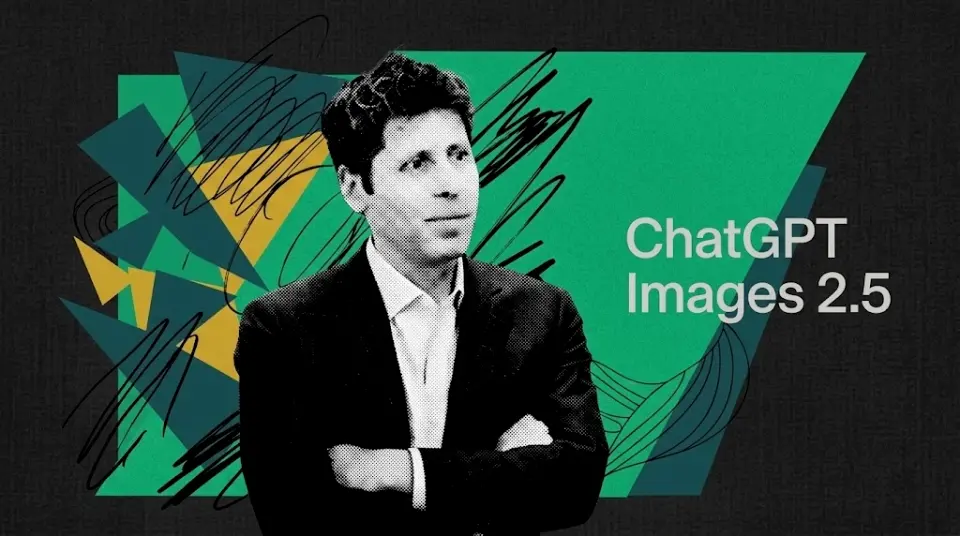
According to a report by the WSJ, Nvidia has invested in the AI laboratory Safe Superintelligence (SSI), founded by former OpenAI chief scientist Ilya Sutskever. The two parties have reached a long-term cooperation agreement aimed at expanding SSI's computing resources while helping Nvidia secure important clients in the AI field. Both companies stated that Nvidia made a "large-scale" investment after understanding some of SSI's research progress, but did not disclose the specific amount.As part of the collaboration, SSI will receive a significant amount of Nvidia's flagship GPU resources, with its computing power expected to increase by an order of magnitude. Previously, SSI primarily relied on TPU chips provided by Google for AI research and development. This collaboration indicates that Nvidia is further expanding its AI chip ecosystem and binding future computing power demands through investments in top AI laboratories.SSI was established in 2024 by Ilya Sutskever, with the goal of developing "Safe Superintelligence." The company has previously raised about $2 billion in funding, with investors including Andreessen Horowitz and Sequoia Capital, and reached a valuation of approximately $30 billion last year. This is not Nvidia's first investment in an AI company founded by former core members of OpenAI. In March of this year, Nvidia also invested in Thinking Machines Lab, founded by former OpenAI chief technology officer Mira Murati, whose first AI model is trained on Nvidia hardware.Ilya Sutskever is one of the important researchers in the field of modern artificial intelligence, having co-founded OpenAI and promoted the development of large model technologies such as ChatGPT. However, after leaving OpenAI, he began to question the approach of solely relying on expanding data and computing power to drive AI progress, turning instead to explore new directions in superintelligence research.

Zhao Changpeng: AI cannot solve the inflation problem, Bitcoin has unique value storage properties

Binance founder CZ recently posted on social media that artificial intelligence (AI) and Bitcoin (BTC) serve different functions; AI drives productivity improvements, while Bitcoin is used to combat inflation and protect wealth. CZ stated, "AI is great, but it cannot protect you from the effects of inflation; Bitcoin can."CZ believes that the market often views AI and Bitcoin as two major hot investment themes, but their natures are fundamentally different. AI is a technology that enhances business efficiency and economic productivity, while Bitcoin is a digital asset with a fixed supply. He pointed out that the AI industry is rapidly developing, with global companies continuously investing billions of dollars in AI software, data centers, chips, and other infrastructure, driving transformations in various sectors such as healthcare, finance, and manufacturing. However, AI companies can issue more shares and raise funds for expansion, and their investment value still depends on business performance and market competition. In contrast, Bitcoin has a total fixed supply of 21 million coins, and holders possess a non-dilutable scarce asset. CZ believes this characteristic gives Bitcoin long-term value storage properties, providing protection when the purchasing power of fiat currency declines due to inflation.CZ has also previously stated that the AI boom may attract some funds that would have originally flowed into the Bitcoin market. As AI companies like OpenAI and Anthropic gain more capital attention, some investors may sell other assets to allocate to AI-related investments. However, CZ believes that AI and Bitcoin are not in competition; rather, they should be viewed as complementary assets: AI drives technological advancement and productivity improvements, while Bitcoin offers a way to store value that is unaffected by supply expansion.

GPUS treasury surpasses 1,000 BTC, Metaplanet issues $137 million in new shares to sprint towards year-end goals

According to BBX data, yesterday the global US stock market and companies listed on the Tokyo Stock Exchange made significant moves in the accumulation of digital asset reserves. The latest updates from two core companies are as follows:GPUS core treasury breaks the 1,000 mark: Artificial intelligence data center company Hyperscale Data, Inc. (NYSE American: $GPUS) officially announced that the number of bitcoins held in its treasury has officially exceeded 1,000. Management stated that the company will continue to closely align with market conditions and existing capital allocation opportunities, supported by its core data center business, to continuously manage and expand its bitcoin reserve scale.Metaplanet raises $137 million through targeted private placement: Metaplanet Inc. (TSE: $3350) announced that it will issue new shares to specific institutional investors through the Third-Party Allotment mechanism under Japanese securities law, aiming to raise approximately $137 million (equivalent to 21.4 billion yen), with all funds to be used for purchasing bitcoin. The company accumulated 2,823 BTC in Q2 this year, and as of June 30, its total holdings have reached 43,000 BTC (valued at approximately $2.67 billion). Based on the current market price of about $62,000 per coin, this lightning private placement is expected to add approximately 2,210 BTC to its reserves, helping it strive towards its ultimate goal of 100,000 BTC by the end of the year.
app_icon
ChainCatcher Building the Web3 world with innovations.