BTC $80,180.31 -1.49%
ETH $2,322.89 -1.83%
BNB $741.21 -2.39%
XRP $1.29 -2.56%
SOL $100.48 -2.21%
TRX $0.3312 -0.22%
DOGE $0.0784 -2.10%
ADA $0.2010 -3.13%
BCH $281.02 -6.21%
LINK $11.57 -1.99%
HYPE $85.24 +4.23%
AAVE $132.50 -2.14%
SUI $0.9239 -1.97%
XLM $0.1698 -1.10%
ZEC $1,264.65 -3.66%
AAPL $348.77 +1.01%
AMZN $251.97 -0.93%
GOOGL $291.83 -10.30%
MSFT $542.45 +2.47%
META $618.83 -0.63%
NVDA $214.50 -2.50%
TSLA $404.50 -1.63%
SNDK $1,371.72 -0.14%
INTC $92.34 -3.67%
SPCX $144.11 -3.68%
MU $957.86 -1.18%
AMD $564.83 -1.29%

attention

All
Article
Flash

Analyst: In each U.S. midterm election cycle, Bitcoin has shown a significant pullback, and attention should be paid to the key support level of $73,000

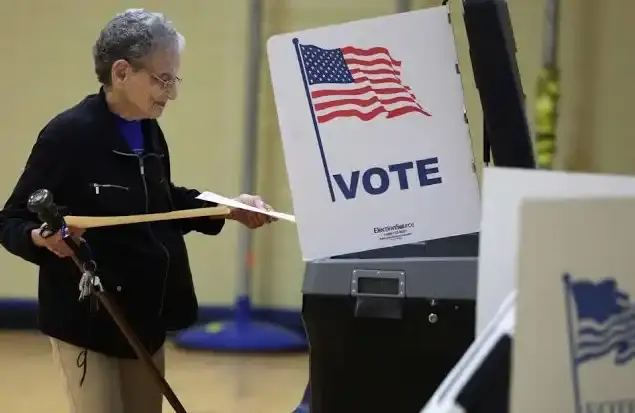
Cryptocurrency analyst Ali Charts stated that as the U.S. midterm elections on November 3 approach, investors may overlook the recurring phenomenon of Bitcoin pullbacks observed in previous election cycles. He believes that this election may once again be accompanied by significant volatility, and the downside risk is worth noting, with a key focus on the lower price level of $73,000. According to his statistics, during the U.S. midterm election cycles in 2010, 2014, 2018, and 2022, Bitcoin experienced pullbacks of 72%, 65%, 52%, and 27%, respectively.However, he emphasized that correlation does not imply causation; the election itself may not necessarily be the reason for the decline, as these pullbacks are also influenced by the overall market cycle of Bitcoin, liquidity conditions, and investor sentiment. Fourth-quarter returns also exhibit similar characteristics: in 2014, 2018, and 2022, Bitcoin fell by 16.7%, 42.16%, and 14.75% in the fourth quarter, respectively. The only exception was in 2010, when it rose by 391%, but Bitcoin was still in its early development stage at that time. Therefore, in the past four midterm election years, three of those years recorded negative returns in the fourth quarter.Regarding the subsequent trend, Ali Charts indicated that the area around $73,000 is close to the average purchase cost of current short-term Bitcoin holders, which can be used to observe the positions of recent investors entering the market. He pointed out that in an established bull market, Bitcoin often finds support near the cost of short-term holders after experiencing a significant pullback. He believes that if selling pressure accelerates after the election on November 3, pushing Bitcoin back down to around $73,000, that area will become an important position to test whether buyers are still willing to maintain the overall bullish trend. If the price continues to rebound from that area, it will strengthen the bullish judgment; in terms of operations, he will wait for signs of selling pressure exhaustion and renewed demand before considering establishing long positions.

Google Quantum Chip Breakthrough: Reducing Key Computation Error Rate, Early Bitcoin Wallet Quantum Risks Under Attention

Google stated that its Willow quantum chip reduces the error rate in preparing the special states (Magic States) required for quantum computing by about 40 times through a method called "Cultivation." The related research was published this week in Science, which is expected to lower the hardware costs of future large-scale quantum computers and draw more attention to the potential threat of cracking Bitcoin wallets.Magic States are a key resource needed to perform certain quantum computing operations, and their preparation process consumes a significant amount of hardware. Google's experiment achieved about 99.99% state fidelity, but only about 8% of attempts passed the screening. Researchers indicated that future experiments need to be scaled up and issues such as real-time operation and error correction need to be addressed. In March of this year, Google estimated that under specific hardware assumptions, future quantum computers might only need fewer than 500,000 physical qubits to crack the cryptography used in Bitcoin and Ethereum wallets.For Bitcoin, some early wallets' public keys have been public since their mining, theoretically making them targets for future quantum attacks; while wallets with undisclosed public keys may face different attack conditions. However, this breakthrough does not mean that quantum computers are capable of cracking Bitcoin. Google's previous cost estimates for attacks assumed the use of efficient Magic States preparation schemes, so this result cannot simply be understood as a 40-fold reduction in the cost of cracking Bitcoin. Research is still in the advancement stage of quantum hardware and error correction technology, and the complete equipment and engineering capabilities required for actual attacks have not yet been realized.

Analysis: It is not common for the Federal Reserve to raise interest rates in October or November before the midterm elections, and the market is paying attention to the remarks by Waller

In September, the U.S. CPI rose 3.7% year-on-year and 0.6% month-on-month, while the core CPI increased 2.6% year-on-year and 0.3% month-on-month, all exceeding market expectations. Following the data release, market bets on a 25 basis point rate hike by the Federal Reserve in October rose to about 40%, up from around 20% the previous day.The Federal Reserve just raised rates by 25 basis points last month, marking its first rate hike of 2023. The next rate decision will be announced on October 28, just 6 days before the U.S. midterm elections on November 3. Inflation continues to remain above the Federal Reserve's 2% target, and economic activity remains resilient, providing grounds for further rate hikes.Economists from institutions such as Jefferies and Nationwide believe that there is data support for rate hikes in both October and December. Some analysts also expect that the Federal Reserve may consider the timing of the elections and potential economic vulnerabilities, choosing to delay until December. Historical data shows that the Federal Reserve rarely raises rates in October or November before midterm elections, and the market will be paying attention to Federal Reserve Chairman Kevin Walsh's remarks before entering the pre-meeting blackout period.

first_img Cathie Wood: Investors should pay attention to the capital flow of AI agents

ARK Invest CEO Cathie Wood stated at a summit hosted by Robinhood in Houston that investors have traditionally "followed developers" to gauge technological trends, but now they may need to "follow agents." The AI agents she refers to are software that can perform tasks on behalf of humans, rather than just answering questions or generating text. This statement came towards the end of a discussion on AI, private markets, and technology investments.As AI agents shift from answering questions to executing operations and spending funds, the type of financial infrastructure they will use has become a focal point. SharpLink co-CEO and former BlackRock digital asset head Joseph Chalom believes that the financial system used by AI agents should not be controlled by a few banks or tech companies. He cited the example of authorized agents booking hotels, pointing out that users should be able to set spending limits, revoke authorizations at any time, and view the agents' transaction records. Additionally, users should be able to transfer the agents' identities, financial information, and permissions between different financial service providers, similar to mobile number portability.Chalom believes that open blockchains like Ethereum can provide a universal financial network for different agents, applications, and companies to use collectively, eliminating the need for each AI company to build its own closed payment system. A report from BlackRock in September also noted that AI agents could create new demands for machine-oriented payment systems, such as payment API calls, purchasing data, or renting computing power, with stablecoins and blockchain being one of the viable solutions. Coinbase's x402 is designed to enable machines to pay for online services like data or APIs.

app_icon
ChainCatcher Building the Web3 world with innovations.