BTC $80,146.32 -1.57%
ETH $2,320.34 -2.00%
BNB $752.54 +0.48%
XRP $1.29 -2.83%
SOL $100.29 -2.26%
TRX $0.3309 -0.20%
DOGE $0.0782 -2.45%
ADA $0.1995 -3.66%
BCH $280.42 -6.19%
LINK $11.50 -2.47%
HYPE $79.31 -3.15%
AAVE $131.01 -3.28%
SUI $0.9156 -2.46%
XLM $0.1688 -1.70%
ZEC $1,250.66 -4.98%
AAPL $347.82 +0.36%
AMZN $251.82 -0.89%
GOOGL $292.01 -10.16%
MSFT $550.91 +3.89%
META $620.48 -0.54%
NVDA $214.24 -2.53%
TSLA $402.54 -1.78%
SNDK $1,362.58 -0.12%
INTC $92.34 -3.26%
SPCX $144.15 -3.93%
MU $954.03 -1.16%
AMD $563.54 -1.05%

semi

All
Article
Flash

first_img Thirteen IPOs on the Sci-Tech Innovation Board were terminated this year, with semiconductor companies accounting for nearly 40%

The Science and Technology Innovation Board Daily cited Wind data stating that by 2026, 76 IPOs had terminated their review, with 13 from the Science and Technology Innovation Board, accounting for 17.1%. In 2025, a total of 50 IPOs were terminated, with only 3 from the Science and Technology Innovation Board, accounting for 6%. The total fundraising scale of terminated IPOs on the Science and Technology Innovation Board in 2026 was 18.248 billion yuan, nearly 5 times the 3.181 billion yuan in the same period of 2025. After entering the fourth quarter, Saikexis and Zhongke Innovation successively terminated their reviews.Among the 13 terminated projects on the Science and Technology Innovation Board, 5 were related to semiconductor and integrated circuit companies, including Wuhan Xinxin, Shanghai Xinyi, Beijing Tongmei, Taosheng Electronics, and Yadian Technology, accounting for approximately 38.5%. Beijing Tongmei was the only project that terminated during the registration phase, accepted on January 10, 2022, submitted for registration on August 1 of the same year, and terminated registration on July 2, 2026, lasting over 4 years. Wuhan Xinxin was accepted at the end of September 2024 and terminated in May 2026, queuing for nearly 600 days, intending to raise 4.8 billion yuan, accounting for about 26.3% of the total intended fundraising of the 13 terminated projects.The duration from acceptance to termination varied significantly. Huihe Medical was accepted on June 30, 2026, and terminated on September 24, taking 86 days, making it the first IPO to withdraw after being selected for on-site inspection this year. Saikexis voluntarily withdrew six months after acceptance, marking the third IPO failure in six years. Huandong Technology was accepted on November 25, 2024, and terminated on September 21, 2026, lasting about 22 months, being the first robot company to terminate an IPO this year, mainly engaged in robotic joint reducers, sponsored by GF Securities. According to the criteria of semiconductors, software equipment, hardware services, etc., there have been 37 IPO listing applications that have become invalid in the Hong Kong stock market this year, compared to 11 in the same period last year.

Goldman Sachs: Semiconductor exposure explains about 54% of the earnings difference, while oil prices account for only 2%

Goldman Sachs' latest research shows that over the past three weeks, semiconductor stock exposure has been able to explain about 54% of the return performance differences between different asset classes, while oil price exposure accounts for only 2%. As the influence of AI trading continues to expand, technology stocks are becoming an important factor driving global market risk appetite and asset performance differentiation.Goldman Sachs pointed out that recent investor risk appetite has been highly synchronized with the relative performance of large technology stocks. Last week, concerns about AI investment returns, financing costs, and capital expenditures intensified, leading to a sell-off in technology stocks and corporate bonds, with Goldman Sachs' risk appetite indicator falling to its lowest level since April 2025. The South Korean stock market has become a typical case of this impact, with the KOSPI rising 3.1% on Tuesday, and SK Hynix and Samsung Electronics increasing by 5.2% and 4.2%, respectively.Due to the high weight of semiconductor stocks in the Korea Composite Stock Price Index, changes in global AI investment expectations directly affect local market performance. Goldman Sachs emphasized that the 54% and 2% figures reflect a statistical relationship within a specific time window and do not imply that AI factors long-term determine global market fluctuations; the impact of high oil prices on inflation, monetary policy, and asset pricing cannot be ignored. Major technology companies such as Microsoft, Google, and Amazon are about to announce their earnings reports, and the market will focus on whether AI demand can continue to grow and whether massive capital expenditures can be converted into actual profits.

first_img Musk's semiconductor project Terafab has contacted about 10 Korean companies

According to South Korean media THE ELEC, Tesla and SpaceX, under Elon Musk, are in contact with South Korean materials, components, and equipment companies for the semiconductor manufacturing project Terafab. Some companies have signed non-disclosure agreements and are discussing supply categories. From October 13 to 15, relevant personnel visited about 10 South Korean company booths at Semicon West 2026 in San Francisco to confirm products and capacities and propose follow-up discussions, many of which have been ongoing for several months.ENF Technology, Asflow, and G&G Intech are involved in this initial contact, focusing on process materials, piping parts and valves, and wastewater reuse equipment, respectively. Mico's cleaning subsidiary Komico signed a tripartite non-disclosure agreement with Tesla and SpaceX about a month ago to discuss cleaning services for the Texas R&D test line. Unisem signed a non-disclosure agreement regarding environmental protection equipment such as exhaust gas treatment, while Dongjin Semichem is discussing materials such as diluents and phosphoric acid related to the Texas plant. Hanmi Semiconductor is discussing thermal compression bonding equipment, HPSP will supply a high-pressure hydrogen annealing device to the R&D line, and testing socket company ISC is exchanging samples and design information.Terafab is located in Texas and was announced to be jointly promoted by Tesla, SpaceX, and xAI in March of this year. The independent legal entity and equity structure have not yet been disclosed. The goal is to reach a monthly production of 1 million wafers within 10 years, with an initial investment of $16.8 billion and the hiring of over 3,000 people. SpaceX signed a tax reduction contract with Texas earlier this month and has begun construction. The industry expects the initial facility, which will produce 100,000 wafers per month, to be completed before 2030. Initial uses include Tesla's autonomous driving and robotics chips, as well as SpaceX's satellite and space data center chips.
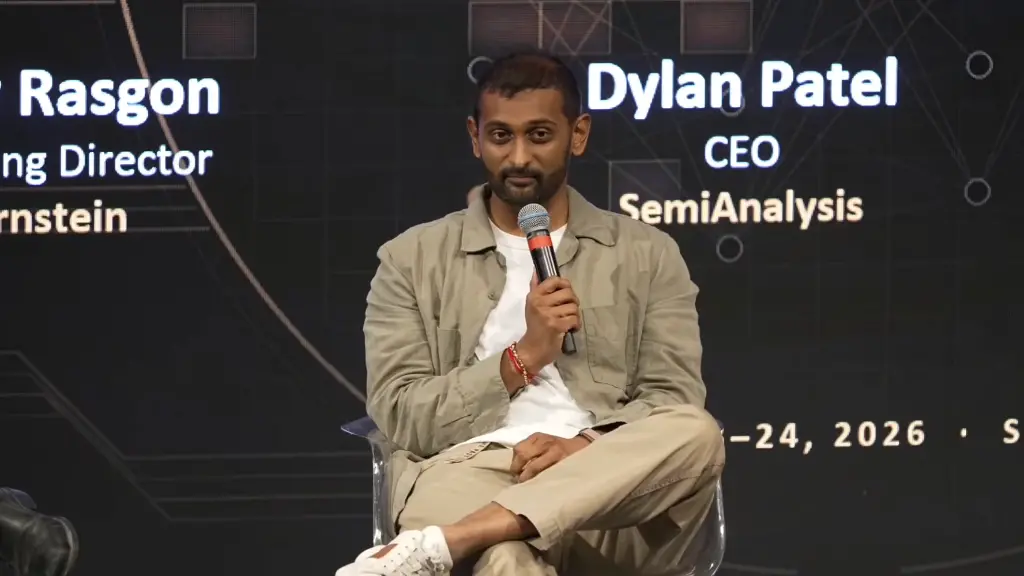
first_img SemiAnalysis: ASML is currently developing hybrid bonding equipment

On October 15, the semiconductor research organization SemiAnalysis published an article stating that the lithography equipment manufacturer ASML has not officially announced related products, but patents, news reports, and the company's roadmap all indicate that it is developing hybrid bonding equipment. The author of the article judges that ASML may first launch more challenging chip-to-wafer hybrid bonding tools and view it as an extension of vertical integration.Patents show that the system operates on a track, with each chip placed in an independent carrier, sequentially completing inspection, cleaning, plasma activation, morphology inspection, leveling, coarse alignment, position adjustment, and fine alignment before entering the bonding station; the final placement is completed by the carrier and suction cup. The track's repeat accuracy is about 10 microns, far from the approximately 50 nanometers required for bonding. ASML submitted 27 bonding patent families from December 2022 to November 2024, most of which are aimed at chip-to-wafer. The Elec reported in March that ASML has begun hybrid bonding machine architecture design with Prodrive Technologies and VDL ETG.The article states that wafer-to-wafer hybrid bonding has been used for image sensors and 3D NAND; chip-to-wafer is currently only used for mass production of logic chips, including AMD's hybrid bonding V-Cache shipped since 2022 and TSMC's SoIC. The current spacing of SoIC is about 6 microns, with a target of reaching approximately 4.5 microns by 2029. Besi is currently the only supplier with chip-to-wafer mass production tools, with related logic business mainly concentrated in TSMC and Intel.

SemiAnalysis: ByteDance accounts for nearly one-fifth of China's data center capacity

The semiconductor research organization SemiAnalysis released a survey on Chinese data centers, tracking over 1,000 facilities from more than 60 operators. The report estimates that by the end of 2026, China's data center capacity will exceed 24GW, second only to the United States' 56GW. ByteDance accounts for nearly one-fifth of this, making it the largest data center tenant in the country.ByteDance has leased over 4GW of data center capacity, with suppliers including Qinhuai Data, China United Network Communications, and Century Internet. The report states that by early 2026, ByteDance will still contribute about 90% of Qinhuai Data's revenue. ByteDance has also begun to accelerate its self-built data centers, constructing large facilities in Shanxi, Anhui, and Inner Mongolia to reduce reliance on external suppliers.The report also mentions that while Chinese data centers have long been considered to have a high vacancy rate, AI server rooms are still in short supply. This is due to many old server rooms lacking sufficient power supply and cooling capabilities, making it difficult to directly deploy high-power AI servers, while newly built large AI data centers are quickly being rented out. For example, a 100MW data center, excluding IT equipment such as servers, has a construction cost of about $300 million in China and about $1.5 billion in the United States, with Chinese facilities of the same scale typically delivered in about 12 months. Compared to the power supply and approval issues faced by the United States, the more prominent bottleneck for expanding AI data centers in China is the supply of advanced chips.
app_icon
ChainCatcher Building the Web3 world with innovations.