BTC $64,790.78 +0.87%
ETH $1,918.88 +0.82%
BNB $586.33 +3.06%
XRP $1.08 +0.43%
SOL $74.17 +0.97%
TRX $0.3283 +0.50%
DOGE $0.0700 -0.65%
ADA $0.1655 +1.16%
BCH $211.29 -0.25%
LINK $8.43 +1.16%
HYPE $53.05 -3.15%
AAVE $98.51 +0.17%
SUI $0.6937 +1.04%
XLM $0.1722 -0.87%
ZEC $475.26 +3.22%
BTC $64,790.78 +0.87%
ETH $1,918.88 +0.82%
BNB $586.33 +3.06%
XRP $1.08 +0.43%
SOL $74.17 +0.97%
TRX $0.3283 +0.50%
DOGE $0.0700 -0.65%
ADA $0.1655 +1.16%
BCH $211.29 -0.25%
LINK $8.43 +1.16%
HYPE $53.05 -3.15%
AAVE $98.51 +0.17%
SUI $0.6937 +1.04%
XLM $0.1722 -0.87%
ZEC $475.26 +3.22%

consensus

All
Article
Flash

Michael Saylor: The biggest challenge for Bitcoin's future is not external competition, but the internal erosion of consensus rules

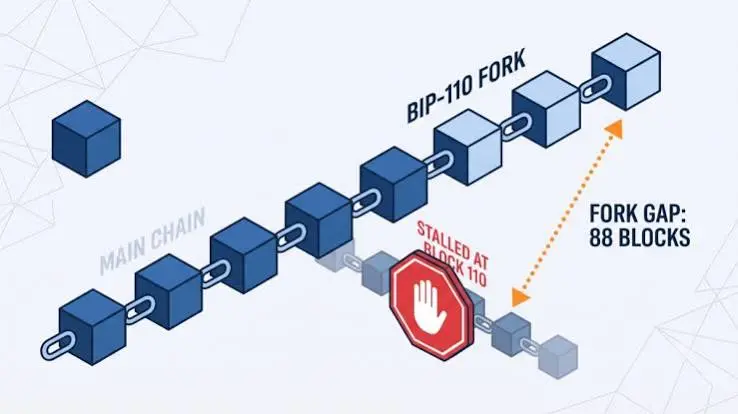
Strategy founder Michael Saylor stated that Bitcoin has gained market recognition, but the biggest challenge in the future is not external competition, but rather the erosion of consensus rules from within. He believes that Bitcoin's consensus rules are like a "constitution," determining property rights, scarcity, settlement mechanisms, and boundaries of power. Any modification of the rules for the benefit of specific groups is an infringement on the economic rights of all participants.He warned that Bitcoin is expected to grow a hundredfold in the future and become the infrastructure of the global capital market, while a single erroneous rule modification could harm markets, technologies, and economic freedoms that have yet to be born. Saylor specifically pointed out certain proposals, including BIP-110, arguing that they undermine the neutrality of the Bitcoin protocol by limiting effective paid transactions, introducing contract mechanisms, or expanding block capacity. He stated that although these proposals take different forms, they all weaken the scarcity of block space, increase network bandwidth and verification costs, expand protocol complexity, and introduce new security risks. At the same time, weakening the fee market will affect miners' income sources after block rewards continue to halve, thereby undermining the long-term security of the Bitcoin network. Furthermore, once a particular interest group is able to modify Bitcoin rules through certain means, other interest groups will follow suit, leading to long-term conflicts in protocol governance, capital outflows, slowed innovation, and deteriorating network security. Saylor called for keeping the Bitcoin base layer simple, neutral, scarce, and secure, leaving innovation to the second layer and application layer, promoting development through voluntary adoption rather than frequent modifications of the underlying protocol, and emphasized that protocol upgrades should be approached with extreme caution and only advanced when truly necessary to maintain the foundation for Bitcoin's long-term development.

The Coinbase Advisory Council warns of quantum risks to Bitcoin, the community still lacks consensus, and preparations for quantum resistance migration should be initiated immediately

The advisory committee of cryptographic experts led by Coinbase has released a report stating that Bitcoin should immediately begin preparing for potential quantum computing attacks. However, the committee did not take a clear stance on whether to freeze the millions of Bitcoins that could potentially be stolen by quantum computing in the future.It is reported that the committee members include several leading experts, such as Ethereum Foundation researcher Justin Drake, who believe that the current focus of the debate is not on how to introduce quantum-resistant signature technology, but rather on how to handle the Bitcoins that have not been migrated for a long time. One viewpoint calls for setting a deadline, after which the existing ECDSA and Schnorr signature schemes for Bitcoin will cease to be supported, and un-migrated assets will be frozen to prevent future quantum attackers from acquiring large amounts of BTC and impacting the market. Another viewpoint argues that this amounts to asset confiscation, contradicting Bitcoin's core principles of "immutability and user complete control of assets," and could set a precedent for freezing assets in the future due to regulatory pressure.The Coinbase advisory committee pointed out that the aforementioned proposals are not mutually exclusive and can be combined, but it refused to take a position on the issue of "whether to freeze legacy BTC," believing that the final decision should be governed by the Bitcoin community. At the same time, it emphasized two points: first, the technical development of quantum-resistant signature migration should be initiated immediately and should not wait for the governance debate to conclude; second, it is necessary to clearly communicate risk information to users to avoid long-term uncertainty affecting the Bitcoin ecosystem.

CME Group's Bitcoin volatility futures are pending approval to launch on June 1, and Circle's Q1 2026 financial report is released today with consensus expected revenue of approximately $715 million

According to BBX data, last week the earnings season for cryptocurrency concept stocks reached its conclusion, while institutional-level derivatives product lines expanded simultaneously. The core dynamics are as follows:CME Group Inc. (NASDAQ: $CME) reported by CoinDesk on May 7 plans to officially launch Bitcoin volatility futures (BVOL) on June 1, 2026, pending regulatory approval; the underlying asset for this product is the Bitcoin implied volatility index, allowing institutional investors to take long or short positions based solely on the magnitude of volatility without needing to predict the direction of BTC price movements, filling the gap for "pure volatility tools" in the existing Bitcoin derivatives market. For corporate treasury managers (such as Strategy-type companies) and cryptocurrency options market makers who need to hedge Bitcoin position volatility exposure, BVOL provides the most direct standardized hedging tool to date.Circle Internet Group, Inc. (NYSE: $CRCL) will release its Q1 2026 earnings report today (May 11) at 8:00 AM (ET) via an official live stream; the current analyst consensus expects revenue of approximately $715 million (Zacks data $717.1 million, S&P Global data $714.9 million, year-on-year approximately +11%, quarter-on-quarter approximately -7%), adjusted EPS of about $0.15---$0.27; last quarter (Q4 2025) reserve interest income was $733 million (year-on-year +69%), with an average market cap of USDC around $76.2 billion; as of May 6, the circulating supply of USDC was approximately $78.1 billion, and the integration of stablecoin infrastructure with Meta and Visa, along with the policy expectations from the CLARITY Act markup in May, are the most closely watched valuation catalysts this season.

Kraken partners with MoneyGram to launch cryptocurrency withdrawal services in over a hundred countries and reveals that the IPO process is "80% complete"; MARA Holdings' Q1 financial report is scheduled for May 11, with consensus expectations of a loss of $2.34 per share

According to BBX data, this week the outflow channels of cryptocurrency infrastructure and the forward-looking financial reports of mining companies are advancing on two fronts, with the core dynamics as follows:Kraken (parent company Payward, Inc.) and the global payment network MoneyGram announced the establishment of a global strategic partnership through PR Newswire on May 5. Kraken users can withdraw cash exchanged for cryptocurrency in hundreds of fiat currencies at nearly 500,000 MoneyGram physical locations covering over 100 countries; initially focusing on cryptocurrency outflows, with plans to expand to local bank deposits and cross-border remittance flows; Kraken is responsible for customer identity verification, while MoneyGram provides licensed remittance services and compliance frameworks. Kraken co-CEO Arjun Sethi confirmed in an interview with Fortune that the company's IPO progress is "close to 80%," having previously submitted its confidential S-1 filing to the SEC. Bloomberg estimates the current valuation at approximately $13.3 billion based on a $200 million equity investment from Deutsche Börse.MARA Holdings, Inc. (NASDAQ: $MARA) officially announced on ir.mara.com on May 4 that its Q1 2026 financial report will be released after the market closes on May 11, with a conference call scheduled for 5:00 PM (ET); analyst consensus expects an EPS of approximately -$2.34 and revenue of about $184.2 million. As of the end of 2025, the company holds 53,822 BTC, with full-year revenue for 2025 at $907 million (up 38% year-on-year) and a hash rate of 66.4 EH/s; during Q1 2026, the price of BTC fell from about $87,000 to around $68,000, putting pressure on the mining company's total costs. The market will focus on the progress of its AI/HPC data center transformation and the rollout pace of the Starwood JV, which exceeds 1 gigawatt capacity.The U.S. Department of Labor released the April non-farm employment data on May 8, showing an increase of 115,000 jobs, nearly double the market expectation; Bitcoin maintained a range of $79,000---$80,000 after the data was released, with the market interpreting this "soft landing" signal as favorable for risk assets—an unheated job market means an increased probability of the Federal Reserve maintaining current interest rates, keeping the mid-term liquidity environment for cryptocurrency stable. The monthly net inflow for Bitcoin spot ETFs in April was approximately $2.44 billion, the strongest single month data of the year; April's monthly close rose by 16%, and if May's closing price remains above $76,000, it will confirm three consecutive months of positive monthly closes for Bitcoin, which Fundstrat founder Tom Lee defines as a "bear market ending signal."
app_icon
ChainCatcher Building the Web3 world with innovations.