








"The Federal Reserve's favorite inflation indicator" is below expectations, and Goldman Sachs no longer expects an interest rate hike in October
 Core Viewpoint

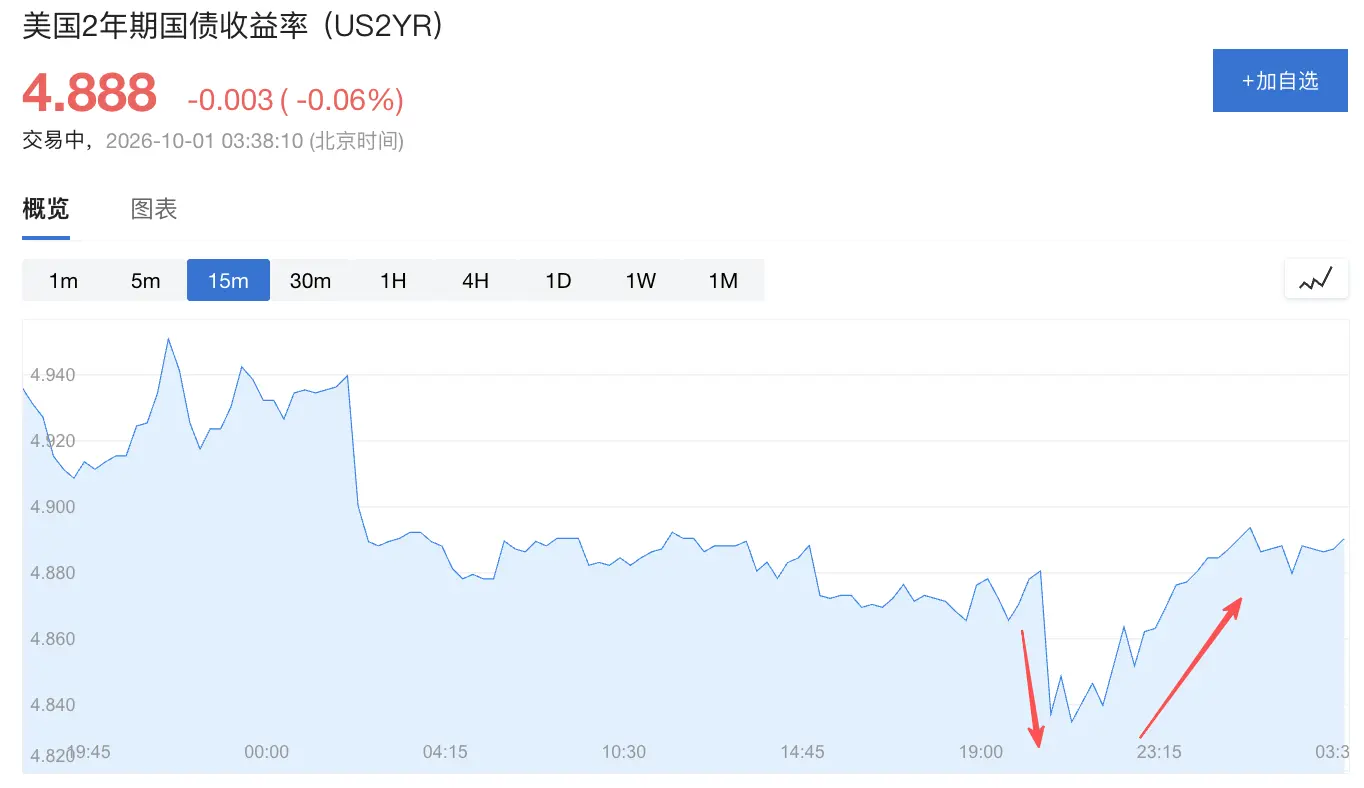
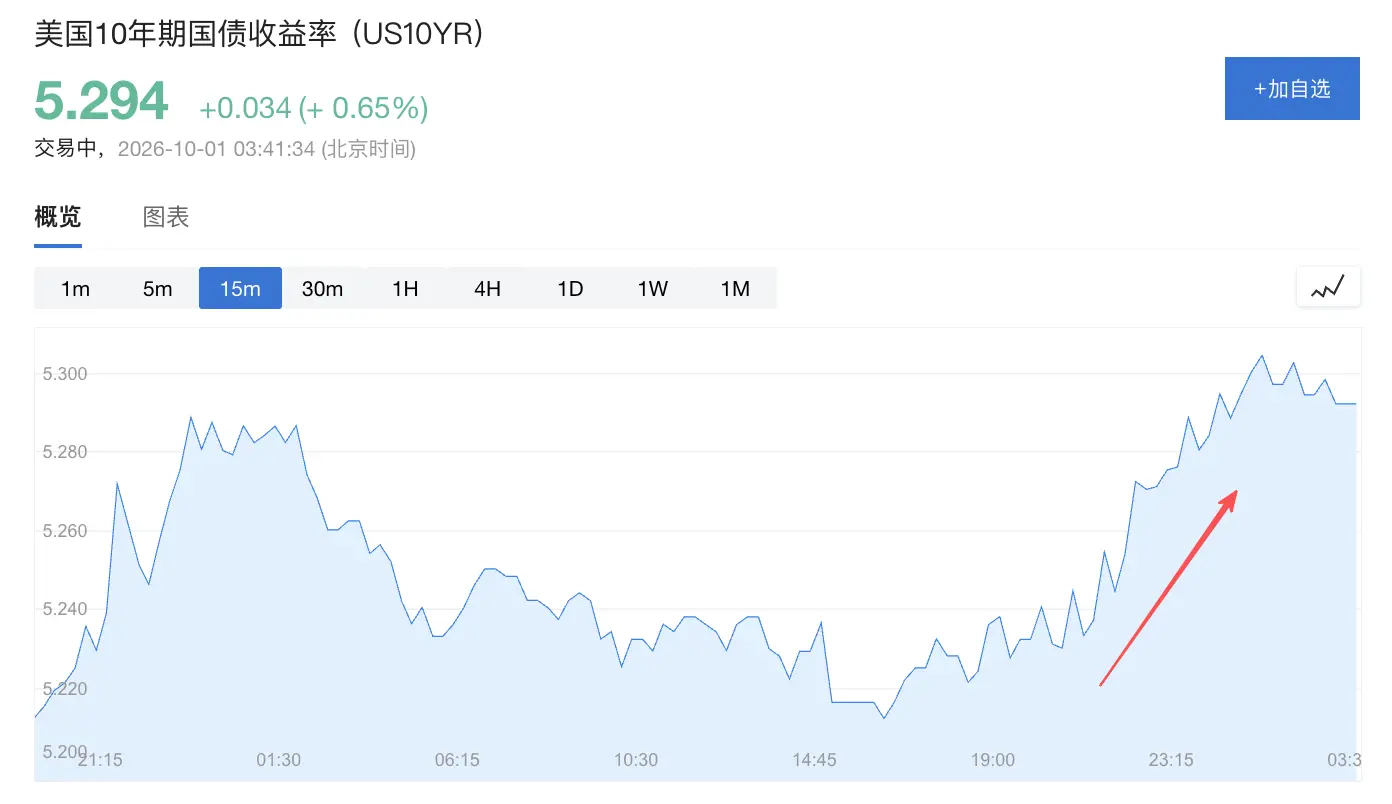
 After the lower-than-expected U.S. August PCE data was released, Goldman Sachs pushed back its expectation for the Federal Reserve's second interest rate hike from October to December, stating that it does not rule out the possibility that the Federal Reserve ultimately believes no further rate hikes are necessary. "The Wall Street Journal" Timiraos pointed out that the PCE did not change the previously known trend of rising inflation. Currently, the market is pricing in a 39% probability of an interest rate hike in October, down from 45% before the PCE was released; the probability for a December hike is 90%. The yield on the 2-year U.S. Treasury bond fell slightly after the PCE release and then rebounded, while the 10-year yield continued to rise.
Author: Yang Chen, Wall Street Journal
The PCE inflation in the U.S. for August fell short of expectations, changing Wall Street's judgment on the timing of the Federal Reserve's next interest rate hike.
Goldman Sachs on Wednesday pushed back its expectation for the Fed's second rate hike of the year from October to December, while not ruling out the possibility that the Fed may ultimately decide that no further hikes are necessary.
"New Federal Reserve News Agency" Nick Timiraos pointed out that previous PPI and CPI data indicated that the improvement in inflation did not continue, and the PCE did little to change this trend; market price indicators remain around 3% before and after statistical method adjustments, and inflation has not made progress toward the 2% target.
The Chief North American Economist at Capital Economics believes that core price pressures are slightly less concerning than previously feared, supporting a pause in rate hikes in October; a senior economist at BMO noted that the proportion of PCE price components with an annualized increase of over 3% dropped from 54% to 51%, still far above normal levels, indicating that there has not been a substantial improvement in the inflation trend.
In terms of market pricing, the Chicago Mercantile Exchange FedWatch Tool shows that the market currently expects the probability of a rate hike in October to be about 39%, down from about 45% before the PCE data was released. The probability of a rate hike in December has reached 90%.
Regarding U.S. Treasury prices, the yield on the 2-year Treasury note fell from 4.887% to about 4.864% after the PCE release, indicating that investors reduced their bets on a short-term rate hike by the Fed, but the yield then continued to rise, fully recovering the decline. The 10-year yield continued to rise.
Meanwhile, U.S. economic data still shows strong resilience. The U.S. GDP growth rate for the second quarter was significantly revised up from 1.5% to 2.2%, and consumer spending in August grew by 0.9%. This means that while the PCE has reduced the urgency for a rate hike in October, it is not enough to fundamentally change the inflation and economic growth situation faced by the Fed.
Goldman Sachs: Low Probability of Rate Hike in October, Second Hike Delayed to December
Based on the inflation indicators released on Wednesday and the speech by New York Fed President John Williams on Tuesday, Goldman Sachs economists adjusted their forecasts for Fed policy, expecting the second rate hike to occur in December instead of the previously predicted October.
The Goldman Sachs economic team, led by Jan Hatzius, wrote in their report that the August personal income and spending data released on Wednesday showed that the core inflation indicator rose less than expected; the core PCE price index rose by 0.25% month-on-month and 3.01% year-on-year, "far below expectations."
Goldman Sachs expects the core PCE price index to rise by 3% year-on-year in the fourth quarter, "far below the median forecast of 3.4% from the Federal Open Market Committee (FOMC) participants." The report stated:
"Combined with New York Fed President John Williams' statement yesterday, we now believe that the probability of a rate hike in October is low; we have pushed back our forecast for the second rate hike to December, and we believe there is a high likelihood that the FOMC will ultimately determine that no further rate hikes are necessary."
Timiraos: PCE Did Not Significantly Change Inflation Trend
Timiraos pointed out that the core message of this PCE report is that it did not significantly change the inflation trend that the market had already grasped.
He believes that the inflation data for June and July performed well, but this situation was already known to the market; the August data showed that this improvement did not continue, and after the PPI and CPI data were released, the market was actually able to see this.
Timiraos also noted that current market price indicators are running at about 3% before and after statistical method adjustments. Although the 12-month inflation reading does not appear as unfavorable, inflation has not made further progress toward the 2% target since April 2025.
Other Wall Street Analysts' Views
Stephen Brown, Chief North American Economist at Capital Economics, has a relatively dovish view on the PCE. Brown stated:
"Core price pressures are slightly less concerning than previously feared, which supports our view that the Fed will pause rate hikes in October."
He also pointed out that after the BEA adjusted the PCE statistical methods, historical core inflation data was revised down, with the related adjustments collectively lowering core inflation by about 0.3 percentage points; the downward revisions for June and July also brought the annualized growth rate of core inflation over the past three months down to 2%.
However, BMO senior economist Sal Guatieri provided a more cautious assessment, believing that there has not been a meaningful improvement in the underlying inflation trend. He stated:
"The proportion of PCE price components with an annualized increase of over 3% has eased, dropping from 54% to 51%, this proportion is still far above normal levels and hardly indicates that the underlying inflation trend has seen substantial improvement."
Guatieri further stated that this will reinforce the Fed's belief that further tightening of policy is still needed to push inflation back to target levels.
From the market pricing perspective, the Chicago Mercantile Exchange FedWatch Tool shows that the market currently expects the probability of a rate hike in October to be about 39%, down from about 45% before the PCE data was released. The probability of a rate hike in December has reached 90%.
GDP Significantly Revised Up, Consumption Remains Resilient
Economic data released simultaneously on Wednesday showed that the U.S. GDP growth rate for the second quarter was significantly revised up to an annualized 2.2%, much higher than the previously reported 1.5%.
Both core components of consumer spending and investment outperformed previous values. The key indicator measuring endogenous growth momentum—real private domestic final sales—was also revised up to 4.6%.
The upward revision in investment categories highlights the driving effect of artificial intelligence infrastructure construction on economic growth, while the increase in consumer spending valuation indicates that, supported by a robust job market and a strong stock market, residents' financial conditions are generally good.
Consumer spending in August grew by 0.9% month-on-month, partly driven by increased spending at gas stations due to rising oil prices; income growth slightly fell from 0.3% last month to 0.2%. The overall PCE price index rose by 3.4% year-on-year, unchanged from the previous month, while month-on-month it accelerated to 0.3%.

 Risk warning




Popular articles





